
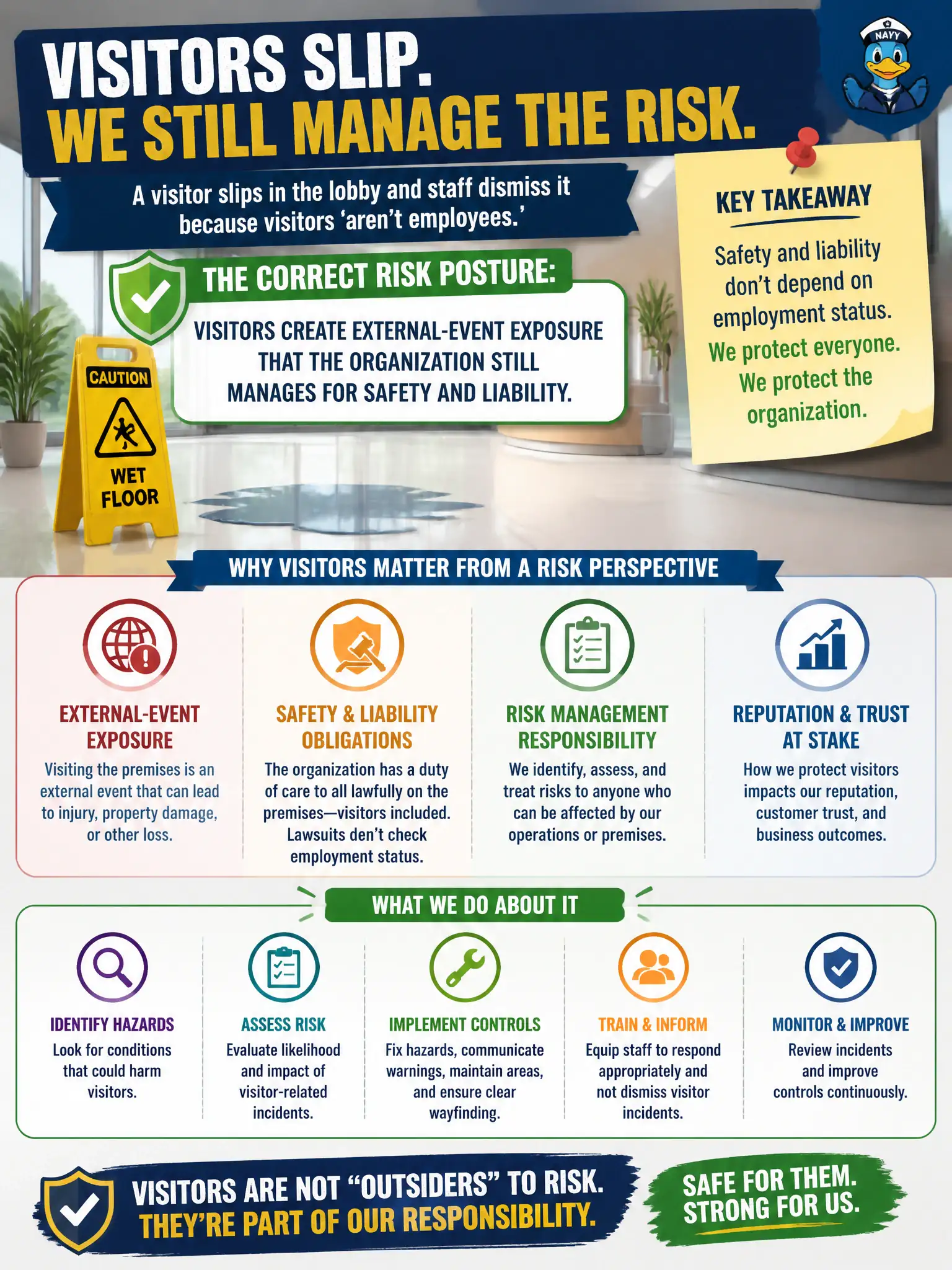
A visitor slips in the lobby and staff dismiss it because visitors 'aren't employees.' What risk posture is correct?
Select an answer to reveal the explanation.
Short Explanation
Visitors are not on payroll, but they still walk your floors. A lobby slip is the organization's problem too—duty of care does not clock out for guests.
Full Explanation
Visitors create external-event exposure that the organization still manages for safety and liability. Dismissing a lobby slip because the person is not an employee misunderstands premises duty in public buildings. Visitor incidents are not irrelevant merely because workers' compensation may not apply. Employees are not the only source of premises liability. Lobby slips are not solely the visitor's personal insurance with no organizational duty. Exam caveat: public-facing premises risk includes visitors, contractors, and patrons. Operational check: treat the slip under public liability/incident protocols, preserve scene documentation, provide aid, file the civic incident report, and review floor conditions and mats. Trend visitor incidents alongside employee incidents on the facilities risk dashboard. In municipal practice, record the rationale in the risk procedure or committee minutes so future staff apply the same rule under budget pressure. Re-validate after the next seasonal peak or org-chart change to confirm the civic control still holds as designed for residents and staff. In municipal practice, record the rationale in the risk procedure or committee minutes so future staff apply the same rule under budget pressure. Re-validate after the next seasonal peak or org-chart change to confirm the civic control still holds as designed for residents and staff.