
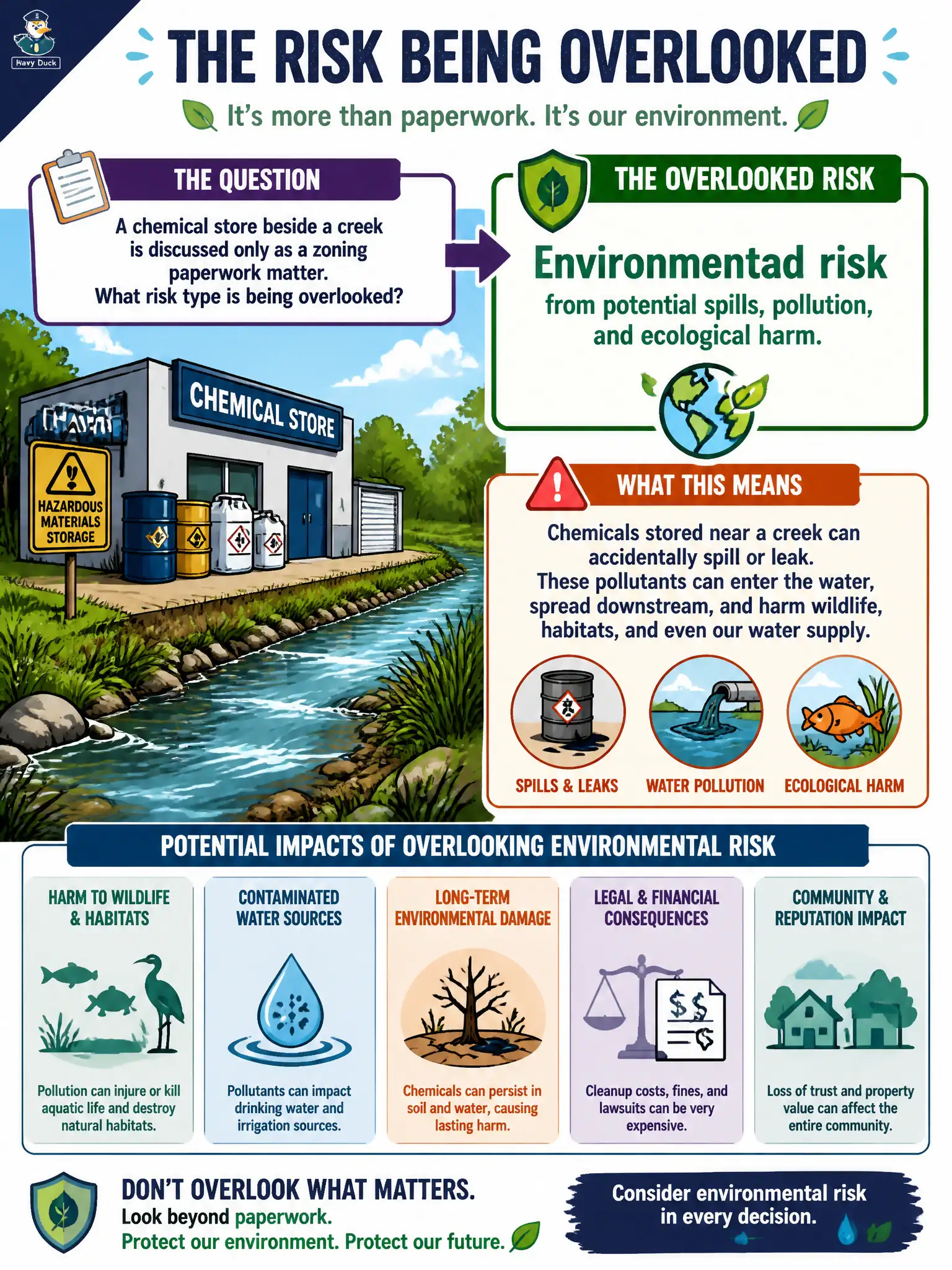
A chemical store beside a creek is discussed only as a zoning paperwork matter. What risk type is being overlooked?
Select an answer to reveal the explanation.
Short Explanation
Chemicals next to a creek are not just a zoning stamp. Spill pathways into water are environmental risk—protect the watershed, not only the permit file.
Full Explanation
A chemical store beside a creek presents environmental risk from potential spills, pollution, and ecological harm—not merely zoning paperwork. Technology risk from barcode scanners is peripheral. Personnel overtime for clerks who stock shelves does not capture spill-to-waterway exposure. Information risk from outdated SDS PDFs matters for knowledge but is not the overlooked environmental classification. Exam caveat: proximity to sensitive environmental receptors elevates environmental risk treatment (containment, drainage control, response plans). Operational check: classify the store as environmental (with safety co-dimensions), verify secondary containment and spill kits, map drainage to the creek, exercise a spill response with public works and environmental health, and update the civic register owner accordingly. Coordinate with zoning only as a compliance input, not as the risk type. In municipal practice, record the rationale in the risk procedure or committee minutes so future staff apply the same rule under budget pressure. Re-validate after the next seasonal peak or org-chart change to confirm the civic control still holds as designed for residents and staff. In municipal practice, record the rationale in the risk procedure or committee minutes so future staff apply the same rule under budget pressure. Re-validate after the next seasonal peak or org-chart change to confirm the civic control still holds as designed for residents and staff.