
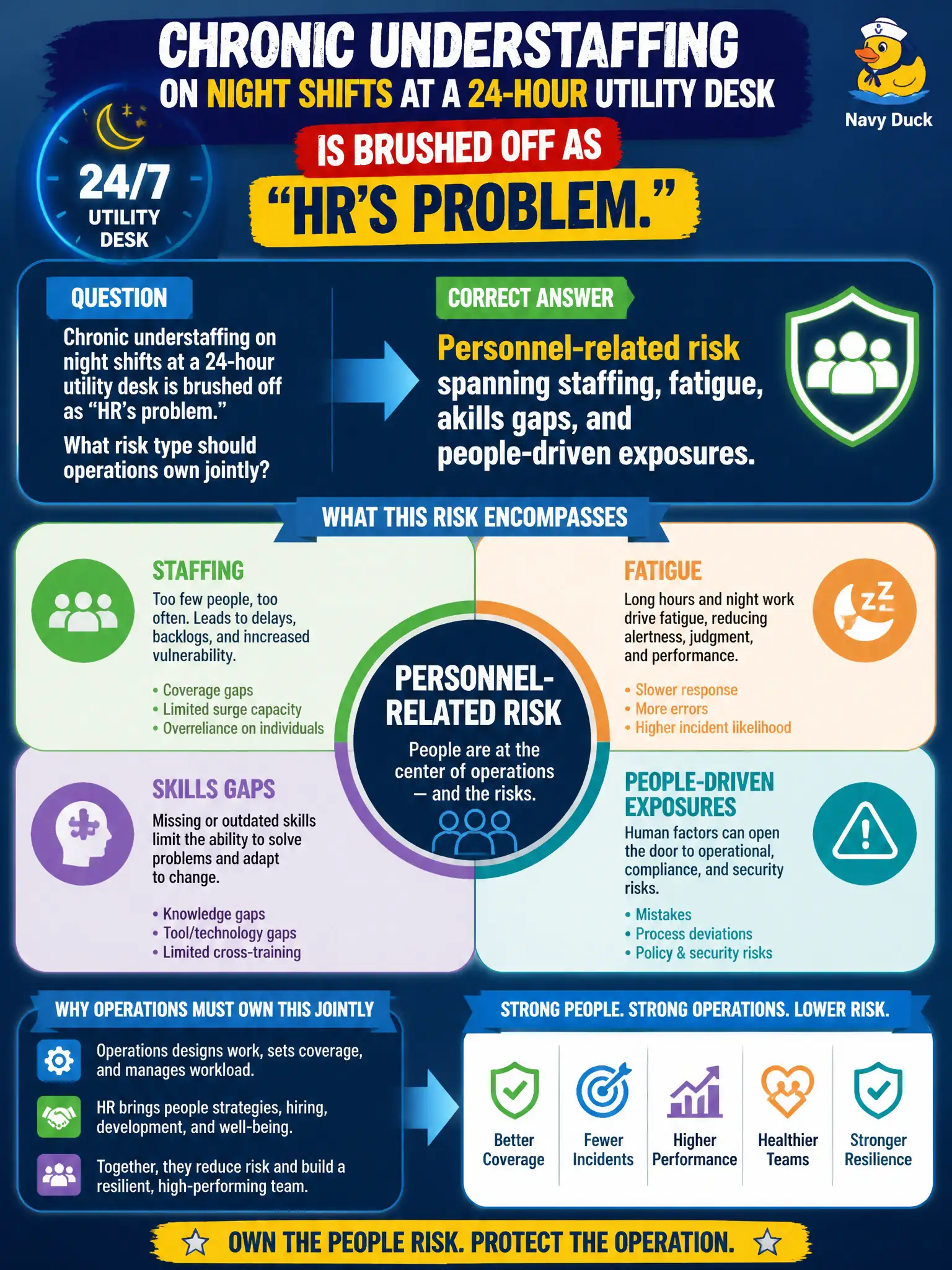
Chronic understaffing on night shifts at a 24-hour utility desk is brushed off as 'HR's problem.' What risk type should operations own jointly?
Select an answer to reveal the explanation.
Short Explanation
Night-shift skeleton crews are not just an HR spreadsheet issue. Tired people miss alarms and make costly mistakes—that is personnel risk for the whole operation.
Full Explanation
Chronic understaffing on night shifts at a 24-hour utility desk is personnel-related risk spanning staffing, fatigue, skills gaps, and people-driven exposure. Brushing it off as solely "HR's problem" leaves operations without ownership of service and safety impacts. Technology risk alone (ticket system crashes when queues grow) may be a secondary effect, not the primary classification. Environmental risk limited to outdoor temperature misses the staffing core. External supplier risk about temp agencies is related but incomplete if internal roster design is the driver. Exam caveat: people/staffing risks are operationally owned jointly with HR. Operational check: add a personnel-risk register row for night-desk staffing, track overtime/fatigue indicators, set minimum staffing and relief rules, and review with operations and HR monthly. Test call-handling quality on short-staffed nights as a residual-risk check for the utility. In municipal practice, record the rationale in the risk procedure or committee minutes so future staff apply the same rule under budget pressure. Re-validate after the next seasonal peak or org-chart change to confirm the civic control still holds as designed for residents and staff.