
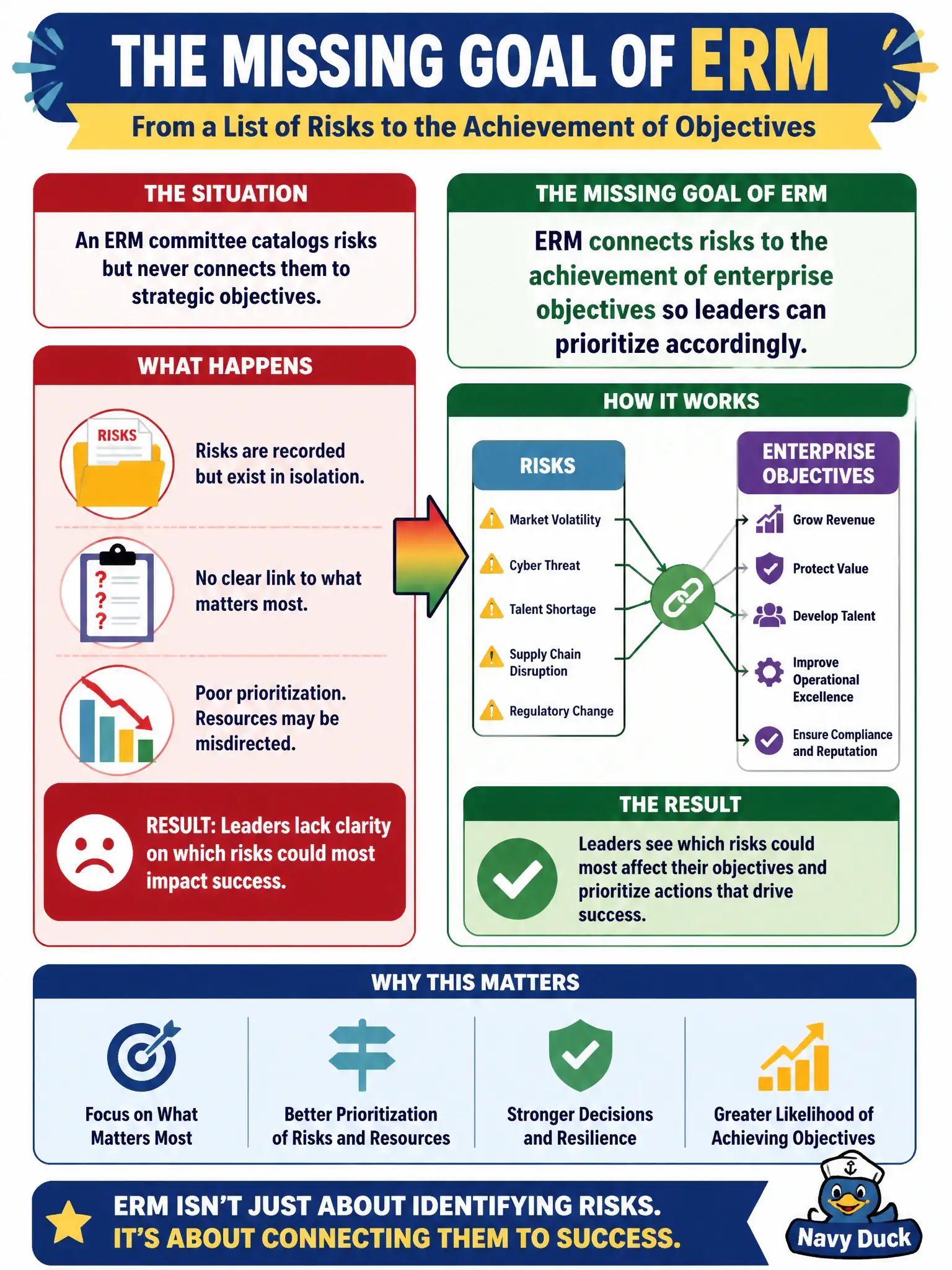
An ERM committee catalogs risks but never connects them to strategic objectives. What goal of ERM is missing?
Select an answer to reveal the explanation.
Short Explanation
A risk list with no tie to goals is a junk drawer. ERM earns its keep when leaders see which threats actually block the objectives the organization is trying to hit.
Full Explanation
A core ERM goal is to relate risks to the achievement of enterprise objectives so leaders can prioritize treatment and acceptance decisions. An ERM committee that catalogs risks but never connects them to strategic objectives is missing that linkage. Connecting risks to objectives turns a register into a decision tool for municipal or enterprise direction.
Avoiding strategy so risk talk stays purely operational keeps ERM from informing the choices that define success. Treating strategic objectives as too confidential to appear in risk reporting blocks the very alignment boards need. Calling objective linkage optional once any register exists accepts inventory theater over decision support.
Exam caveat: risk-to-objective mapping is central to ERM purpose at CRMC awareness depth.
Operational check: tag top register items to specific enterprise or civic objectives; review prioritization in light of those objectives; include the mapping in leadership ERM packets. Add an “objective impacted” field to the risk register and require it for top-tier items before committee review. Reject orphan risks that cannot be tied to any enterprise objective without a documented reason. Retain evidence of the review in the municipal risk file for the next audit cycle.