
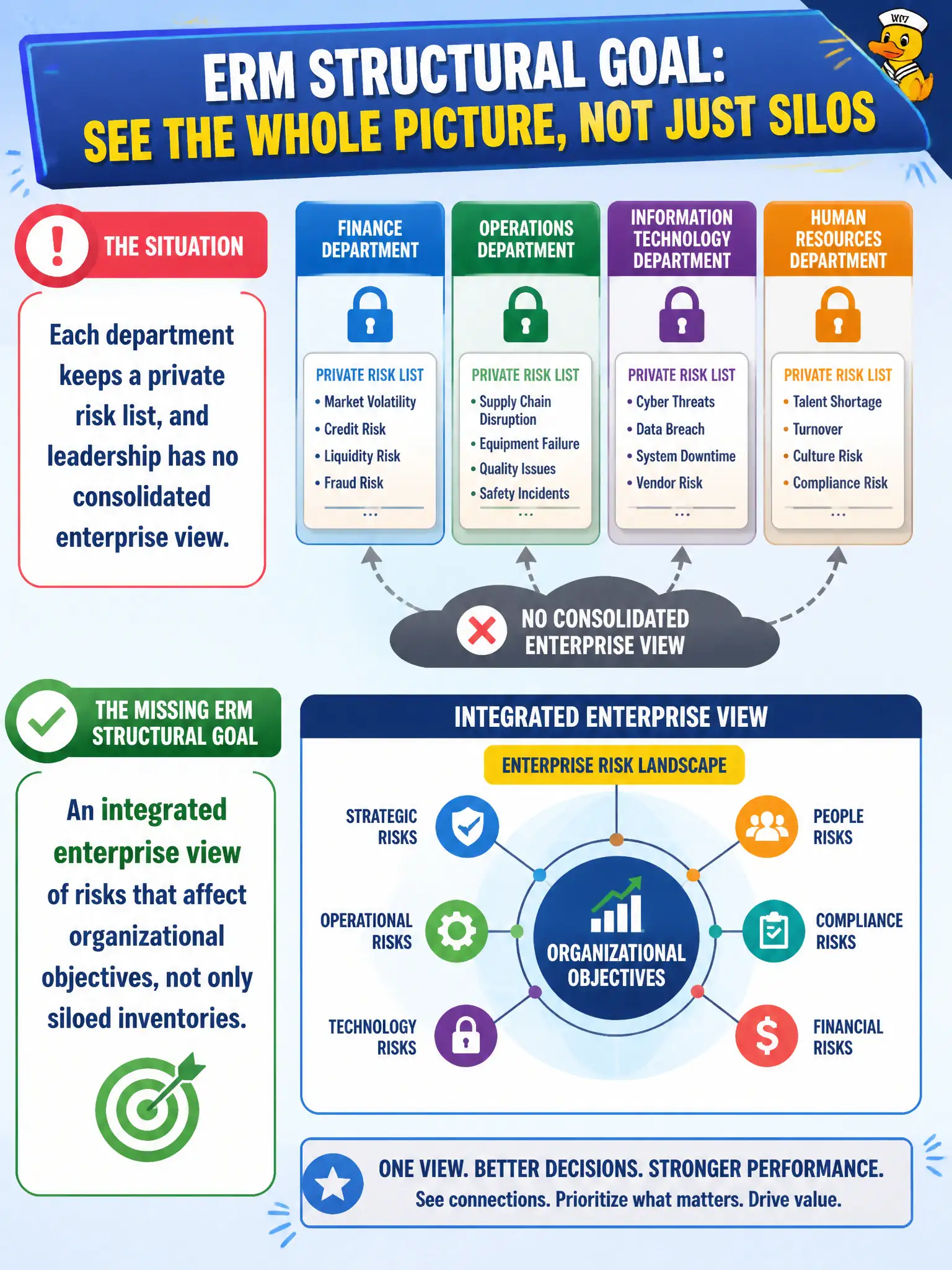
Each department keeps a private risk list, and leadership has no consolidated enterprise view. What ERM structural goal is missing?
Select an answer to reveal the explanation.
Short Explanation
Silo lists are like each kitchen writing its own fire-exit plan and never telling the building manager. ERM pulls the picture together so leadership can see what actually threatens the whole organization’s objectives.
Full Explanation
Enterprise risk management seeks an integrated view of risks across the organization so leaders can prioritize relative to objectives—not a pile of disconnected departmental inventories. When siloed lists never roll into an enterprise view tied to objectives, the missing ERM practice is integrating those inputs into a portfolio perspective that supports municipal or enterprise decision-making.
Keeping only siloed inventories without enterprise synthesis leaves leadership unable to compare and prioritize across units. Requiring deletion of departmental lists so only board members may name risks throws away operational knowledge instead of integrating it. Reviewing only insurance policies and never risk lists from operations narrows ERM to financing instruments.
Exam caveat: ERM integrates departmental inputs; it does not replace them with insurance paperwork alone or ban local lists.
Operational check: collect departmental risk inputs on a shared taxonomy; map top items to enterprise objectives; present an integrated view to leadership; retain departmental detail as supporting evidence rather than the only view. Produce a quarterly integrated risk view that references departmental lists as sources, not as the final leadership artifact. Map at least the top enterprise items to stated civic or organizational objectives.