
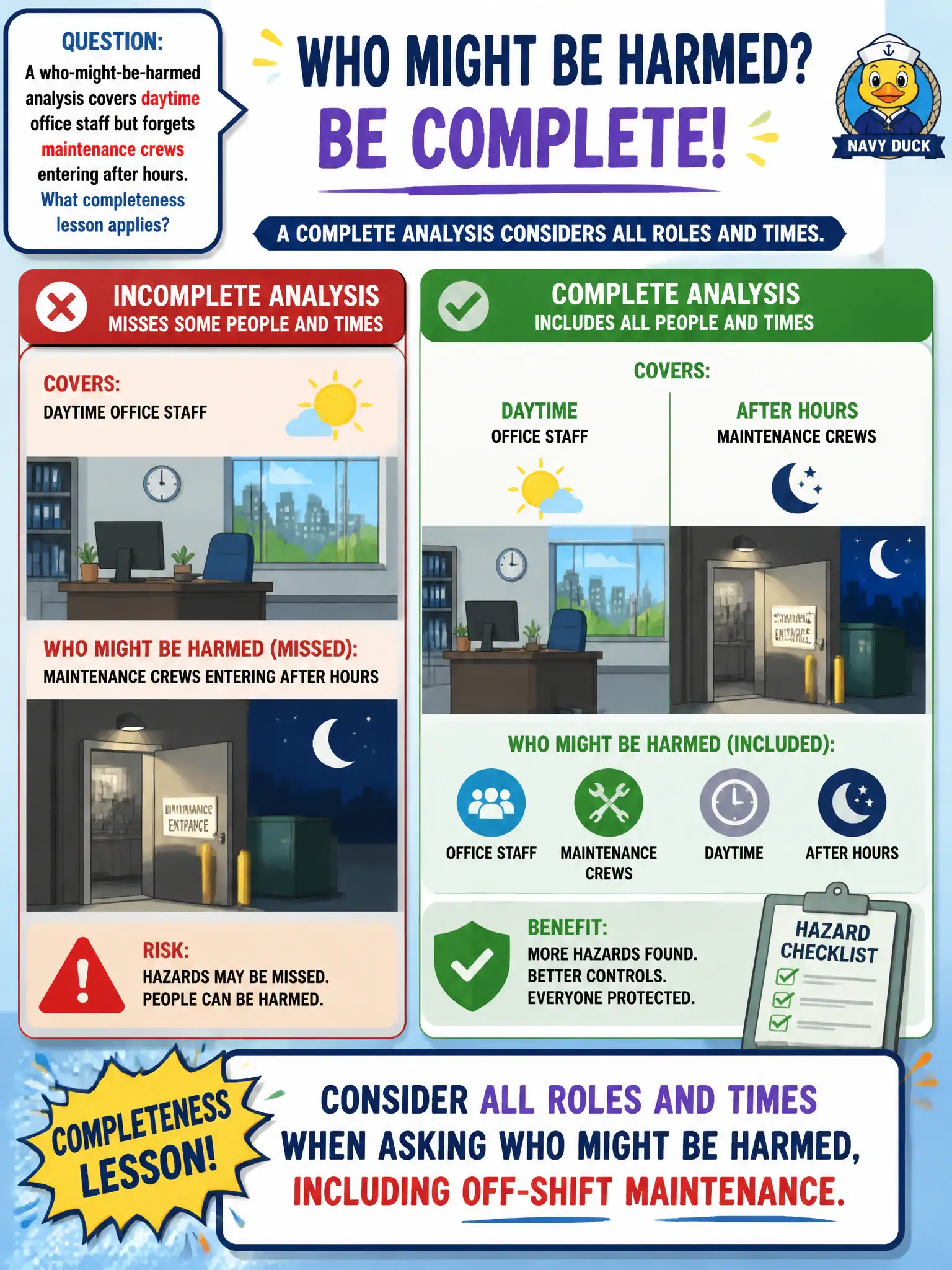
A who-might-be-harmed analysis covers daytime office staff but forgets maintenance crews entering after hours. What completeness lesson applies?
Select an answer to reveal the explanation.
Short Explanation
Harm does not punch out at five. Night maintenance walks the same hazards—often with fewer witnesses. Expand the who-list across shifts and roles, or you leave the people most alone least protected.
Full Explanation
Comprehensive who-might-be-harmed analysis includes every population that can interact with hazards across relevant times and roles. Covering daytime office staff while forgetting maintenance crews entering after hours leaves a material exposure group out of civic facility analysis. Considering all roles and times—including off-shift maintenance—completes identification.
Claiming after-hours workers are outside risk analysis because the building is “closed” confuses public hours with hazard presence. Limiting harm assessments to daytime org-chart roles excludes contractors and maintainers who often face higher residual risk. Assuming visitor sign-in sheets automatically cover maintenance exposure substitutes access logging for hazard analysis.
Exam caveat: completeness of exposed populations matters. Time-of-day and role gaps are common identification failures.
Operational check: expand who-might-be-harmed worksheets to off-shift and maintenance roles; interview those workers about tasks and access; update controls and briefings; re-approve the analysis with the broader population listed. Schedule at least one after-hours identification touchpoint with maintenance when buildings have off-shift work. Update the who-might-be-harmed roster whenever contractor maintenance models change.