
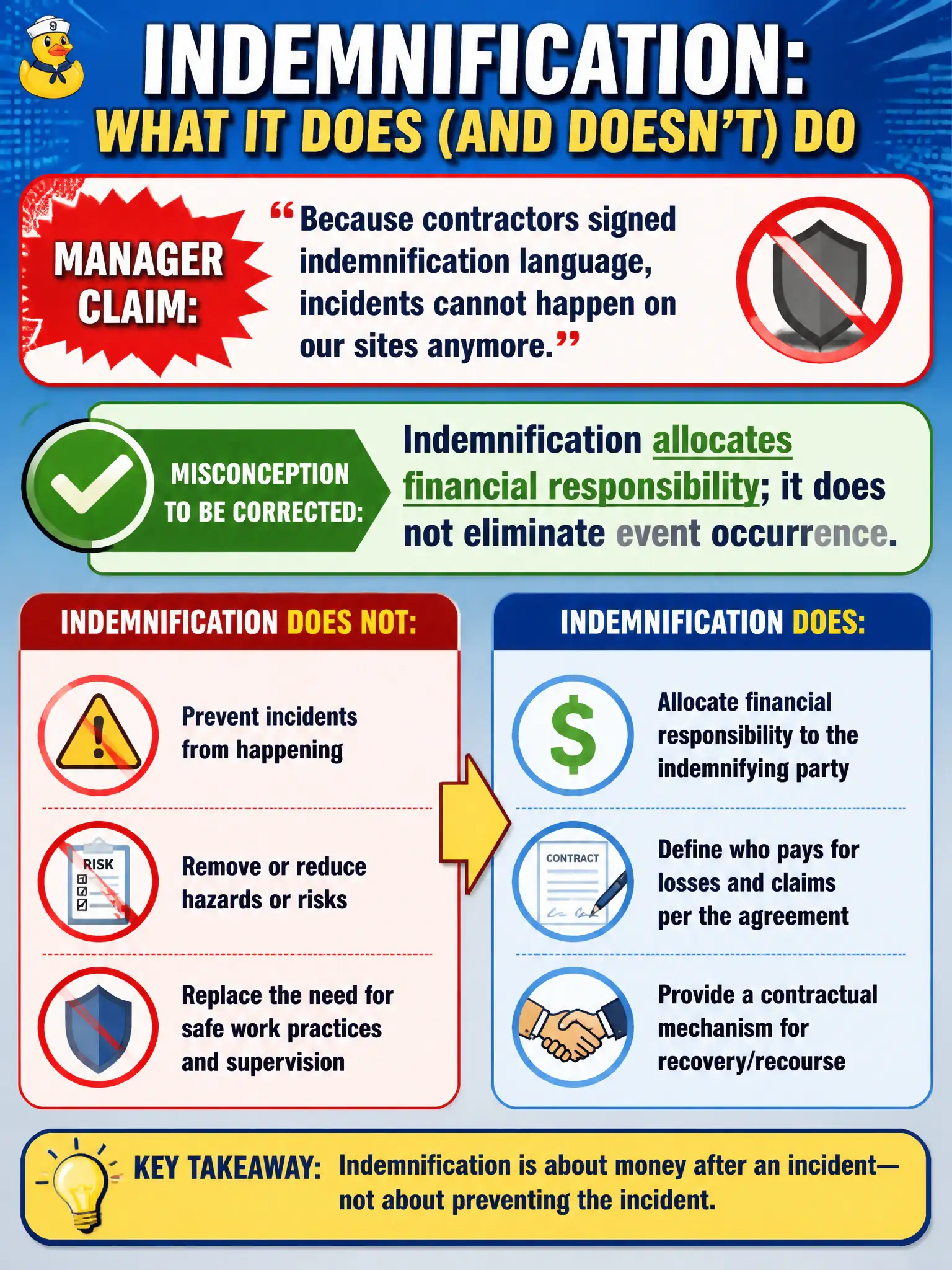
A manager claims that because contractors signed indemnification language, "incidents cannot happen on our sites anymore." What misconception should be corrected?
Select an answer to reveal the explanation.
Short Explanation
Indemnity talks about who pays after a mess — it doesn't put a magic force field over the site. Bad things can still happen; the clause just argues about the bill.
Full Explanation
Indemnification allocates financial responsibility; it does not eliminate event occurrence is the misconception to correct when a manager claims signed indemnity means incidents cannot happen on site anymore. Contract language shifts who may pay; physical hazards still need controls, training, and supervision. Civic site safety programs remain necessary alongside indemnity and insurance.
Claiming indemnification always removes the need for any site safety program fails by concept because financial allocation ≠ hazard control, and hosts often retain duties regardless. Claiming indemnification converts every physical hazard into a transferred cyber risk fails because indemnity does not transmute risk types; slips and struck-by hazards remain physical. Claiming indemnification is identical to avoidance and stops the activity from occurring fails because avoidance stops the work; indemnity assumes work may occur and allocates loss.
Exam caveat: CRMC clearly separates transfer tools (indemnity/insurance) from avoidance and reduction. Indemnity never means “incidents cannot happen.”
Operational check: Brief project managers that contractor indemnity is necessary but not sufficient; keep host safety requirements, oversight, and incident reporting active on county sites regardless of contract clauses.