
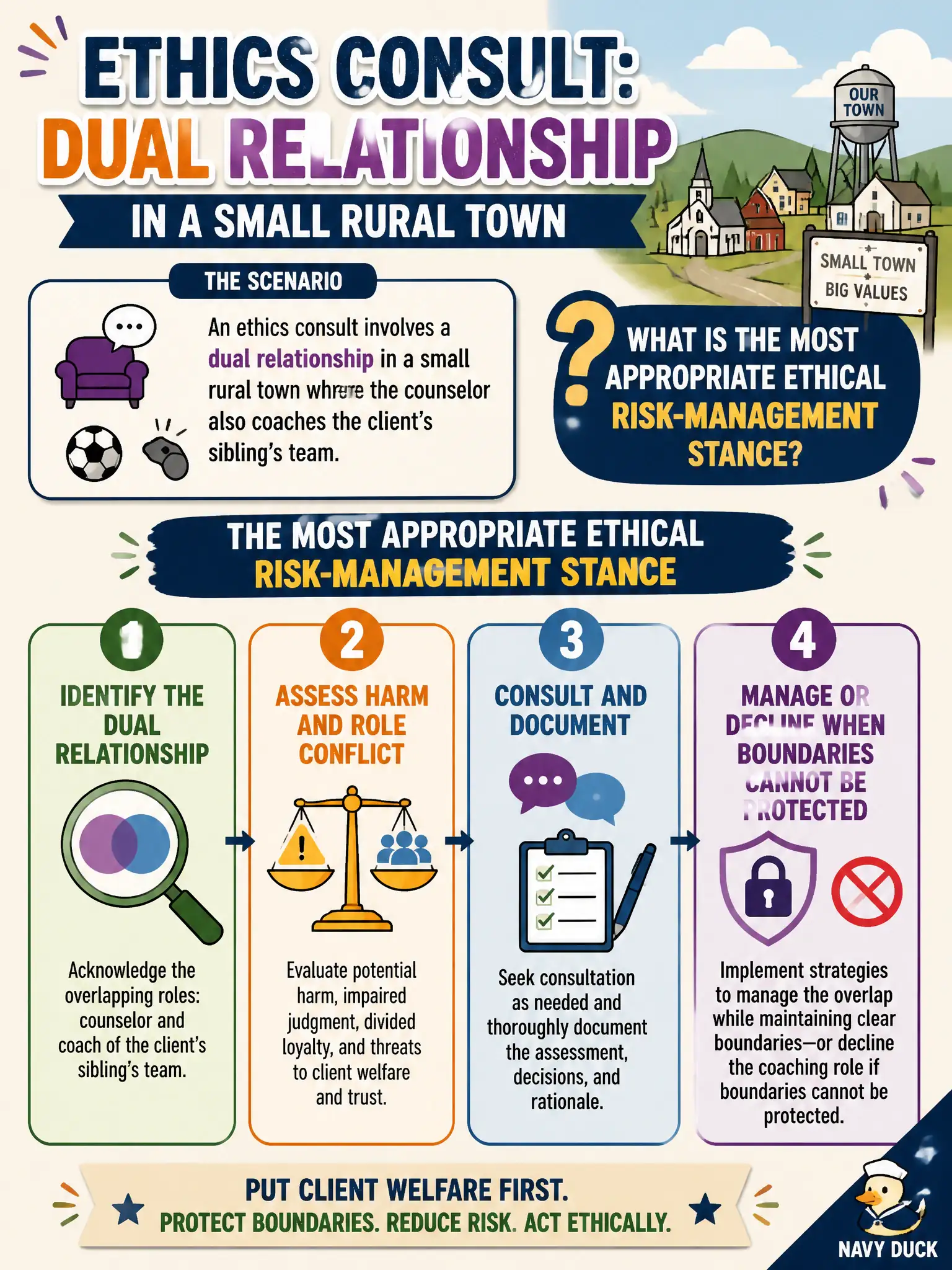
An ethics consult involves a dual relationship in a small rural town where the counselor also coaches the client's sibling's team. What is the most appropriate ethical risk-management stance?
Select an answer to reveal the explanation.
Short Explanation
Small towns shrink the map — you bump into clients at the grocery and the ball field. That doesn't mean anything goes; it means you name the overlap, check for harm, get consultation, and write it down. If you can't keep counseling clean, step back from the extra role.
Full Explanation
In a small rural town, coaching a client’s sibling’s team while counseling the client creates a dual relationship requiring ethical risk management: identify the overlap, assess harm and role conflict, consult and document, and manage or decline the overlapping role when boundaries cannot be protected. Rural civic practice often involves multiple roles; ethics requires active management, not denial.
Saying dual relationships are automatically prohibited with no documentation or consultation allowed fails by concept because rural ethics emphasize assessment, consultation, and documentation rather than impossible absolute isolation. Ignoring the overlap as ethically irrelevant fails because multiple relationships can still impair objectivity and confidentiality. Asking the client to leave services so coaching can continue without discussion fails by prioritizing the counselor’s secondary role over client care and informed processing.
Exam caveat: not every rural dual relationship must be declined, but unassessed dual roles are unsafe; harm potential and feasible safeguards drive the decision. Operational check: disclose the overlap, explore risks/benefits with the client, consult a supervisor/ethics resource, document the plan, and step back from coaching or transfer counseling if role conflict cannot be mitigated.