
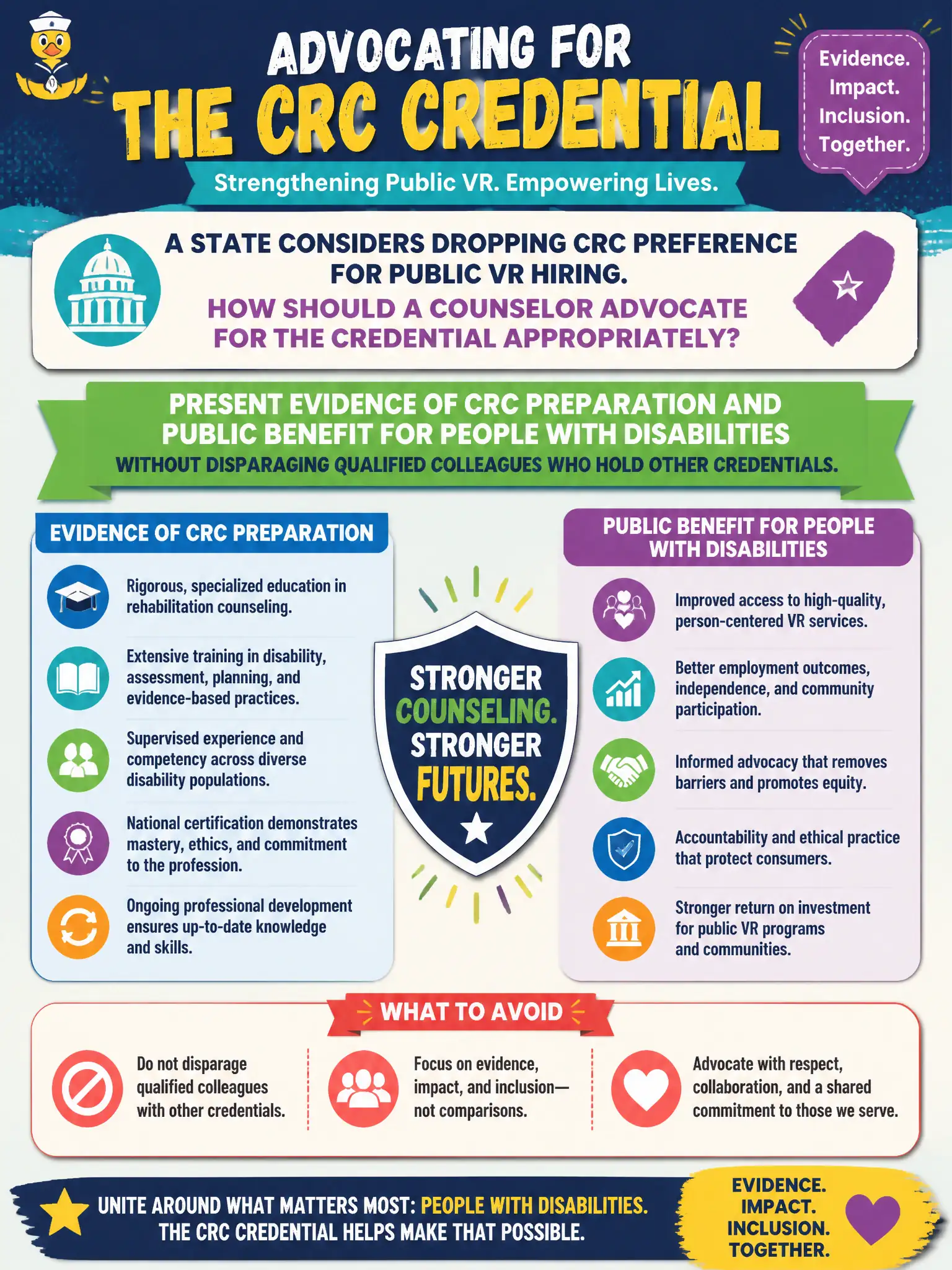
A state considers dropping CRC preference for public VR hiring. How should a counselor advocate for the credential appropriately?
Select an answer to reveal the explanation.
Short Explanation
Advocate for the CRC's value with evidence and respect. You can champion the credential without trash-talking every other qualified colleague.
Full Explanation
When a state considers dropping CRC preference for public VR hiring, appropriate advocacy presents evidence of CRC preparation and public benefit for people with disabilities without disparaging qualified colleagues who hold other credentials. Civic workforce policy debate can elevate specialized training while remaining collegial and fact-based. The aim is better services for residents with disabilities, not professional tribal victory.
Attacking non-CRC counselors personally fails by concept because ad hominem advocacy undermines professional ethics and coalitions needed for consumer-focused policy. Remaining silent because credential advocacy is “always unethical” fails because policy advocacy for consumer benefit can be ethical when truthful and non-defamatory. Claiming only CRCs may legally speak with employers under the ADA fails as a false legal assertion that weakens credible advocacy and misstates disability employment law.
Exam caveat: hiring preferences must comply with applicable civil service and nondiscrimination rules; advocacy should stick to competencies and outcomes evidence. Operational check: assemble curriculum comparisons, outcome or quality arguments, consumer-impact statements, and respectful testimony that avoids denigrating other qualified rehab professionals while clearly explaining CRC preparation value.