
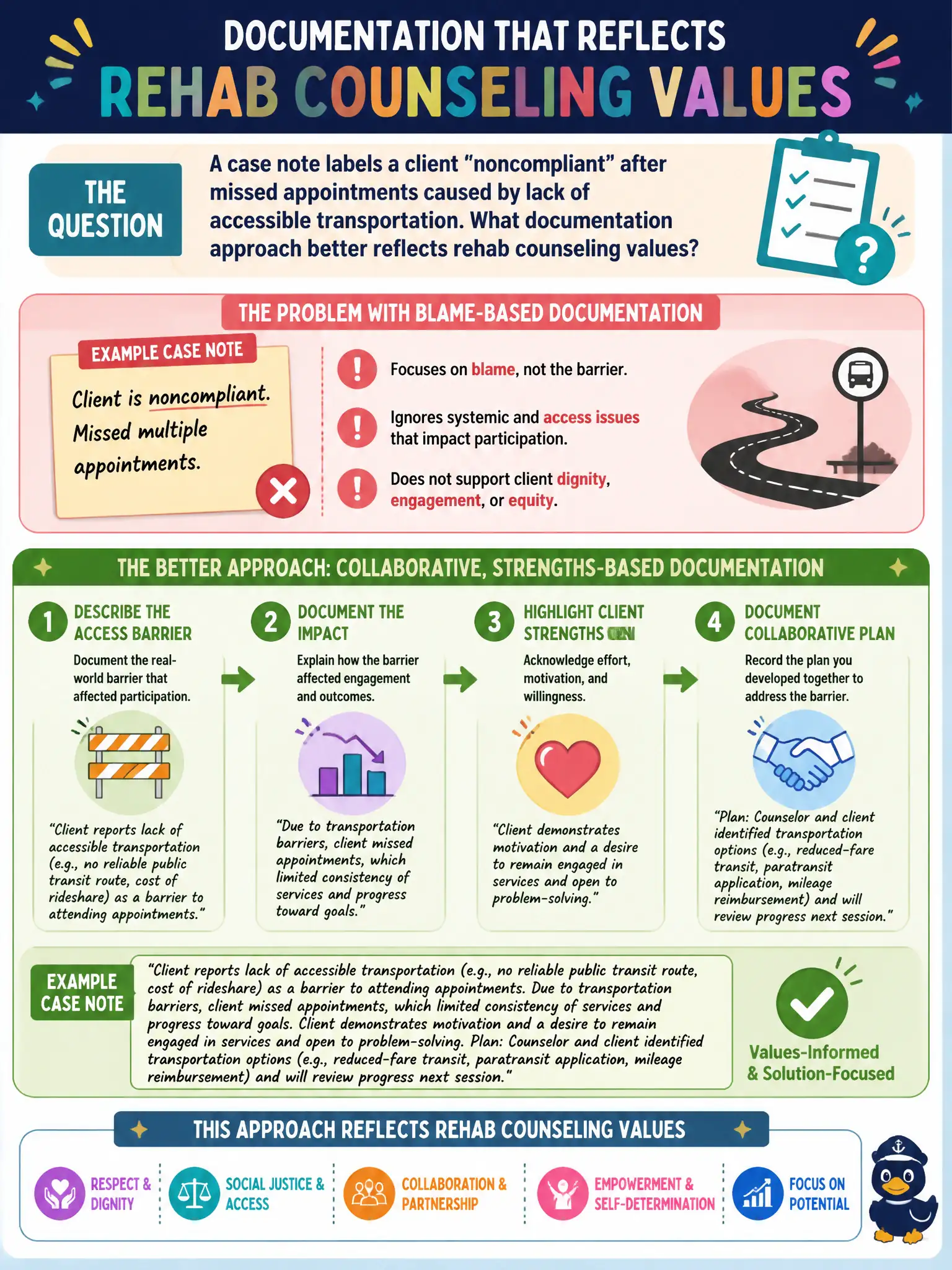
A case note labels a client "noncompliant" after missed appointments caused by lack of accessible transportation. What documentation approach better reflects rehab counseling values?
Select an answer to reveal the explanation.
Short Explanation
Calling someone "noncompliant" when the bus is inaccessible blames the passenger for a broken ramp. Name the barrier and plan around it.
Full Explanation
When missed appointments stem from inaccessible transportation, person-centered civic documentation describes the access barrier and its impact, then records collaborative plans to address transportation rather than branding the resident “noncompliant.” Rehabilitation values locate many participation failures in environments and systems, not solely in client character. Accurate notes also protect clients from stigma that can follow them across municipal vendors and future counselors who inherit the chart.
Keeping “noncompliant” as a pressure label fails by concept because it moralizes an environmental access problem and can bias future readers of the chart. Closing immediately for failure to appear without noting barriers fails as premature termination that ignores remediable access issues. Rewriting history to claim refusal for convenience only fails as falsification and stigma that misstates the known transportation cause.
Exam caveat: some no-shows reflect ambivalence or competing priorities—assessment still matters—but when the barrier is known inaccessible transport, documentation should say so. Operational check: record the transportation constraint, list attempted remedies (paratransit, travel training, remote meetings, schedule changes), update the plan with concrete access supports before punitive closure language, and review whether office location or hours themselves create civic access inequities.