
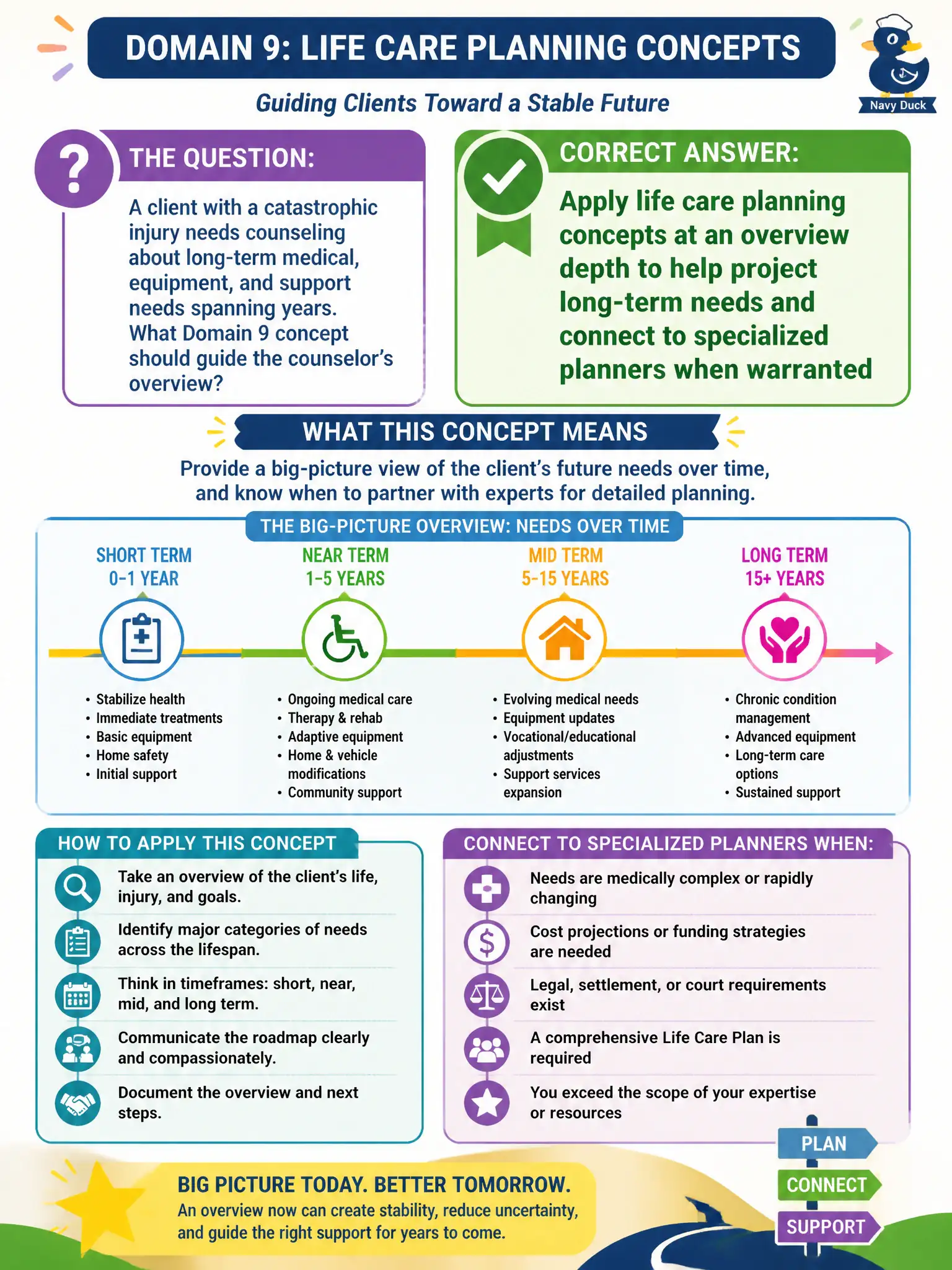
A client with a catastrophic injury needs counseling about long-term medical, equipment, and support needs spanning years. What Domain 9 concept should guide the counselor's overview?
Select an answer to reveal the explanation.
Short Explanation
Catastrophic injury is not a two-week problem set. Life care planning thinking looks down the road at medical care, equipment, and supports across years. Use that overview lens—and call in specialists when the plan gets deep.
Full Explanation
When a client with a catastrophic injury needs counseling about long-term medical, equipment, and support needs spanning years, applying life care planning concepts at an overview depth helps project long-term needs and connect to specialized planners when warranted. Domain 9 expects conceptual literacy, not necessarily producing a forensic-level plan in every case. Assuming short-term job club attendance covers all lifelong support planning fails because catastrophic injury creates multi-year medical and equipment trajectories beyond job club scope. Limiting discussion to the next two paycheck cycles only fails when durable medical equipment, attendant care, and housing modifications dominate the future. Treating catastrophic injury aftercare as unrelated to rehabilitation counseling fails because long-term supports determine whether vocational goals remain feasible. Exam caveat: overview life-care concepts guide counseling and referral; formal life care plans for litigation or complex funding often require specialized credentialed planners. Operational check: sketch major long-term need categories (medical follow-up, AT/DME, personal assistance, housing, transportation, vocational), identify which need specialist planning, and make at least one appropriate referral while continuing vocational counseling.