
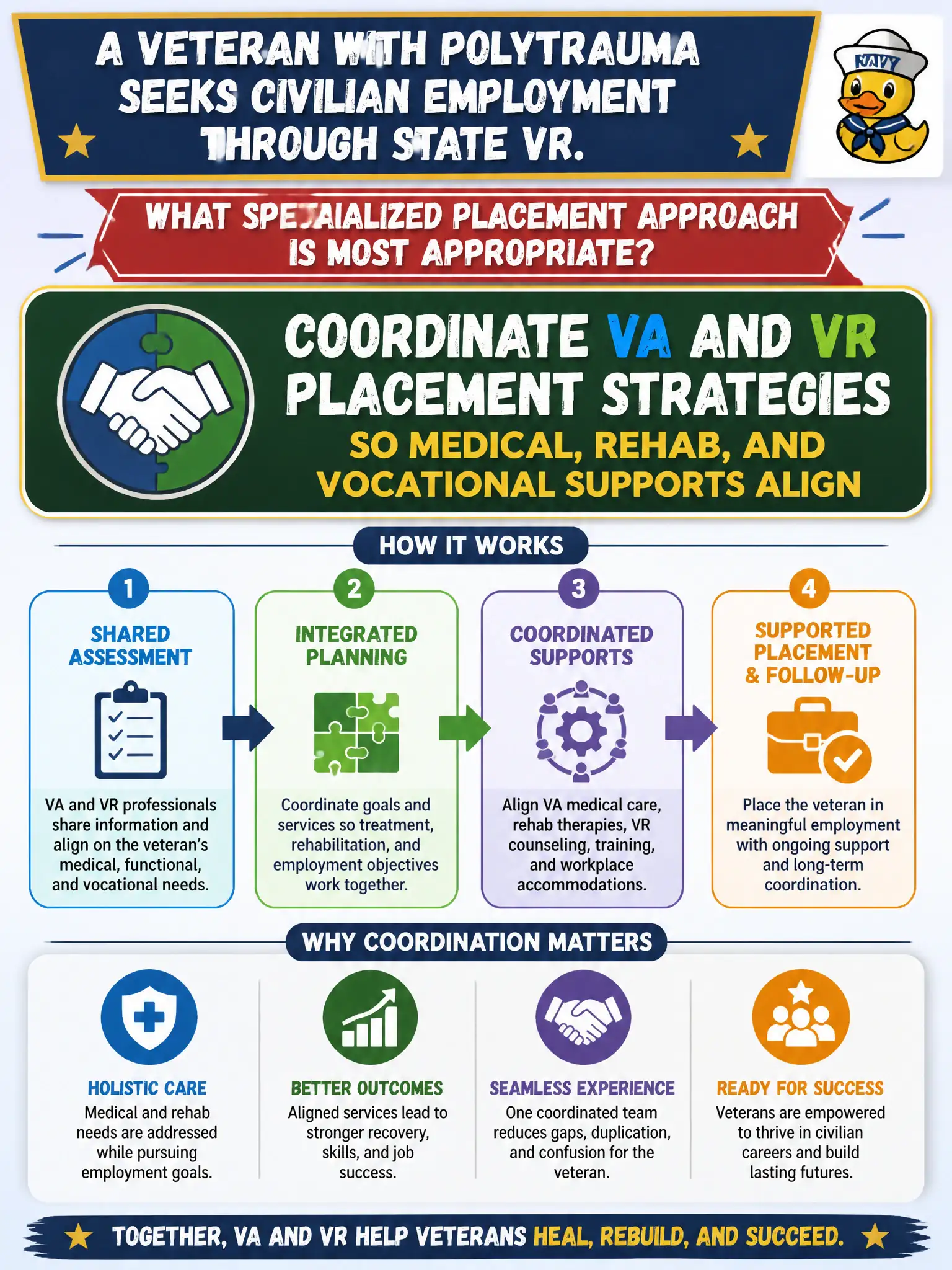
A veteran with polytrauma seeks civilian employment through state VR. What specialized placement approach is most appropriate?
Select an answer to reveal the explanation.
Short Explanation
Polytrauma is a team sport—VA clinics and VR counselors both bring pieces of the puzzle. Coordinated placement beats two agencies tugging the veteran in different directions. Align the medical and vocational tracks so the job plan actually holds.
Full Explanation
Veterans with polytrauma seeking civilian employment through state VR benefit most when VA and VR placement strategies are coordinated so medical, rehabilitation, and vocational supports align. Collaboration reduces duplication, clarifies clinical constraints and benefits interactions, and presents civic employers with a coherent support picture rather than conflicting advice from siloed systems. Ignoring VA services and duplicating every medical function inside VR alone fails because VR cannot replace VA specialty medical care, prosthetics, or benefits navigation expertise. Placing veterans only into unpaid volunteer roles permanently because of veteran status fails by stereotyping and denying competitive integrated employment goals available to other citizens with disabilities. Refusing collaboration with any federal system to “keep planning simple” fails because complexity avoided in the office reappears as gaps, missed appointments, and unsafe job matches in the community. Exam caveat: dual-system work requires informed consent for information sharing and clear role boundaries; coordination is partnership, not merging agencies or surrendering client choice. Operational check: with client consent, identify VA vocational or rehab contacts, align restrictions and appointment schedules with job-search timing, and document which partner owns medical versus vocational action items before employer outreach.