
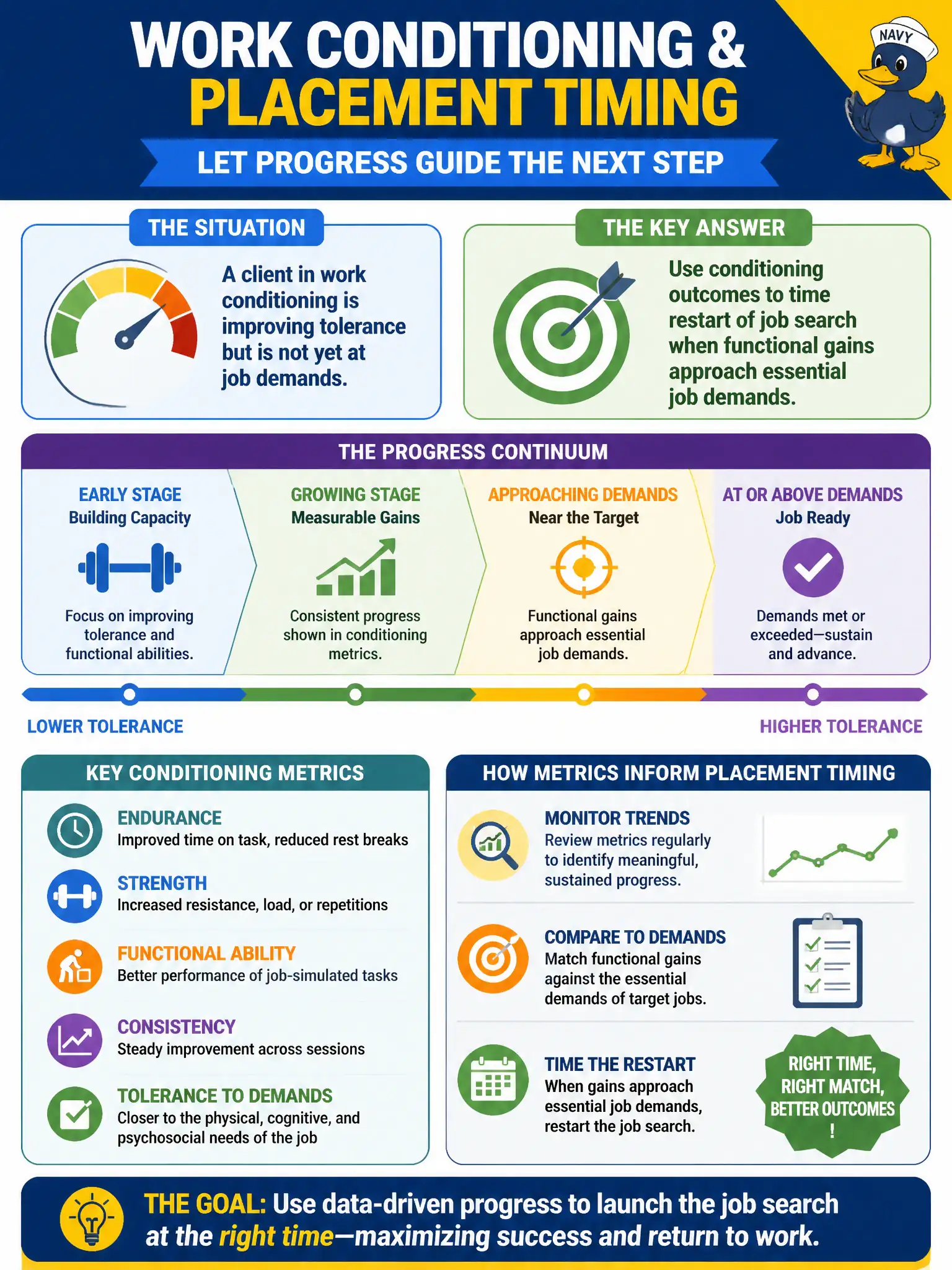
A client in work conditioning is improving tolerance but is not yet at job demands. How should progress metrics inform placement timing?
Select an answer to reveal the explanation.
Short Explanation
Work conditioning is the gym for the job—you watch the numbers before you re-enter the arena. When tolerance nears what the job actually needs, that’s the green light to ramp the search. Guessing from the calendar alone is how reinjury and failed tryouts happen.
Full Explanation
Progress metrics from work conditioning should time the restart of intensive job search when functional gains approach essential job demands. Linking measured tolerance to placement timing protects the client from premature full-duty failure while avoiding endless conditioning with no vocational movement in public VR caseloads. Starting full job search on day one of conditioning regardless of measured tolerance fails when current capacity still falls far short of essential demands and early failures demoralize clients and employers. Never linking functional progress to placement timing and using only calendar months fails because elapsed time alone does not equal restored capacity for paced industrial or warehouse work. Ending all job search forever if any conditioning session feels difficult fails because therapeutic challenge is expected in hardening programs and is not a reason to abandon employment goals. Exam caveat: some concurrent exploratory activities—informational interviews, employer education, résumé updates—can proceed during conditioning; the caution is about timing offers that require unmet physical demands. Operational check: set threshold criteria (lift, carry, pace, shift length) tied to the target job; when session data approach those thresholds, resume intensive search and negotiate accommodations for any remaining gaps.