
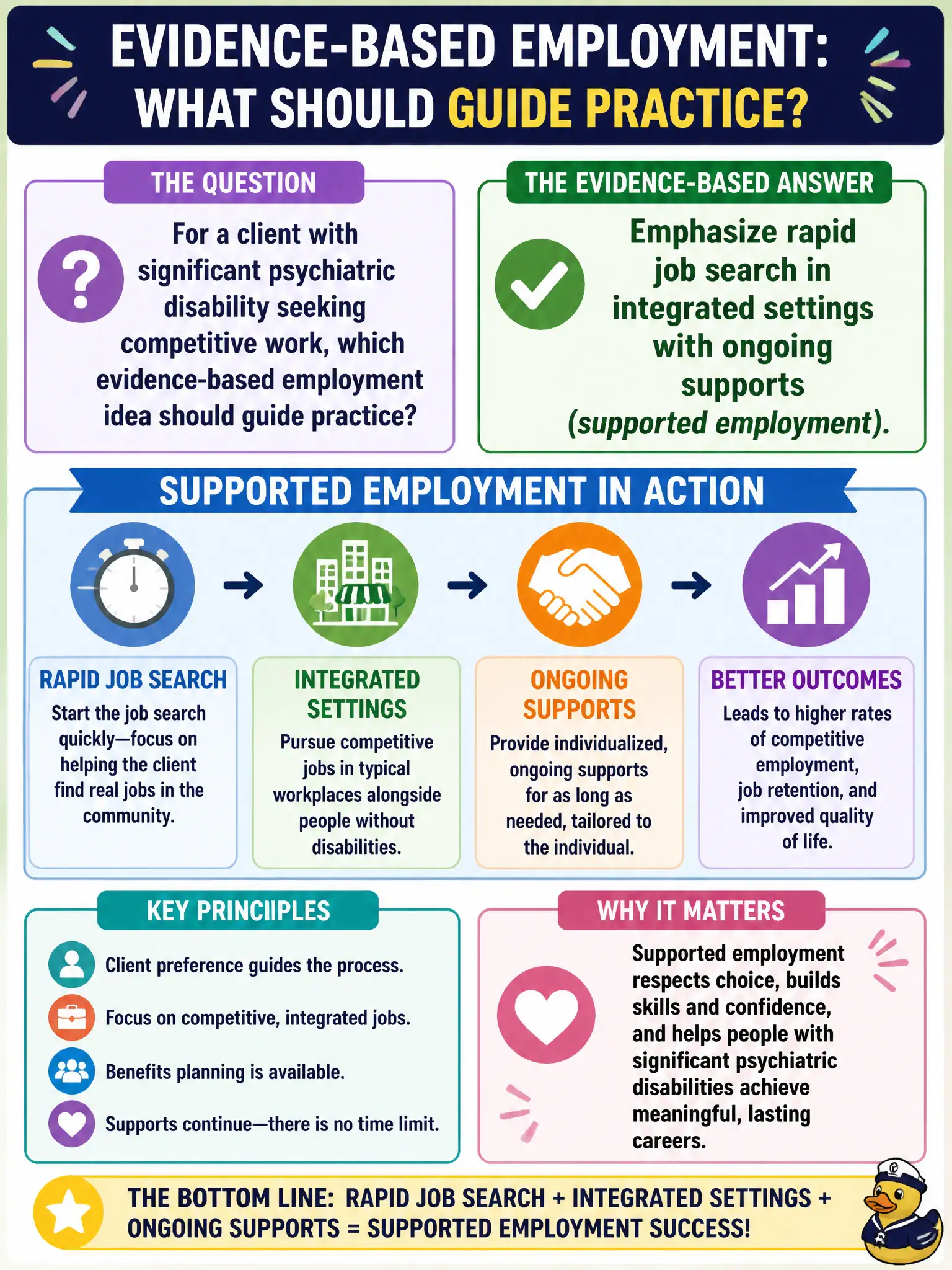
For a client with significant psychiatric disability seeking competitive work, which evidence-based employment idea should guide practice?
Select an answer to reveal the explanation.
Short Explanation
Old-school "train forever, work never" lost the evidence race. Supported employment says get into real integrated jobs sooner and wrap supports around the person. Waiting for perfect symptom silence isn't the model.
Full Explanation
For clients with significant psychiatric disability seeking competitive work, evidence-based practice favors rapid job search in integrated settings with ongoing supports—supported employment—rather than endless prevocational delay. The model prioritizes real community jobs plus wraparound assistance instead of waiting for perfect symptom silence. Requiring years of unpaid prevocational workshops before any community job search fails because extended “train then place” sequences are associated with poorer competitive outcomes than place-then-support approaches for many psychiatric disability populations. Limiting placement only to segregated workshops as the default end goal fails because segregated settings are not the preferred competitive integrated outcome under contemporary rehabilitation philosophy and policy direction. Postponing job search until all symptoms are permanently absent fails because symptom elimination is often unrealistic and employment itself can be part of recovery when supports are present. Exam caveat: rapid search still requires individualized readiness for safety and informed choice; crisis stabilization may temporarily pause outreach, but permanent symptom-free waiting is not the standard. Operational check: if the plan shows multi-month workshop prerequisites with no integrated job contacts, revise toward competitive openings plus defined ongoing supports (coaching, clinical coordination) and a near-term search start date.