
Which communication approach most improves employer engagement when discussing disability hiring?
Select an answer to reveal the explanation.
Short Explanation
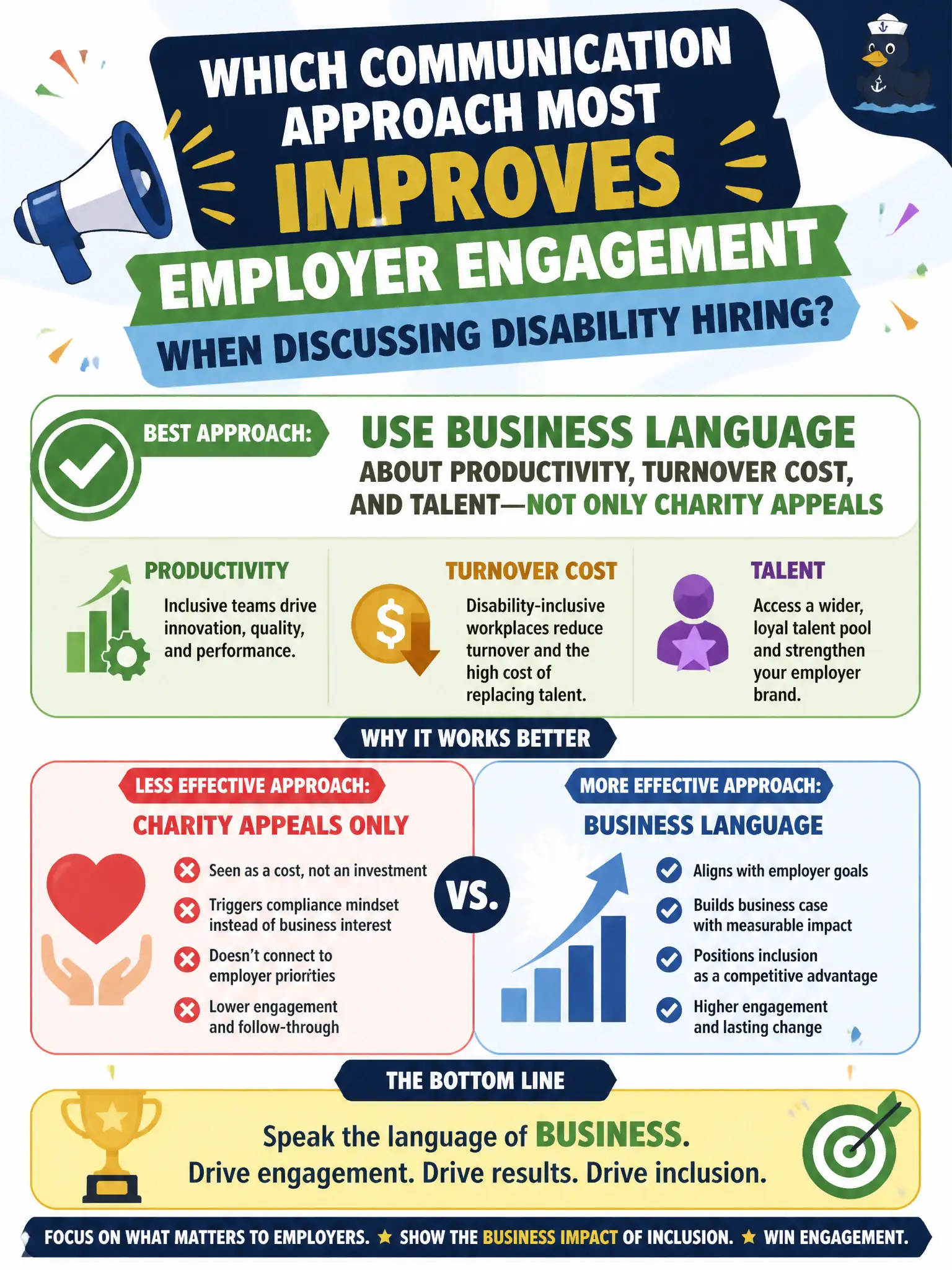
Plant managers buy talent and lower turnover—not sob stories. Translate disability employment into productivity and cost language they already use. Charity pitches get polite nods; business cases get interviews.
Full Explanation
Employer engagement improves when counselors use business language about productivity, turnover cost, and talent—not only charity appeals. Productivity framing helps plant managers and municipal department heads see disability hiring as workforce strategy rather than occasional goodwill. Relying solely on pity-based charity framing with no workforce value fails because charity fatigue ends partnerships when budgets tighten or leadership changes. Avoiding any discussion of business outcomes or staffing metrics fails because employers evaluate partners by whether vacancies fill and overtime falls. Speaking only in clinical abbreviations the plant manager cannot use fails because inaccessible jargon blocks engagement and makes the counselor sound irrelevant to operations. Exam caveat: ethical practice still centers client dignity; business language translates mutual value without reducing people to cost chips or promising outcomes the counselor cannot control. Operational check: in outreach materials and meetings, include at least one staffing metric (time-to-fill, overtime reduction, retention) alongside inclusion values, and replace unexplained clinical acronyms with task-and-training language.