
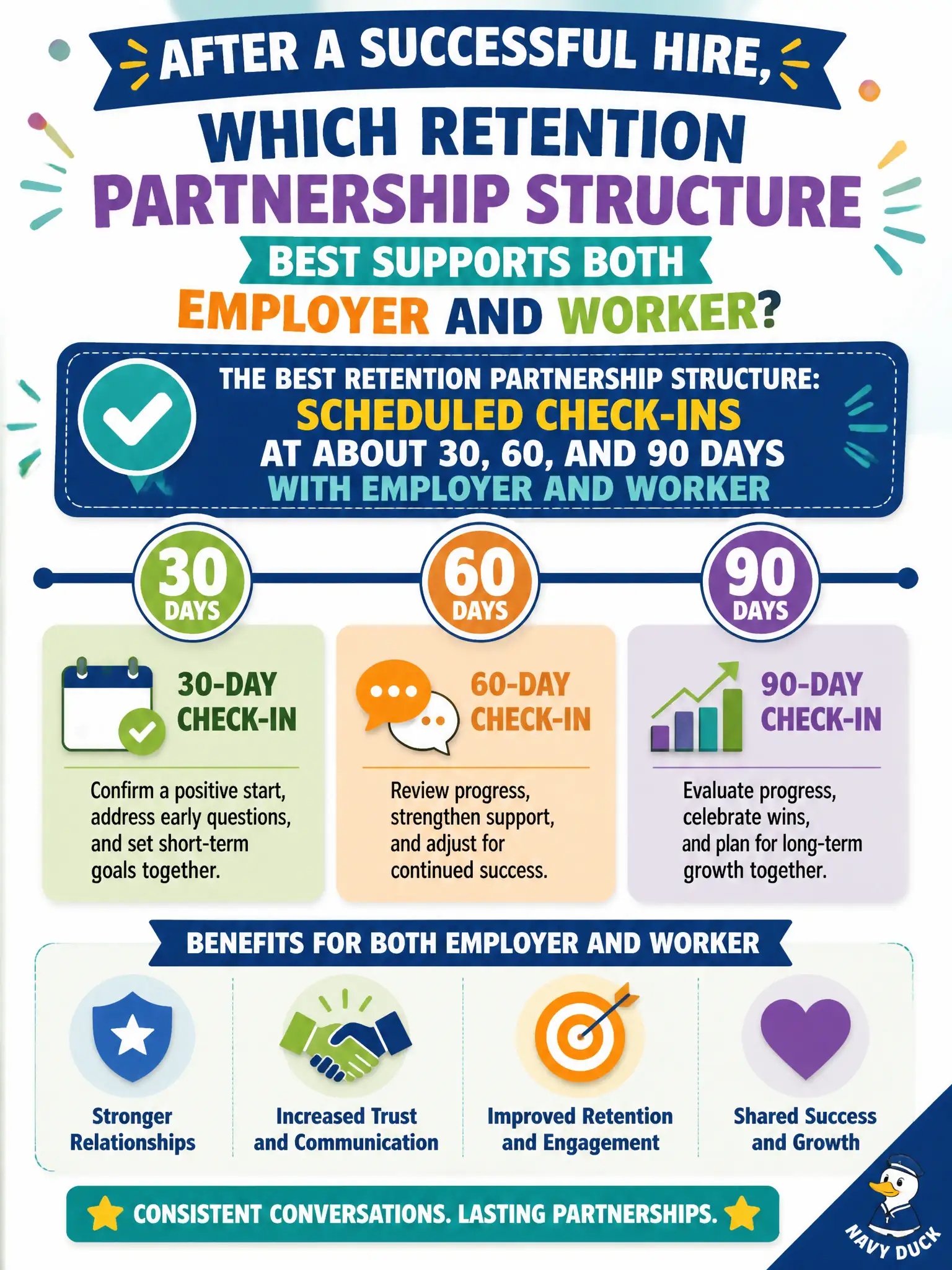
After a successful hire, which retention partnership structure best supports both employer and worker?
Select an answer to reveal the explanation.
Short Explanation
The first ninety days are when small snags become quit-or-fire moments. Planned 30/60/90 check-ins catch issues while they’re still fixable. Dual support means the boss and the worker both get a voice.
Full Explanation
After a successful hire, scheduled check-ins at about 30, 60, and 90 days with employer and worker provide a retention partnership structure that catches early problems while supports are still easy to adjust. This cadence is a practical business-engagement habit for state VR and CRP partners. Ending contact after day one because placement “ends at the handshake” fails because early weeks are high-risk for accommodation snags, unclear expectations, and transportation surprises. Only annual contact regardless of early warning signs fails because yearly cadence misses the window when small fixes prevent termination. Secret monitoring of the worker with no employer involvement fails because retention partnerships are collaborative problem-solving, not covert surveillance that excludes the workplace customer. Exam caveat: cadence can flex for high-support jobs (more frequent early contacts) or very stable placements (slightly lighter), but some early structured contact remains best practice. Operational check: calendar 30/60/90 contacts at placement, use a short agenda covering tasks going well, barriers, accommodation tweaks, and attendance or transport, then document outcomes in the case record.