
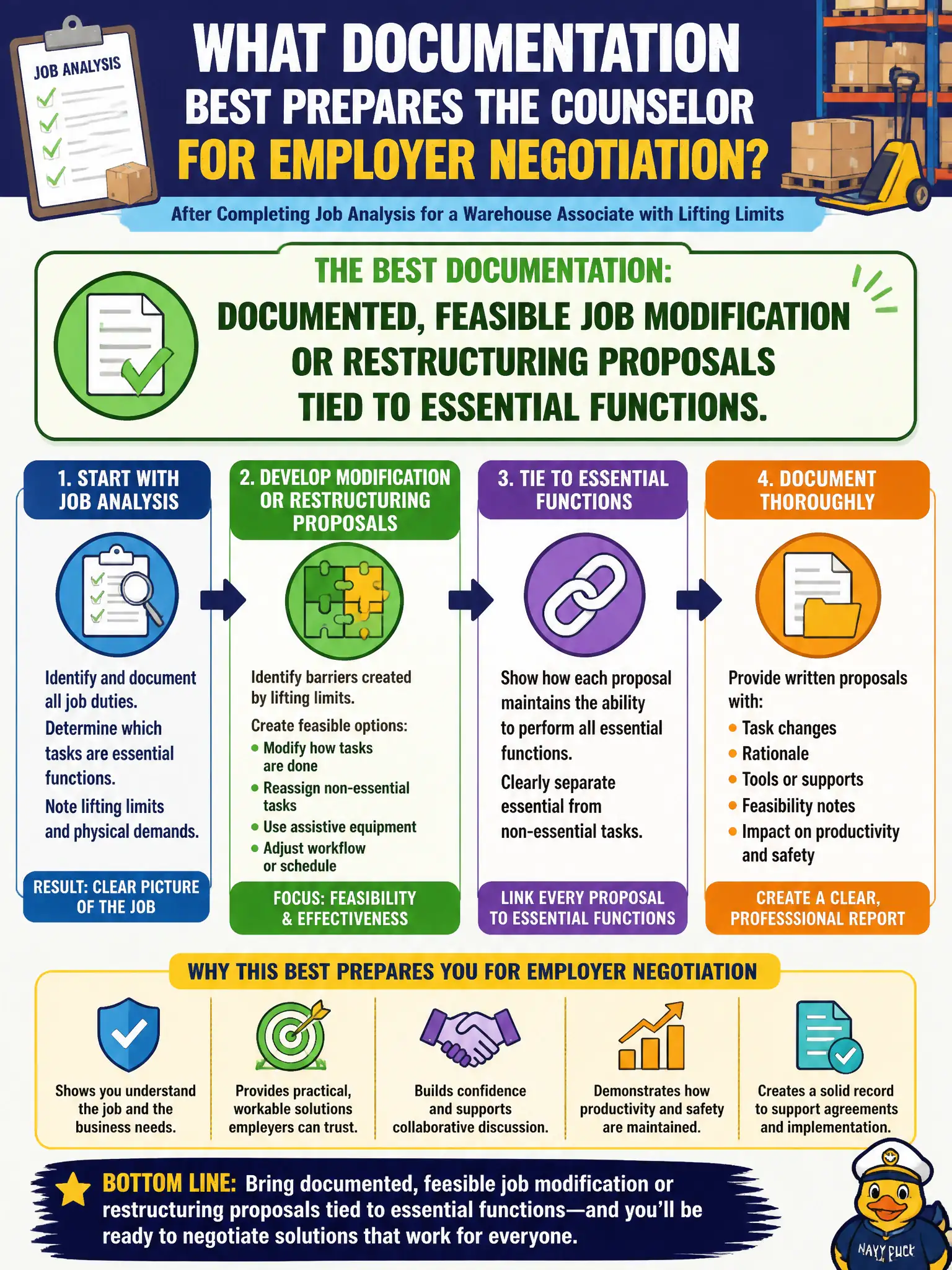
After completing job analysis for a warehouse associate with lifting limits, what documentation best prepares the counselor for employer negotiation?
Select an answer to reveal the explanation.
Short Explanation
Employers negotiate better with a clear sketch than a shrug. Analysis should turn into written, doable modification ideas that still get the essential work done. "Just take it easy" isn't a plan — specifics are.
Full Explanation
Employer negotiation after warehouse job analysis succeeds when the counselor arrives with documented, feasible modification or restructuring proposals tied to essential functions and the client’s lifting limits. Written options translate assessment into actionable business language for municipal and private employers alike. An unsigned verbal idea to “take it easy” fails because vague suggestions do not define task changes, safety boundaries, or how essential work still gets done. Demanding elimination of all production metrics without analysis support fails because it asks the employer to abandon accountability without showing how essential outcomes can still be met. Providing only a medical diagnosis code with no link to task changes or residual capacities fails because employers need functional implications and concrete job redesign ideas, not diagnostic labels. Exam caveat: proposals should remain flexible through the interactive process; documentation prepares negotiation, it does not force acceptance of every preferred modification. Operational check: before the employer meeting, prepare a one-page set of specific modifications (e.g., lift assists, task swaps, pace adjustments) mapped to each essential function and residual capacity, and note which ideas are preferred versus fallback.