
A client with significant hearing loss is exploring plant jobs with heavy reliance on auditory alarms. Which vocational implication is most accurate?
Select an answer to reveal the explanation.
Short Explanation
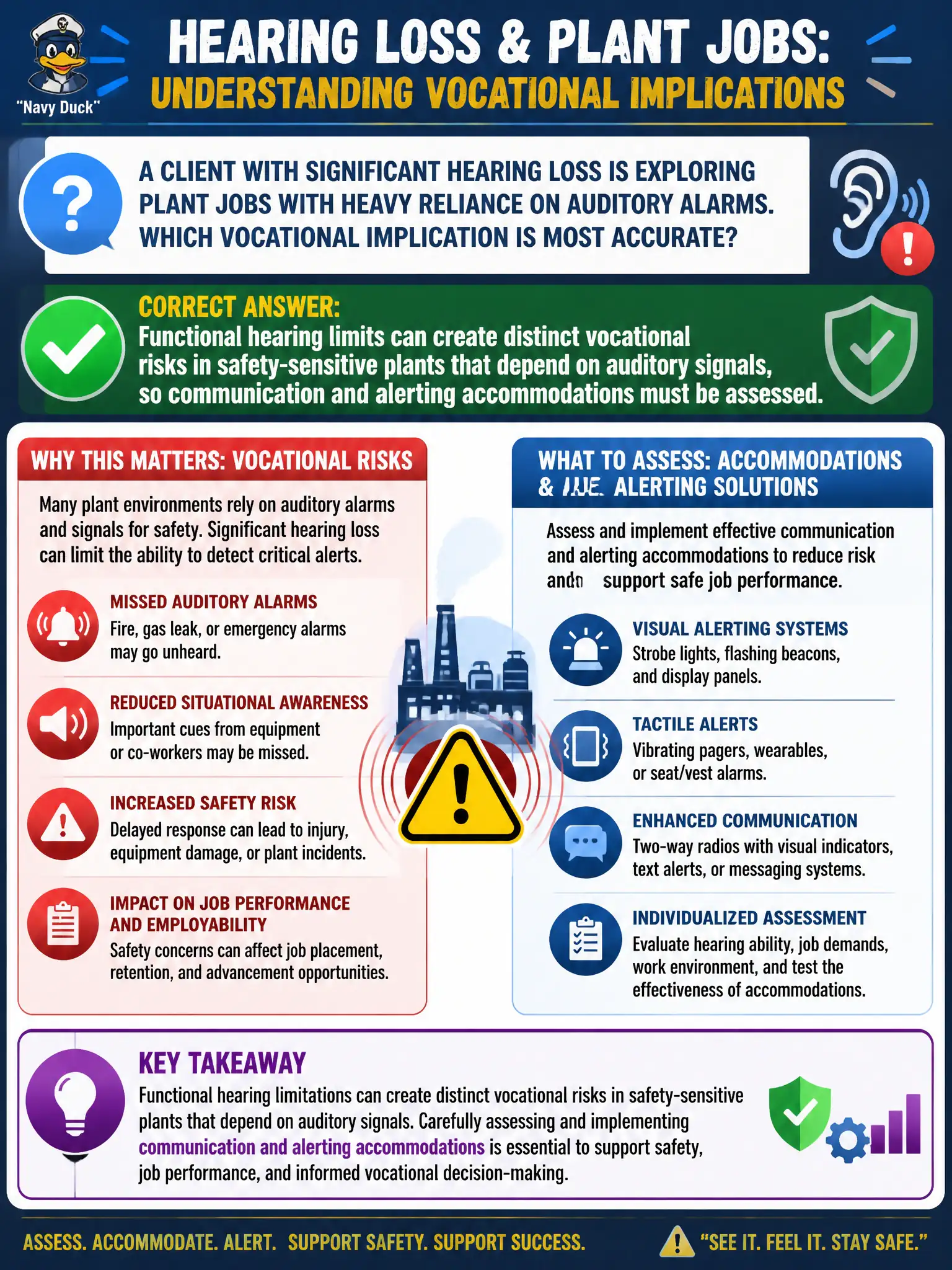
If the plant screams danger only through speakers, ears become part of the safety system. Hearing loss does not ban every factory job, but it does change the risk math where alarms are auditory. Assess alerts, visuals, and communication before you call it a fit.
Full Explanation
Significant hearing loss in plant jobs that rely heavily on auditory alarms creates distinct vocational risks in safety-sensitive settings; communication and alerting accommodations must be assessed before assuming fit. Hearing limits are not irrelevant, nor does every factory role fail equally if visual/tactile alerting can substitute. Industrial civic placements need explicit alarm-access analysis.
Claiming hearing loss never affects safety-sensitive industrial roles denies sensory-safety interaction. Declaring all factory work equally unsuitable regardless of alarm systems or visual alternatives overgeneralizes. Saying only speech therapy scores matter while workplace alarm design is irrelevant ignores environmental safety design.
Plant safety committees are civic partners for designing visual strobes or vibrating pagers that keep Deaf/hard-of-hearing workers safe.
Exam caveat: functional hearing + auditory-alarm-dependent plants → assess alerting accommodations and residual risk.
Operational check: inventory auditory safety signals; evaluate visual/tactile alerting options with the employer; trial accommodations; decide placement only after safety access is verified. Re-verify length and fidelity of the written plan at the next supervisory case review so civic accountability stays visible.