
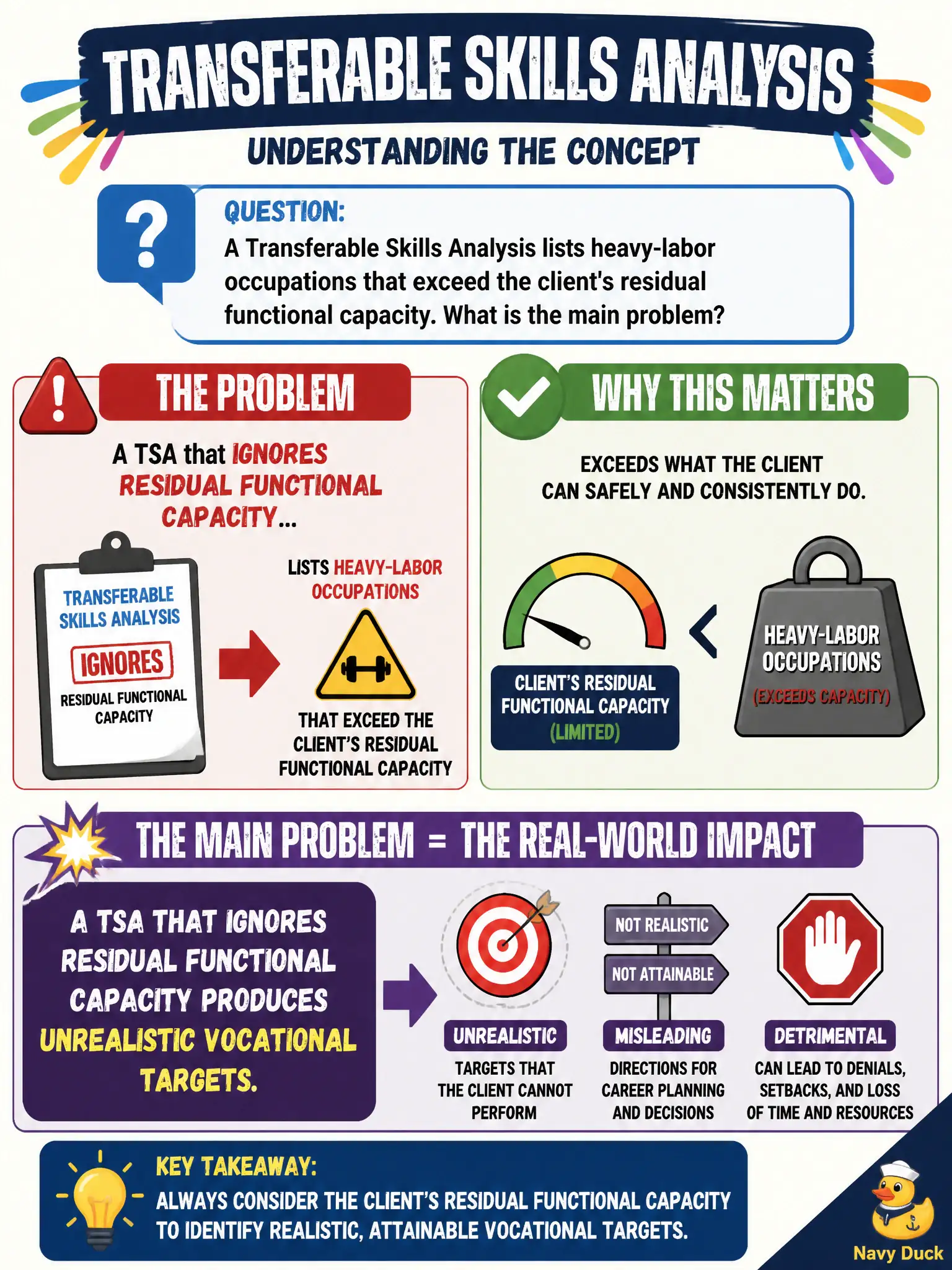
A Transferable Skills Analysis lists heavy-labor occupations that exceed the client's residual functional capacity. What is the main problem?
Select an answer to reveal the explanation.
Short Explanation
Suggesting marathon jobs to someone with a broken ankle is not optimism — it is a bad map. Transferable skills still have to fit what the body can safely do. Pair TSA with residual functional capacity or the targets look good on paper and fail in real life.
Full Explanation
A Transferable Skills Analysis that lists heavy-labor occupations exceeding residual functional capacity is flawed because TSA must incorporate RFC; ignoring capacity produces unrealistic vocational targets. Skill similarity without medical/functional filters is incomplete analysis. Quality civic VR practice rejects wish-list titles that violate lifting or stamina limits.
Claiming TSA should never consider prior work history when generating targets guts the method’s premise. Declaring RFC irrelevant once any skill transfer is identified invites unsafe goals. Treating unrealistic targets as desirable motivation to ignore medical limits is unethical and harmful.
Supervisors reviewing TSA printouts should reject any list that exceeds documented RFC before those titles enter the IPE draft.
Exam caveat: TSA without residual functional capacity constraints is invalid for target selection.
Operational check: re-run or edit the TSA with RFC filters applied; remove occupations exceeding limits; regenerate a feasible shortlist before counseling next steps. Re-verify length and fidelity of the written plan at the next supervisory case review so civic accountability stays visible. Confirm the rationale in the case record so auditors and supervisors can see the clinical logic.