
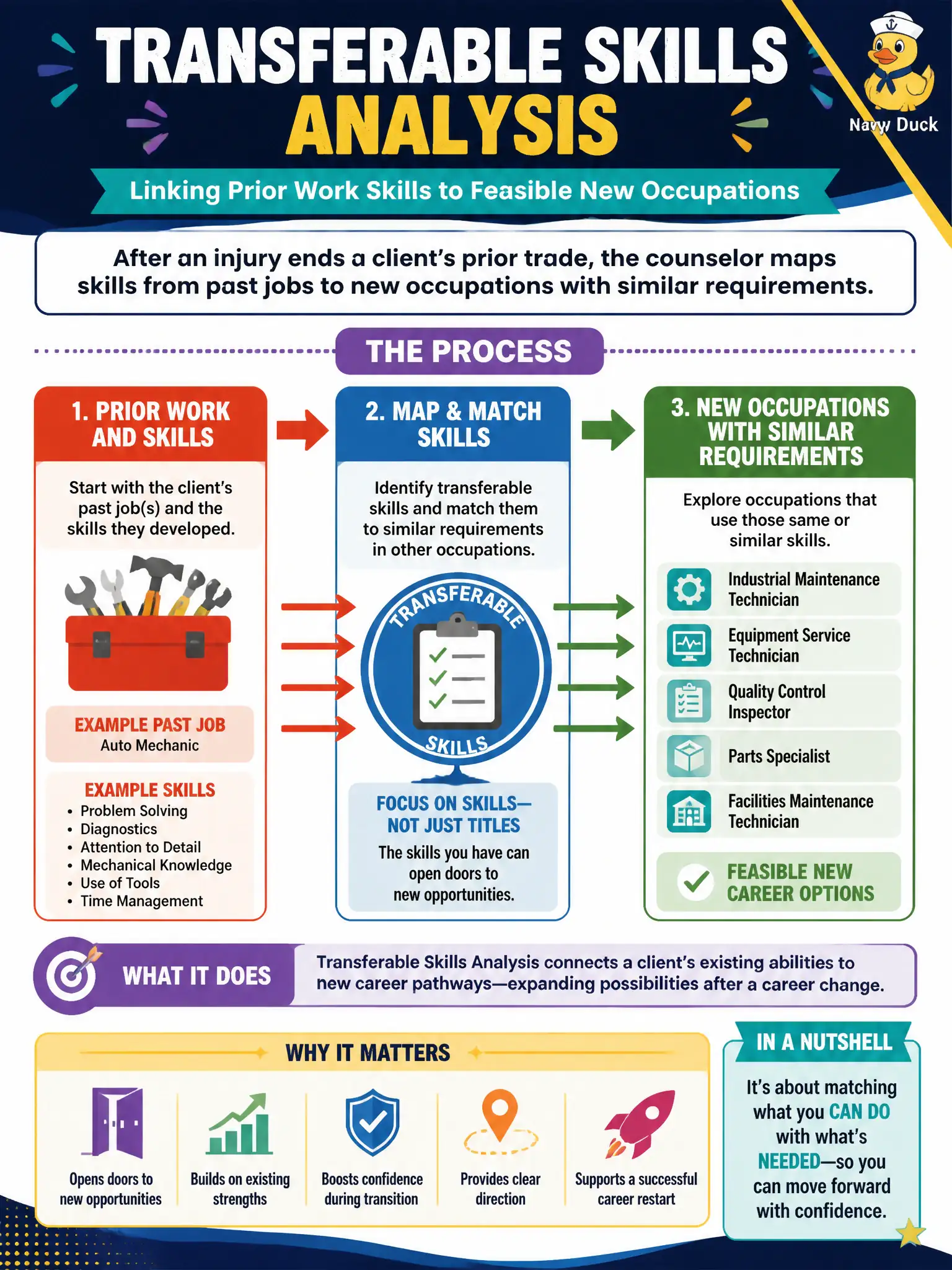
After an injury ends a client's prior trade, the counselor maps skills from past jobs to new occupations with similar requirements. Which process is being used?
Select an answer to reveal the explanation.
Short Explanation
It is like packing tools from an old toolbox into a new job's toolkit — same wrenches, different shop. Transferable Skills Analysis (think VDARE-style work) maps what the person already knows how to do onto occupations that still fit after injury. History becomes a bridge, not a closed door.
Full Explanation
Mapping skills from past jobs to new occupations with similar requirements after an injury ends a prior trade is Transferable Skills Analysis (TSA). TSA links residual work history skills to feasible new occupations under current limitations. It is a core vocational assessment/planning process in public VR after career interruption.
Crisis debriefing focused only on emotional catharsis is a different intervention. Pharmacological review of medication side effects is medical coordination, not skill transfer mapping. Independent living skills training unrelated to work history addresses daily living, not occupational skill transfer.
TSA quality depends on accurate past job analysis and current limitations; rushed title matching without that groundwork misleads clients.
Exam caveat: recognize TSA as linking prior work skills to new feasible occupations after loss of a trade.
Operational check: inventory past job tasks/skills; crosswalk to occupations with similar requirements within residual capacity; review results with the client for IPE options. Re-verify length and fidelity of the written plan at the next supervisory case review so civic accountability stays visible. Confirm the rationale in the case record so auditors and supervisors can see the clinical logic.