
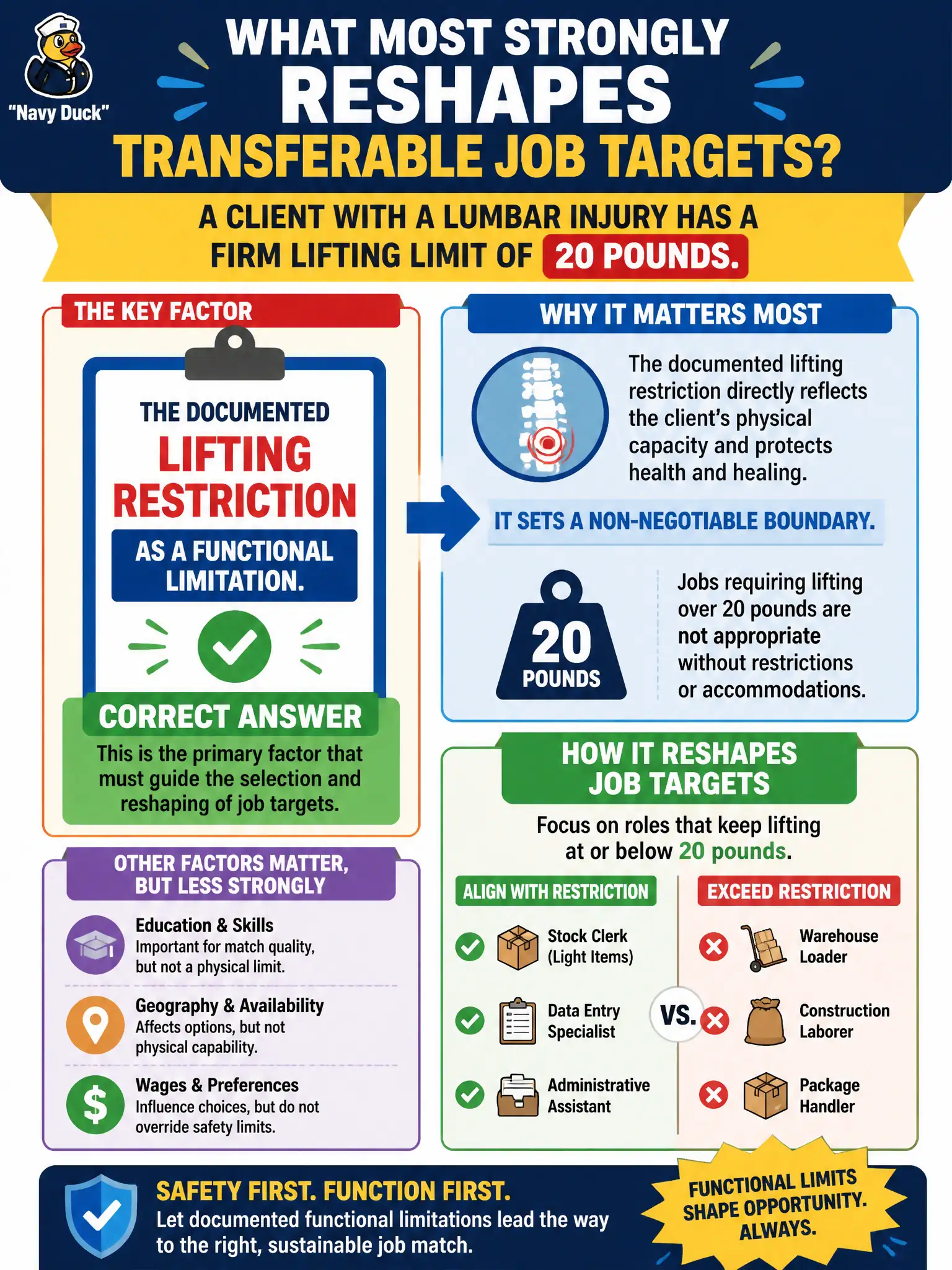
A client with a lumbar injury has a firm lifting limit of 20 pounds. Which factor should most strongly reshape transferable job targets?
Select an answer to reveal the explanation.
Short Explanation
Picture sorting luggage by how heavy each bag is, not by the airline sticker on the handle. The diagnosis names the condition, but the lifting limit tells you which jobs still fit. Vocational targets follow residual function — what the person can safely do — more than the label alone.
Full Explanation
A firm 20-pound lifting limit is a functional limitation that should most strongly reshape transferable job targets—more than the ICD label, injury setting, or preferred title alone. Vocational targets must respect documented residual capacity. Public VR transferable-skills work that ignores lifting limits produces unsafe or unrealistic placements.
Using the ICD diagnostic label by itself does not specify capacity for job matching. Whether the injury occurred at work or at home does not change the lifting physics of target jobs. Preferred job title before functional review expresses interest, not feasibility under the restriction.
Transferable skills lists that ignore lifting physics waste client hope and public training dollars on titles that will fail medical clearance.
Exam caveat: functional limitations (e.g., lifting limits) drive target selection more than diagnosis names or preference alone.
Operational check: filter occupational targets by the 20-pound limit; rebuild the transferable list accordingly; confirm essential functions of shortlisted jobs against the restriction. Re-verify length and fidelity of the written plan at the next supervisory case review so civic accountability stays visible.