
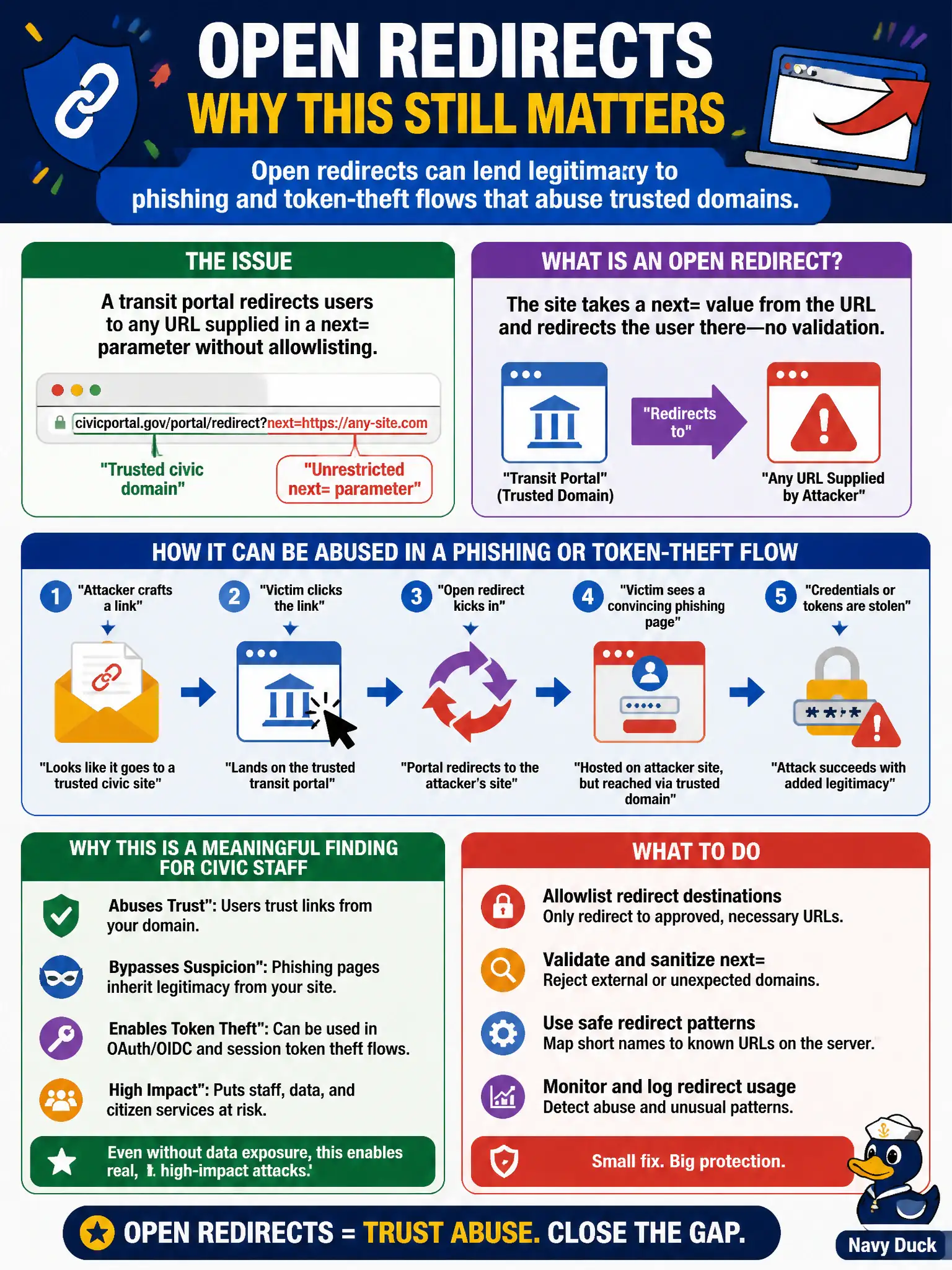
A transit portal redirects users to any URL supplied in a next= parameter without allowlisting. Why is this still a meaningful finding for civic staff phishing risk?
Select an answer to reveal the explanation.
Short Explanation
A trusted city domain that happily ships you to evil.example looks like a hall pass from management. Open redirects help phishing and some token-stealing patterns because staff trust the first hop. They are not "just SEO," and they are not the same thing as SSRF to metadata.
Full Explanation
A transit portal that redirects to any URL in a next= parameter without allowlisting remains a meaningful civic finding because open redirects lend trusted-domain legitimacy to phishing and token-theft flows aimed at staff or riders. Attackers can craft links that begin on the municipal hostname and land on attacker content.
Claiming open redirects only matter for SEO ignores social-engineering abuse. Asserting browsers refuse all off-domain redirects is false. Equating every open redirect with successful SSRF to cloud metadata confuses client redirection with server-side request forgery.
Exam caveat: severity rises when redirects can carry tokens, pair with login flows, or target privileged staff; still report even simple open redirects with honest phishing context.
Operational check: supply an external URL in the next= parameter, confirm the civic site issues the redirect, and document phishing implications for transit staff. Recommend allowlists or relative-path-only redirects validated server-side. In municipal operations, record the rationale in the engagement notes so future assessors know which control was chosen and which failure modes the rejected options would create for city services.