
A transit content-discovery pass will use Ffuf-class tooling against a civic CMS. What discovery practice should guide the run?
Select an answer to reveal the explanation.
Short Explanation
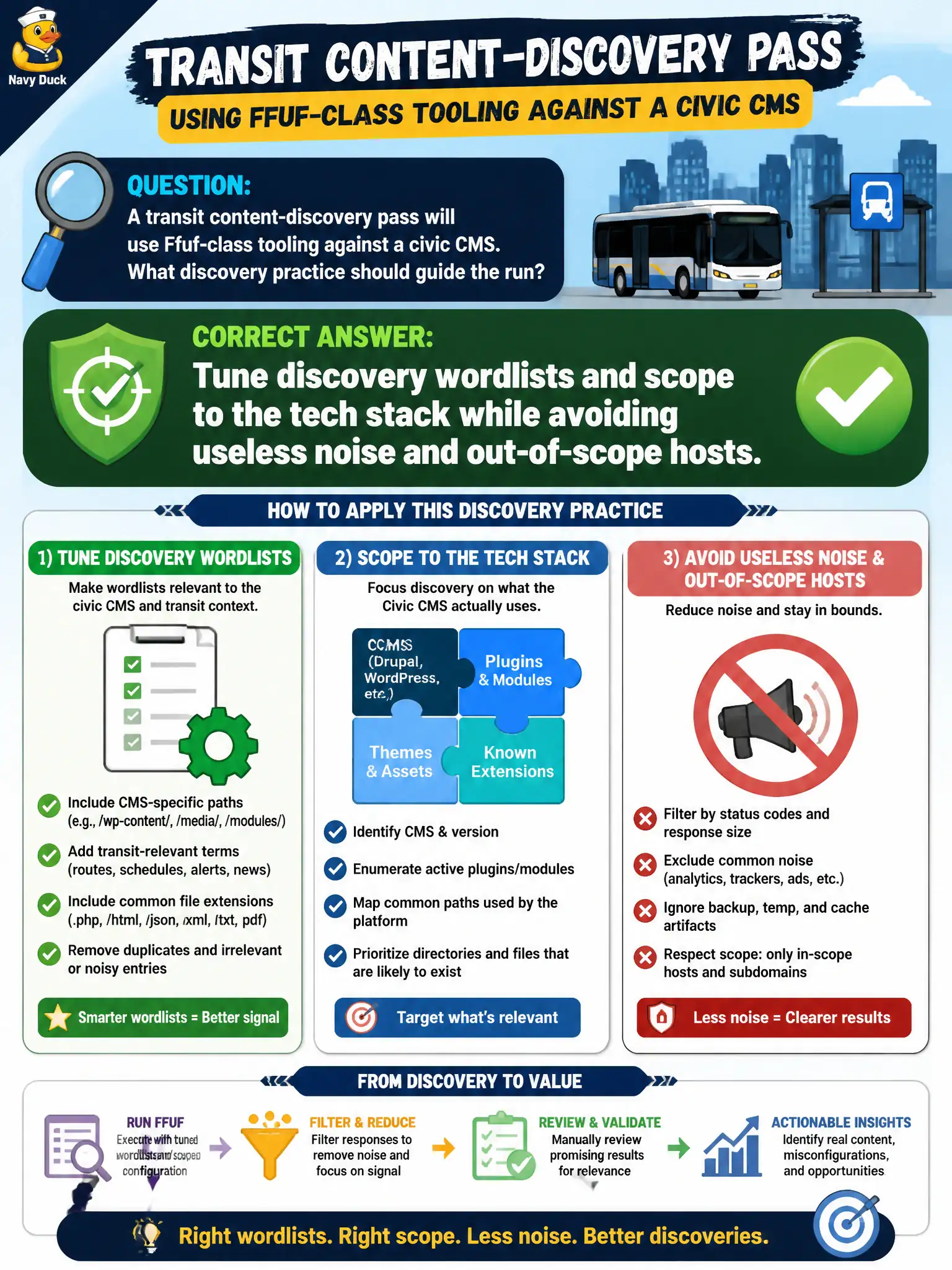
Content discovery works better when the wordlist speaks the CMS’s language — admin paths, plugin folders, the stuff that stack actually uses. Blind max-speed blasting across the whole ASN just makes ops mad and burns scope. Tune it, aim it, stay in bounds.
Full Explanation
Content discovery against a civic CMS should tune wordlists and scope to the tech stack while avoiding useless noise and out-of-scope hosts. Ffuf-class tooling is valuable when aimed at likely paths for the known CMS and in-scope transit hostnames—not when used as an unscoped internet firehose that overwhelms logs and risks collateral systems.
Largest generic lists at maximum speed against every ASN IP are scope and noise failures. CMS products can have hidden paths—skipping discovery entirely is unjustified. Path discovery remains relevant; limiting only to query-string fuzzing misses valuable routes.
Exam caveat: discovery quality beats discovery volume. CPTS content discovery emphasizes scoped, stack-aware wordlists and respectful rates for public-sector availability.
Operational check: fingerprint the civic CMS, select targeted wordlists, restrict hosts/paths to RoE, throttle requests, and triage interesting hits before deeper exploitation tests. Archive the tuned wordlist and host scope with the transit engagement notes so follow-up testers do not rediscover by blasting generic lists. Rate-limit discovery against the civic CMS so logging pipelines remain usable for defenders during the test.