
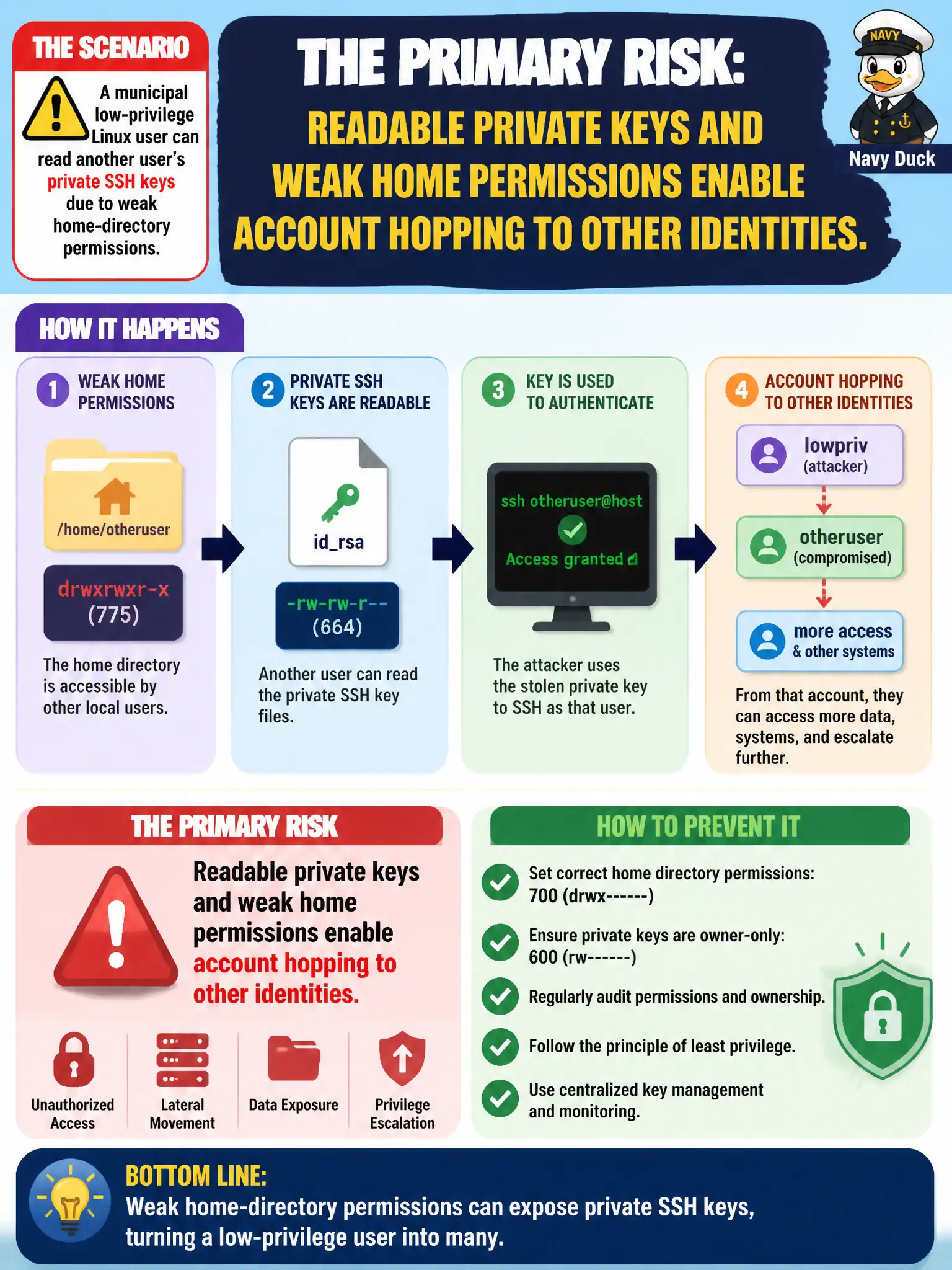
A municipal low-privilege Linux user can read another user's private SSH keys due to weak home-directory permissions. What is the primary risk?
Select an answer to reveal the explanation.
Short Explanation
If you can read someone else's SSH private key, you can often walk through their front door on the next host. Loose home-directory permissions turn neighbor accounts into stepping stones. Fix the perms; do not shrug it off as wallpaper settings.
Full Explanation
A municipal low-privilege Linux user who can read another user's private SSH keys due to weak home-directory permissions faces a primary account-hopping risk: stolen private keys enable authentication as those identities to local or remote civic systems, often without cracking passwords.
SSH private keys are highly useful without physical datacenter access when network authentication is allowed. World-readable homes are not limited to desktop theme leakage. The finding does not prove SELinux is enforcing or blocking all lateral movement.
Exam caveat: check key passphrases, authorized_keys trust, and whether the same keys unlock jump hosts used by administrators.
Operational check: verify home and .ssh permissions, demonstrate unauthorized readability within RoE, and recommend strict 700/600 patterns plus monitoring for municipal user directories. In municipal operations, record the rationale in the engagement notes so future assessors know which control was chosen and which failure modes the rejected options would create for city services. Re-validate after the next maintenance window that the same finding class still applies under the estate's current patch and configuration baseline.