
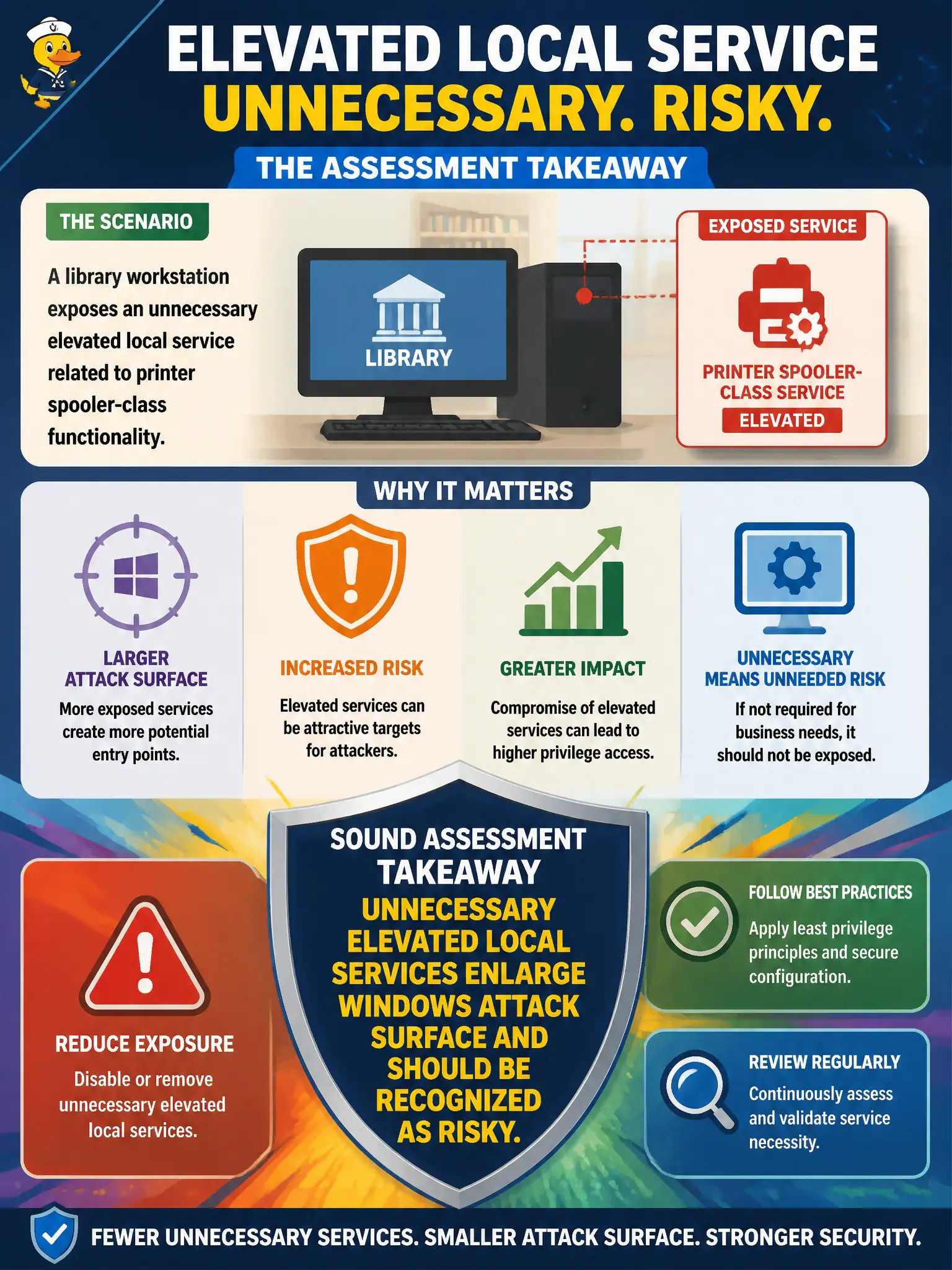
A library workstation exposes an unnecessary elevated local service related to printer spooler-class functionality. Without providing exploit steps, what is the sound assessment takeaway?
Select an answer to reveal the explanation.
Short Explanation
Extra elevated services are extra doors into the house—especially on a plain workstation that does not need them. Spotting risky local services is part of Windows priv-esc awareness, not a demand for a public exploit write-up. Shrink the surface; do not ignore it.
Full Explanation
A library workstation that exposes an unnecessary elevated local service related to printer spooler-class functionality enlarges Windows attack surface. Even without exploit steps, the sound takeaway is that nonessential elevated services increase local privilege-escalation opportunity and should be recognized as risky.
Local services are not identical in risk and are worth enumerating. Printer-related services are not only abusable from the public Internet—local abuse classes matter. RoE letters do not universally require disabling service enumeration.
Exam caveat: hardening may mean disabling unused features, restricting exposure, or applying vendor mitigations rather than only 'exploit or ignore.'
Operational check: inventory elevated local services on library endpoints, flag unnecessary spooler-class attack surface, and recommend reducing privileged services per CIS-style baselines appropriate to the role. In municipal operations, record the rationale in the engagement notes so future assessors know which control was chosen and which failure modes the rejected options would create for city services. Re-validate after the next maintenance window that the same finding class still applies under the estate's current patch and configuration baseline.