
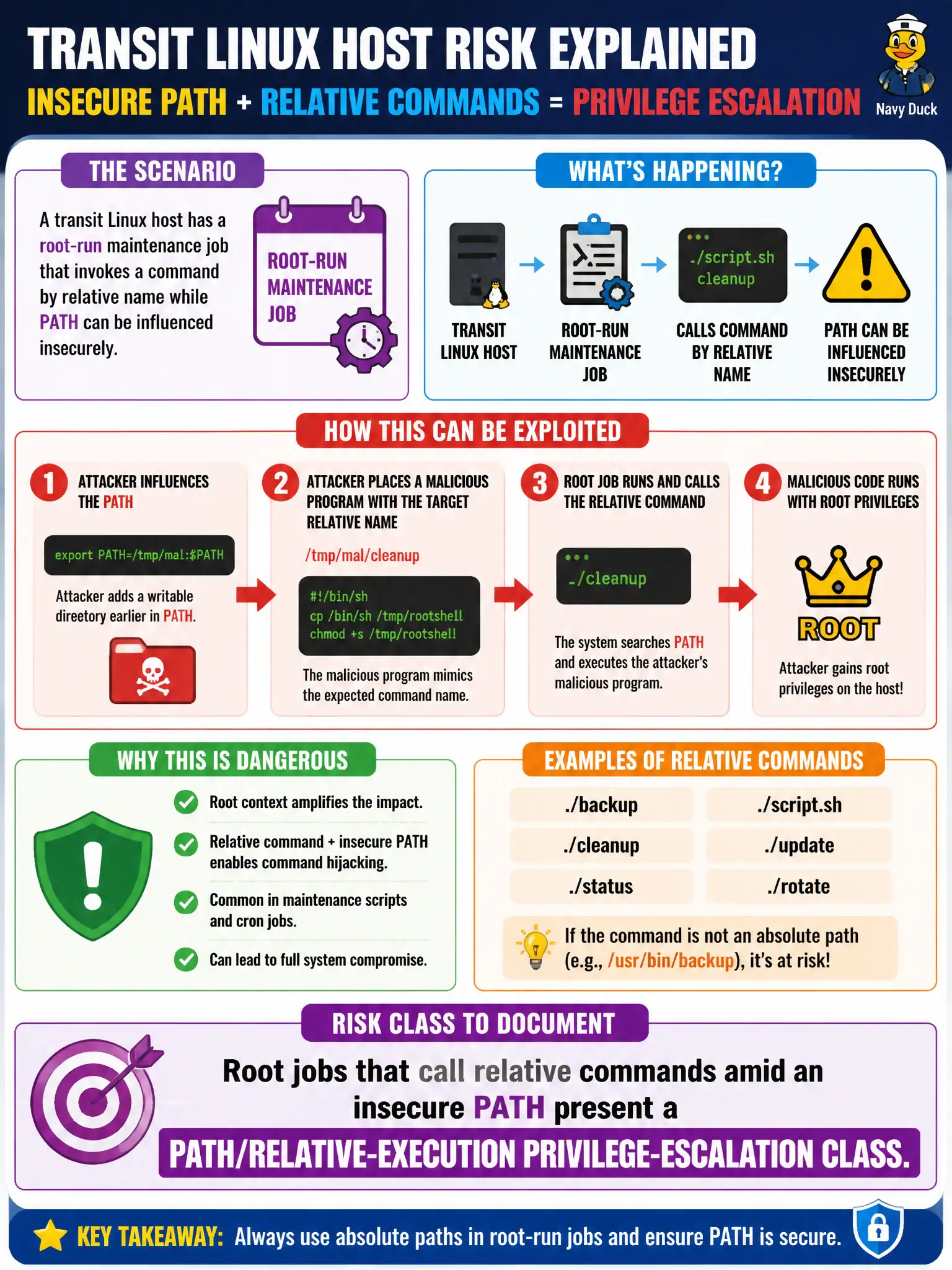
A transit Linux host has a root-run maintenance job that invokes a command by relative name while PATH can be influenced insecurely. What risk class should the tester document?
Select an answer to reveal the explanation.
Short Explanation
If root shouts "run backup" without saying which hallway, someone may plant a fake backup first. Relative commands plus a sloppy PATH under root are a PATH hijack class — concept only, no recipes. Hostnames do not fix lookup order.
Full Explanation
A transit Linux host with a root-run maintenance job that invokes a command by relative name while PATH can be influenced insecurely presents a PATH/relative-execution privilege-escalation class: root may execute an attacker-controlled binary that appears earlier in PATH.
Relative names are not ignored whenever SELinux is permissive. Linux does not resolve only absolute paths for cron in all cases—relative resolution depends on the job's environment. Hostname strings containing 'transit' do not magically secure relative command invocation.
Exam caveat: prefer absolute paths in privileged scripts; treat writable PATH components and cwd-dependent calls as related themes.
Operational check: inspect root job definitions for relative command names, evaluate PATH and working directory inheritance, and document whether unprivileged users can plant colliding executables. Recommend absolute paths and sanitized environments for transit maintenance automation. In municipal operations, record the rationale in the engagement notes so future assessors know which control was chosen and which failure modes the rejected options would create for city services. Re-validate after the next maintenance window that the same finding class still applies under the estate's current patch and configuration baseline.