
A municipal Windows host can open admin shares on peer systems using stolen user credentials. How should that pattern be framed in findings?
Select an answer to reveal the explanation.
Short Explanation
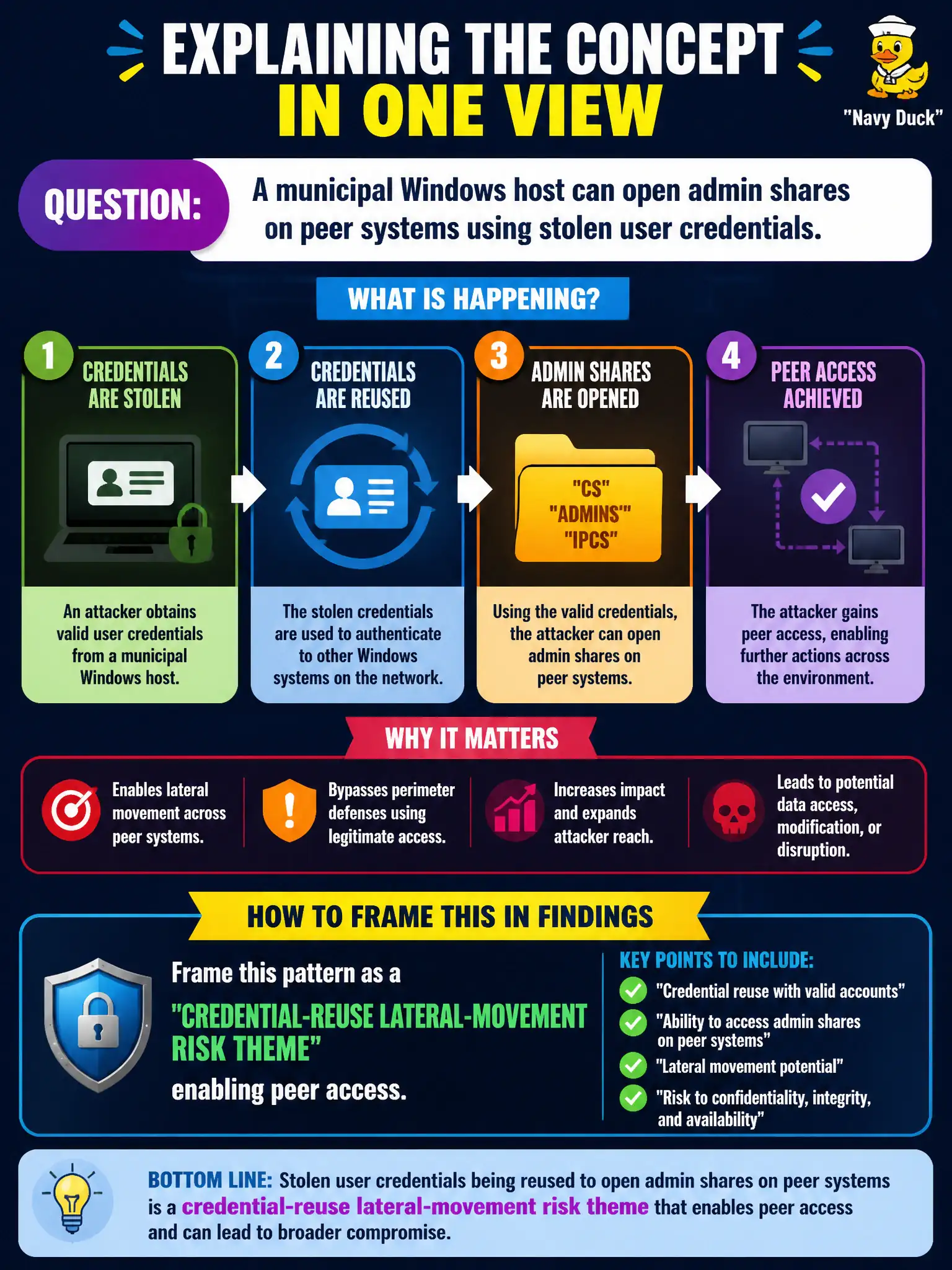
If one stolen user password waltzes you onto peer admin shares, that is the story: reuse plus overly trusting peer access. Frame it as a lateral-movement risk theme, not a how-to guide. The client needs the pattern and the impact, not a recipe book.
Full Explanation
When a municipal Windows host can open admin shares on peer systems using stolen user credentials, frame the pattern as a credential-reuse lateral-movement risk theme enabling peer access. That is not a reason to test admin shares only from the public Internet, nor a reason to publish credentials on a status page. It is also not a mere logging cosmetic issue; the movement impact is the point. Exam caveat: discuss the theme conceptually and with controlled evidence—avoid dumping live credential material into wide distribution. Operational check: show authorized access to an in-scope peer admin share under RoE, map which identity enabled it, recommend credential hygiene and tiering, and ensure shares are not needlessly exposed to broad user groups. In municipal operations, record the rationale in the engagement notes so future testers and city defenders understand which approach was chosen and which failure modes the rejected options would create for civic services. Re-validate the same judgment after the next change window so the control still holds under the city’s current tooling, identity posture, and RoE amendments. Keep secret material and session artifacts in the approved vaulted workflow rather than chat paste or unprotected tickets used by mixed municipal teams.