
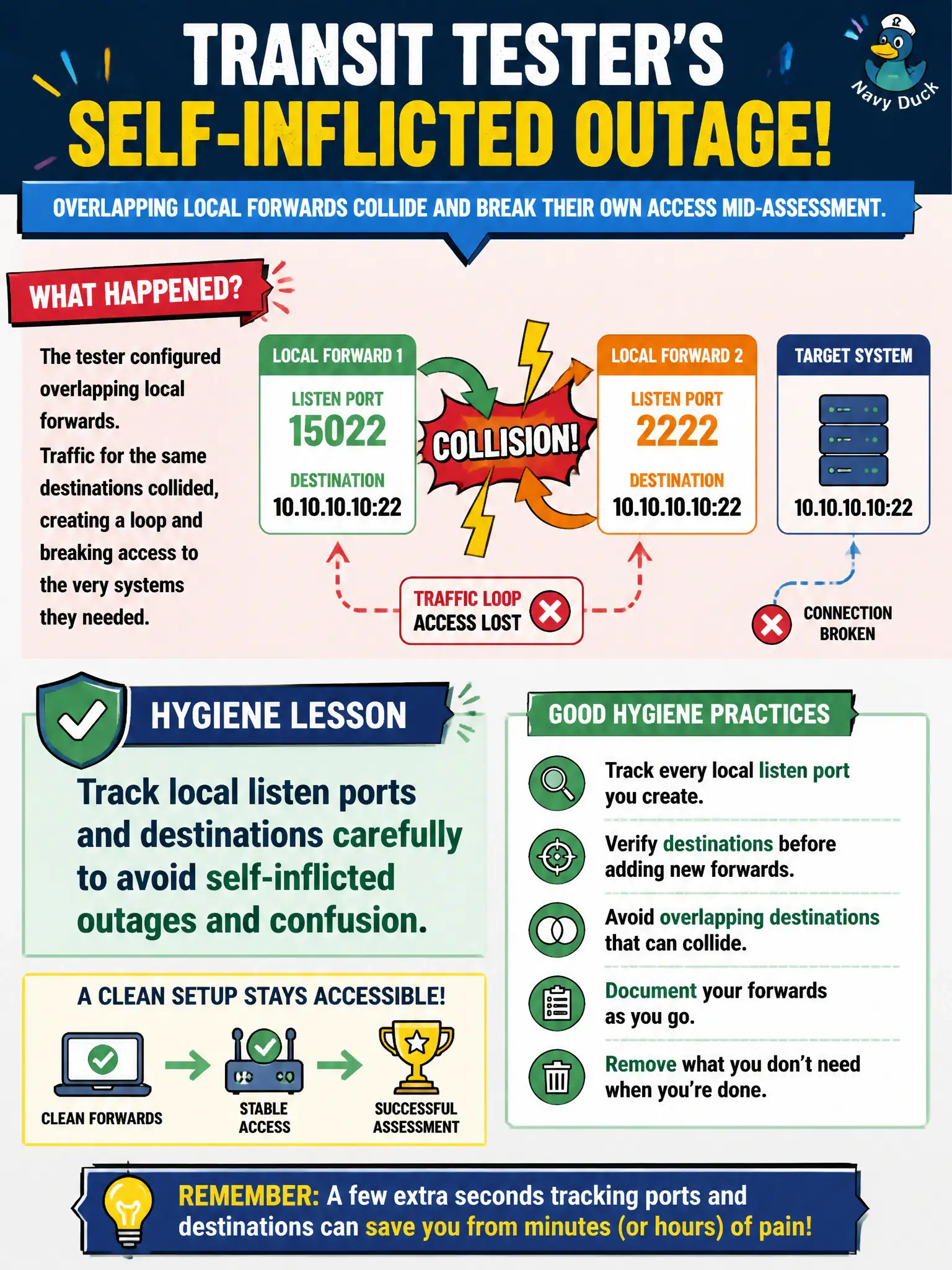
A transit tester’s overlapping local forwards collide and break their own access mid-assessment. What hygiene lesson applies?
Select an answer to reveal the explanation.
Short Explanation
Overlapping forwards are like two people claiming the same parking spot—somebody scrapes a bumper, and today that bumper is your own access. Keep a simple list of what listens where and what it points to. Boring bookkeeping beats dramatic self-DoS.
Full Explanation
When a transit tester’s overlapping local forwards collide and break their own access, the hygiene lesson is to track local listen ports and destinations carefully to avoid self-inflicted outages and confusion. Port numbers still matter even when DNS works; collisions are a bookkeeping failure. Reusing the same listen port for every forward invites exactly this breakage. Disabling bookkeeping because pivots should feel spontaneous is unprofessional in municipal engagements where uptime and clarity matter. Exam caveat: operational self-care is part of pivoting competency on exams. Operational check: keep a port allocation table (listen port, remote host, service, purpose), free unused listeners promptly, and verify connectivity after each change before continuing transit testing. In municipal operations, record the rationale in the engagement notes so future testers and city defenders understand which approach was chosen and which failure modes the rejected options would create for civic services. Re-validate the same judgment after the next change window so the control still holds under the city’s current tooling, identity posture, and RoE amendments. Keep secret material and session artifacts in the approved vaulted workflow rather than chat paste or unprotected tickets used by mixed municipal teams.