
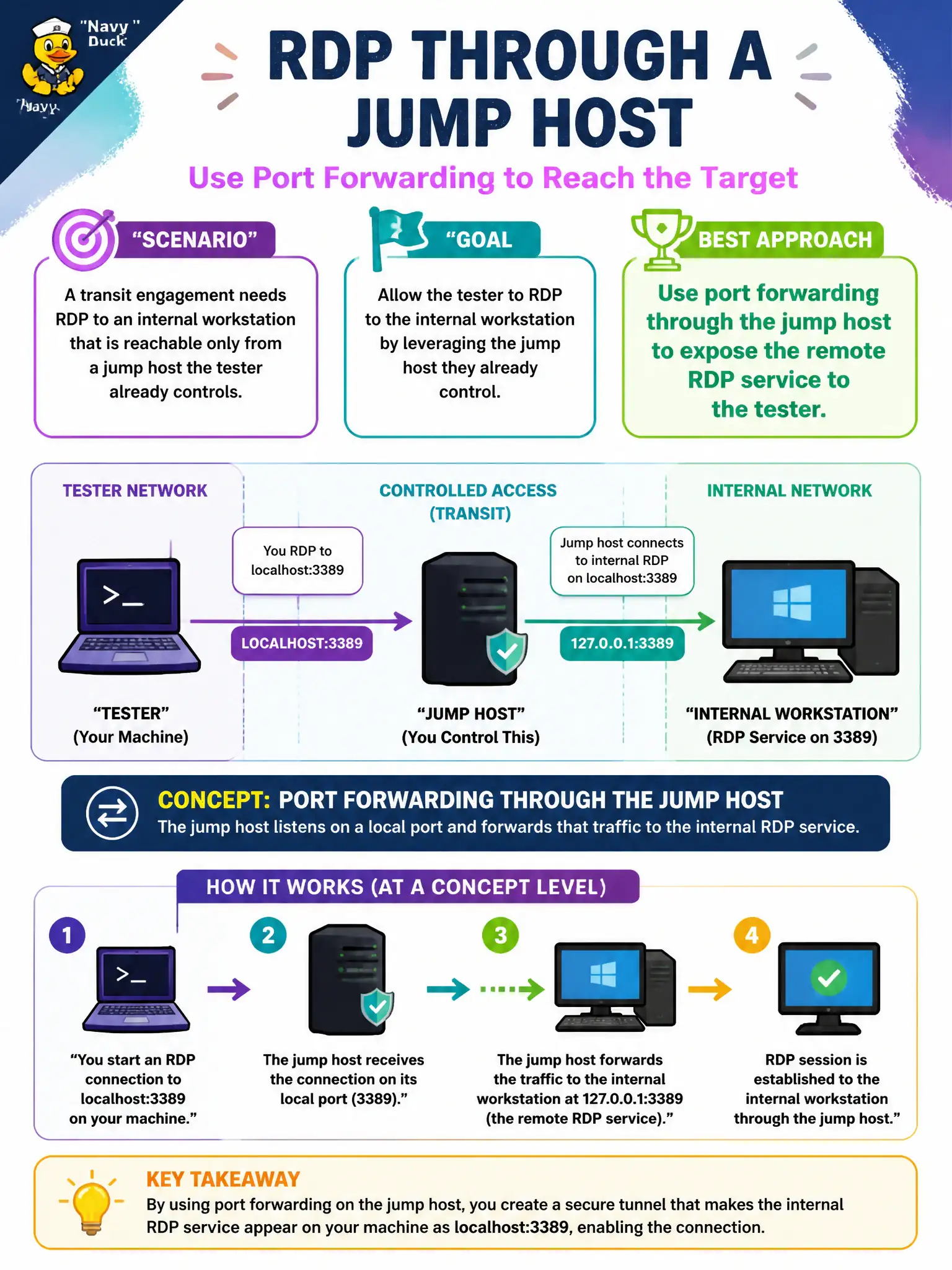
A transit engagement needs RDP to an internal workstation that is reachable only from a jump host the tester already controls. Which approach best matches that goal at a concept level?
Select an answer to reveal the explanation.
Short Explanation
Think of the jump host as a receptionist who can dial the back-office RDP line for you. Port forwarding asks that receptionist to patch your call through without remodeling the whole building’s wiring. You get the service you need without pretending every machine is suddenly next door to your laptop.
Full Explanation
When a transit engagement needs RDP to an internal workstation reachable only from a jump host the tester already controls, the matching concept is port forwarding through the jump host to expose the remote RDP service to the tester. Disabling the jump host firewall so the whole VLAN becomes flat is a high-impact network change that destroys segmentation and usually violates RoE. Replacing network segmentation with VPN credentials shared in chat creates secret-handling and architecture problems instead of a controlled forward. Scanning only from the tester laptop while ignoring the jump host path fails the reachability constraint the scenario states. Exam caveat: questions want the pivoting pattern (forward through controlled host), not destructive flattening of municipal networks. Operational check: pick an approved forward method, bind only to tester-controlled interfaces, verify the workstation is in-scope, use the RDP path for authorized testing, and tear the forward down at stop time. In municipal operations, record the rationale in the engagement notes so future testers and city defenders understand which approach was chosen and which failure modes the rejected options would create for civic services.