
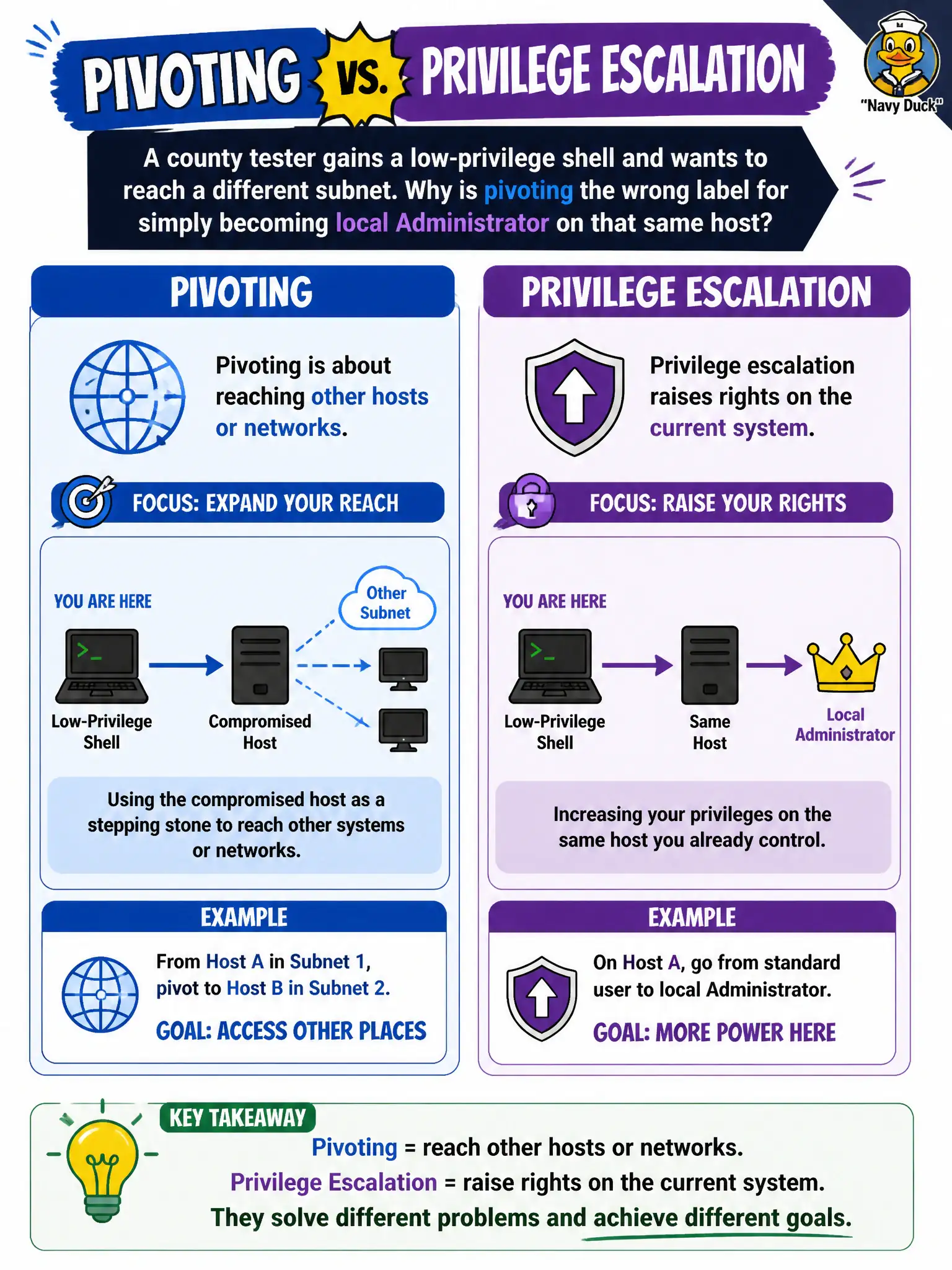
A county tester gains a low-privilege shell and wants to reach a different subnet. Why is pivoting the wrong label for simply becoming local Administrator on that same host?
Select an answer to reveal the explanation.
Short Explanation
Picture getting a better badge for the room you are already in versus getting keys to other buildings. Priv-esc is the better badge on this host; pivoting is moving toward other hosts or networks. Mixing those up makes the report sound like you wandered the campus when you only unlocked one office.
Full Explanation
A county tester with a low-privilege shell who wants another subnet should not label simply becoming local Administrator on that same host as pivoting. Pivoting is about reaching other hosts or networks; privilege escalation raises rights on the current system. Conflating the two as identical steps that always happen together blurs methodology and mis-teaches both CPTS domains. Privilege escalation does not automatically grant routes to every VLAN—routing, filters, and credentials still matter. Calling local Administrator acquisition “tunneling” misuses tunneling vocabulary, which concerns encapsulated or forwarded channels rather than local rights. Exam caveat: exam items often pair these terms as distractors; keep the definitions crisp. Operational check: in notes, tag actions as privilege escalation versus pivot/tunnel, record the new privilege level with whoami-class evidence, then separately plan any subnet reachability work under RoE. In municipal operations, record the rationale in the engagement notes so future testers and city defenders understand which approach was chosen and which failure modes the rejected options would create for civic services. Re-validate the same judgment after the next change window so the control still holds under the city’s current tooling, identity posture, and RoE amendments.