
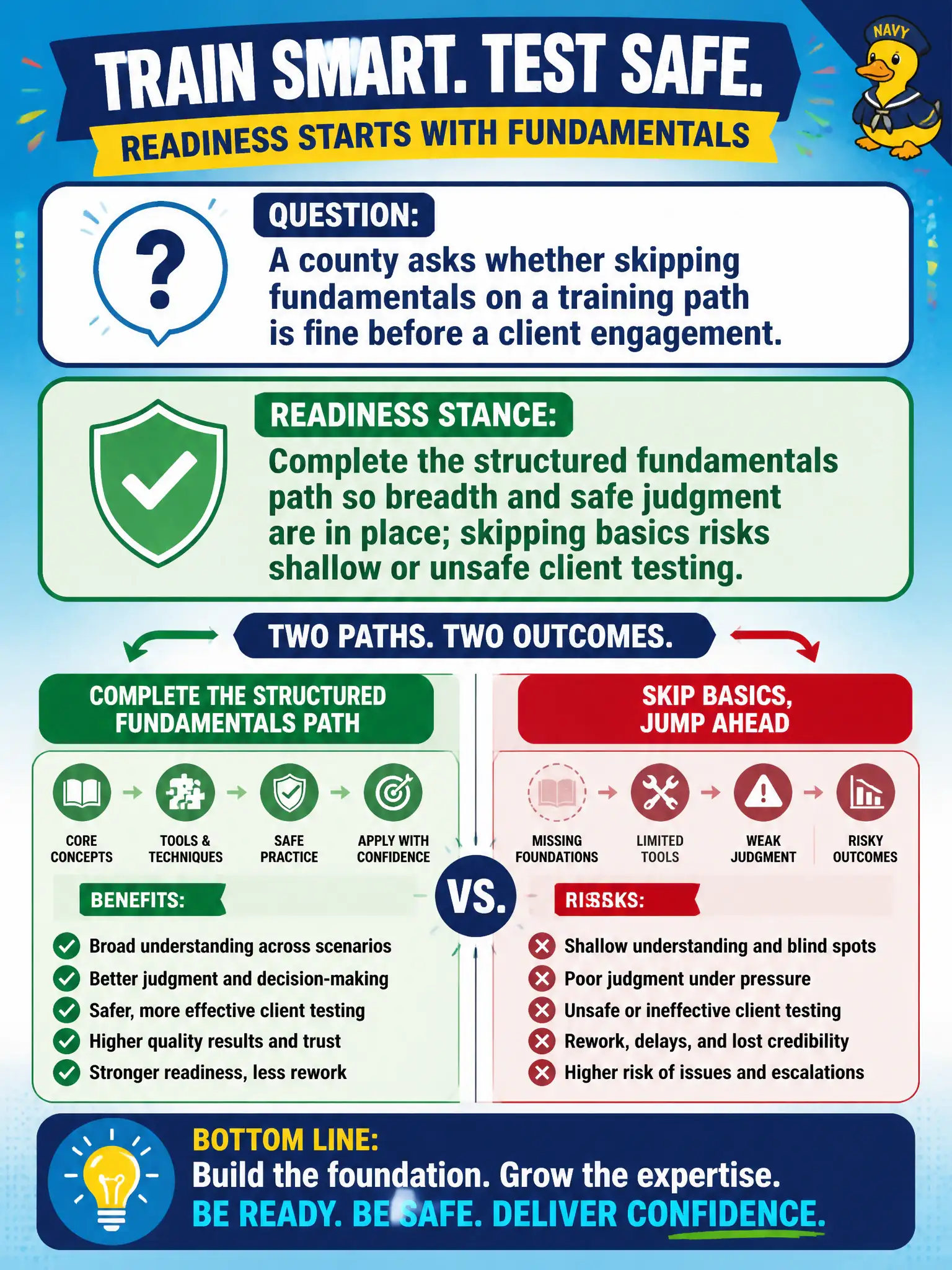
A county asks whether skipping fundamentals on a training path is fine before a client engagement. What readiness stance should guide the answer?
Select an answer to reveal the explanation.
Short Explanation
Skipping the basics is like jumping into city traffic before learning turn signals. Fundamentals build the habits that keep client work safe and useful. Excitement is not a substitute for readiness.
Full Explanation
Readiness for client engagements means completing the structured fundamentals path so breadth and safe judgment are in place; skipping basics risks shallow or unsafe municipal testing. Exciting advanced blog posts do not replace fundamentals in scoping, RoE discipline, enumeration rigor, and ethical boundaries. Fundamentals are not merely badge theater—they show up in live county work when a tester must decide whether a technique is authorized or harmful. Using client engagements as the first place to learn basic scoping and RoE transfers training risk onto public systems. Exam caveat: CPTS-style learning paths deliberately sequence fundamentals before complex exploitation chains. Operational check: verify the tester has completed required labs and methodology modules, can explain LoE/RoE purpose, and can articulate safe enumeration-before-exploitation habits before being assigned to unsupervised civic testing. Document the rationale in the municipal engagement notes so later civic responders know which boundary was honored and which failure modes the rejected options would create for public services. Document the rationale in the municipal engagement notes so later civic responders know which boundary was honored and which failure modes the rejected options would create for public services.