
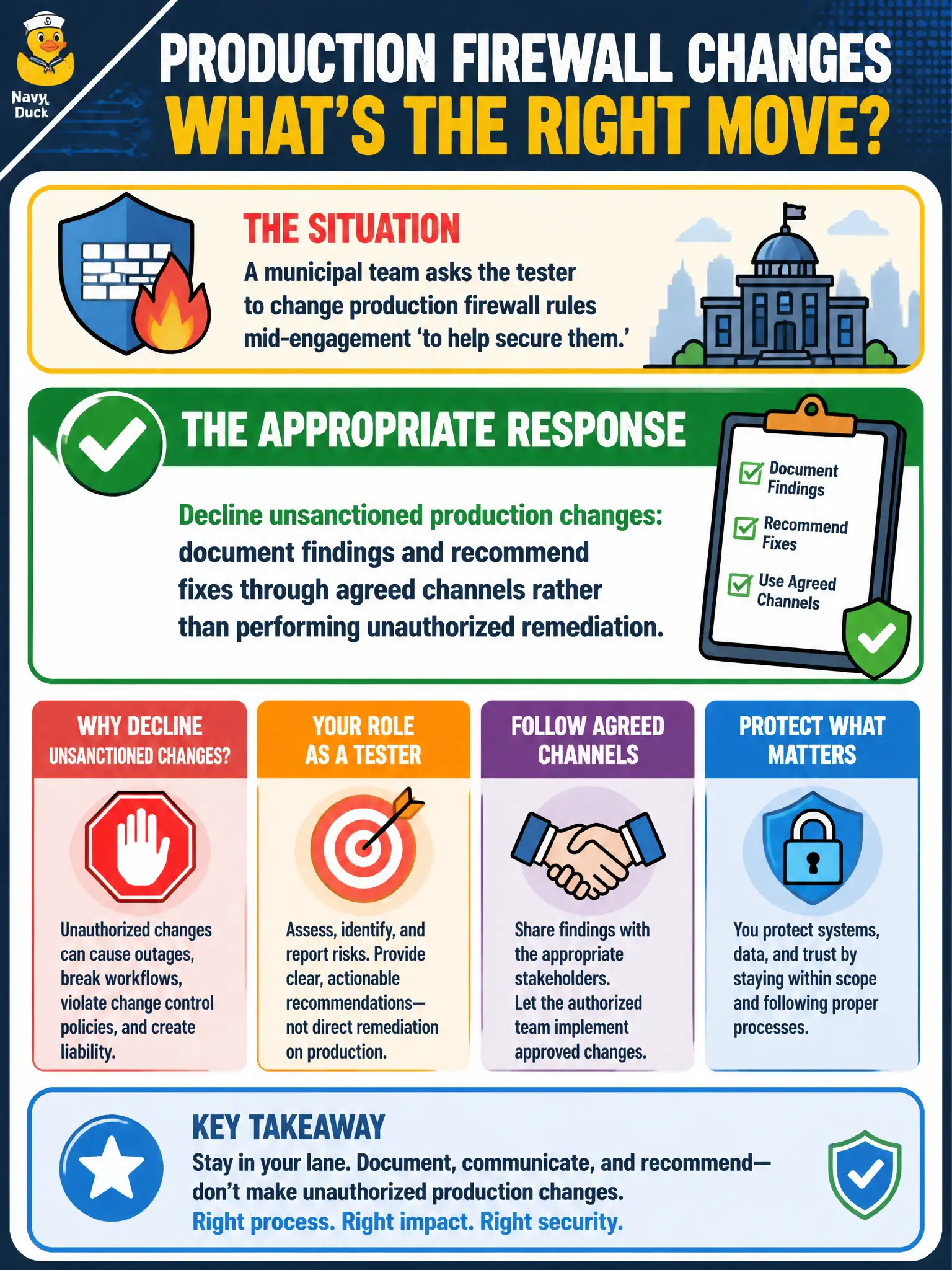
A municipal team asks the tester to change production firewall rules mid-engagement 'to help secure them.' What is the appropriate response?
Select an answer to reveal the explanation.
Short Explanation
Testers are the inspectors, not the midnight construction crew — unless the contract says otherwise. Write down what is wrong and how to fix it; do not freestyle production changes. Change control exists for painful reasons.
Full Explanation
When a municipal team asks the tester to change production firewall rules mid-engagement 'to help secure them,' the appropriate response is to decline unsanctioned production changes. The tester's role is to document findings and recommend fixes through agreed change-control channels, not to become an unauthorized operator of city infrastructure. Applying firewall changes immediately because hardening feels urgent bypasses change tickets, peer review, and rollback planning that protect availability. Quietly editing production configs and mentioning them only if asked destroys trust and auditability. Handing root credentials into a help-desk chat expands access beyond the engagement design. Exam caveat: some contracts include optional remediation workshops, but those are separate, authorized workstreams—not improvised mid-scan changes. Operational check: write the recommended rule change as a finding with risk and validation steps, deliver it to the designated municipal owner, and continue testing only within the original authorized access. Document the rationale in the municipal engagement notes so later civic responders know which boundary was honored and which failure modes the rejected options would create for public services.