
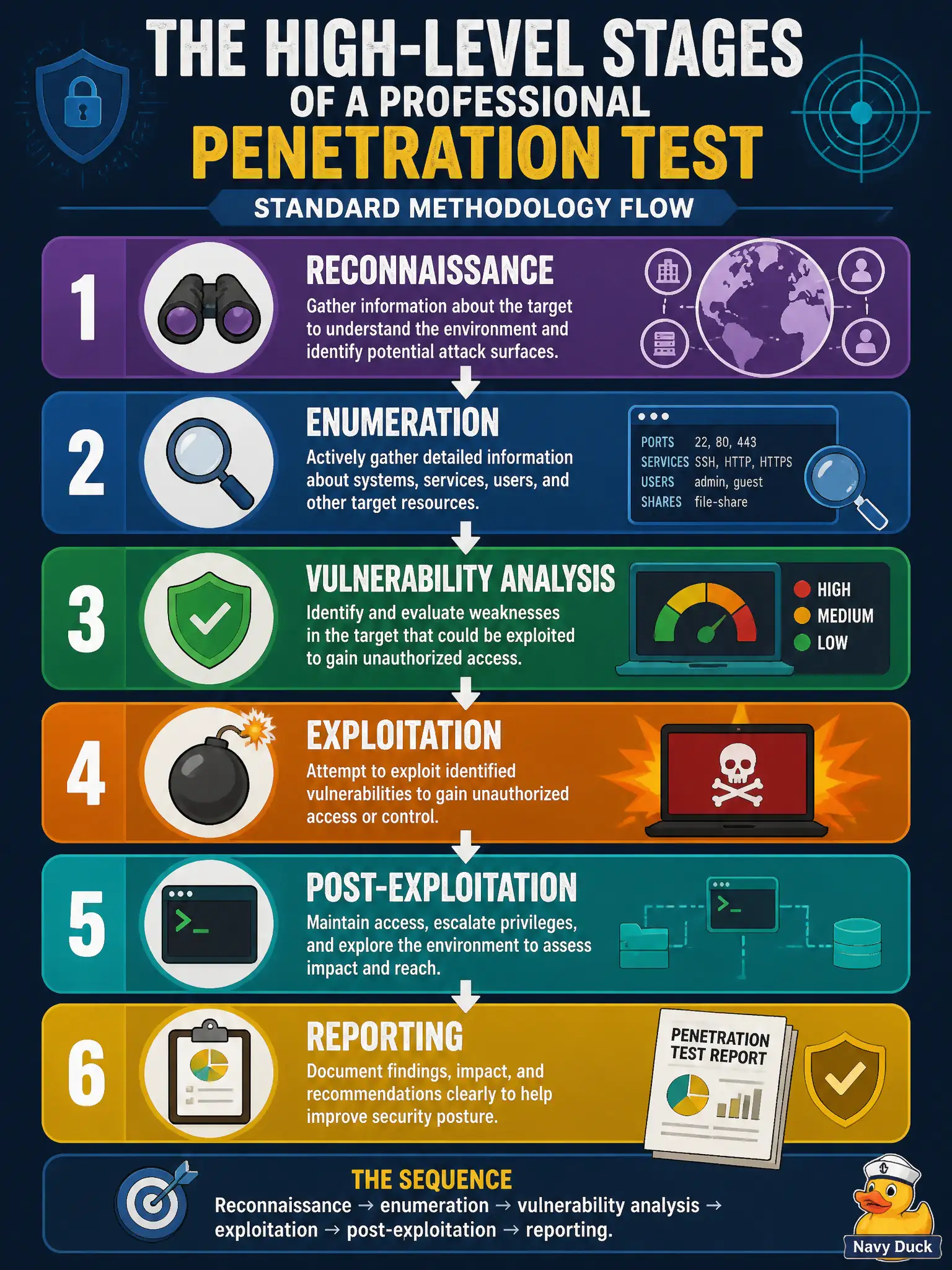
A municipal SOC asks for the high-level stages of a professional penetration test in sound order. Which sequence best reflects standard methodology flow?
Select an answer to reveal the explanation.
Short Explanation
You map the neighborhood before you try doors, and you write it down before you leave. Recon and enumeration build the picture; analysis and careful exploitation test paths; post-ex and reporting finish the job. Jumping straight to exploitation is backwards theater.
Full Explanation
A municipal SOC looking for standard high-level flow should expect reconnaissance, then enumeration, vulnerability analysis, exploitation, post-exploitation, and reporting. That order reflects how professional engagements gather context, map attack surface, select weaknesses, attempt controlled impact, explore further access if authorized, and finally communicate evidence. Starting with reporting or exploitation before recon inverts evidence-based work and invites reckless testing. Deleting logs as a final stage is unethical and typically out of RoE. Ending at vulnerability scanning plus a slideshow before a contract is signed skips both authorization and validated impact. Exam caveat: real engagements iterate—new recon can follow a foothold—but the conceptual pipeline still separates discovery from exploitation and closes with reporting for city stakeholders. Operational check: map the city's statement of work milestones to these stages, ensure RoE gates before exploitation, and schedule continuous evidence capture so the civic report is not an afterthought on the final day. In municipal operations, record the decision and residual risk in the engagement notes so future civic responders understand which control or boundary was honored and which failure modes the rejected approaches would create for public services. Re-check the same control at the next maintenance window or retest cycle.