
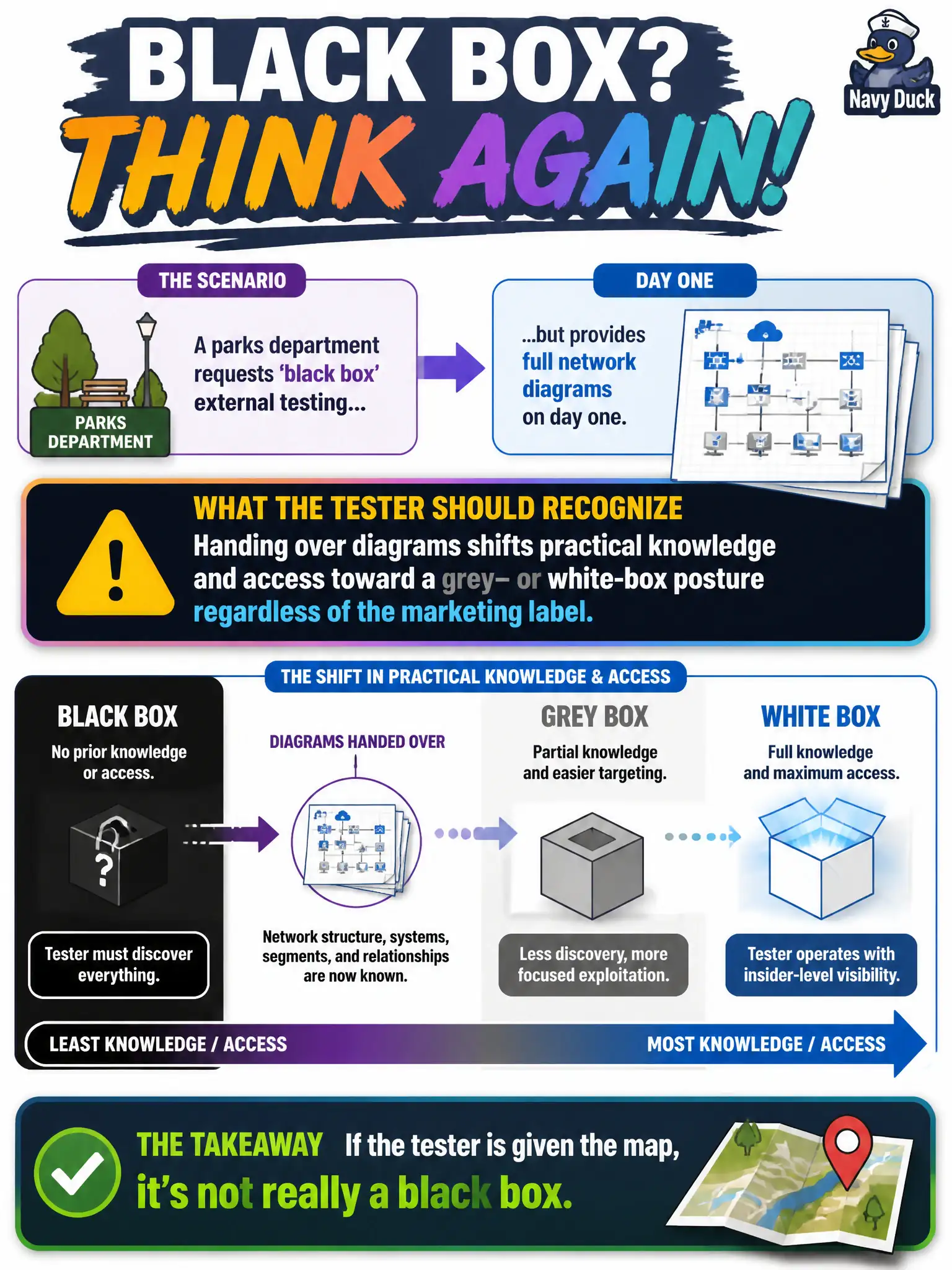
A parks department requests 'black box' external testing but provides full network diagrams on day one. What should the tester recognize?
Select an answer to reveal the explanation.
Short Explanation
Names on the proposal are stickers; what you were actually handed is the real starting line. Full diagrams on day one means you are not flying blind anymore. Call the posture what it is and test accordingly.
Full Explanation
When a parks department asks for 'black box' external testing yet delivers full network diagrams on day one, the practical posture has shifted toward grey- or white-box knowledge regardless of the marketing label. Extra documentation reduces discovery friction and changes what 'unknown' means for the tester. The label alone does not freeze methodology once detailed internals were supplied. Diagrams do not automatically convert the engagement into code-review-only work; they inform network and service testing unless scope says otherwise. Black-box rules do not forbid reading client-supplied materials the client chose to provide. Exam caveat: report honesty matters—state what was provided so readers do not assume a pure black-box discovery path for parks systems. Operational check: update the methodology section to note diagram-assisted testing, confirm whether credentials or source will also be shared, and keep external attack simulation techniques aligned with the still-valid scope boundaries for parks department assets. In municipal operations, record the decision and residual risk in the engagement notes so future civic responders understand which control or boundary was honored and which failure modes the rejected approaches would create for public services. Re-check the same control at the next maintenance window or retest cycle.