
A library's internal DNS allows zone data leakage to the tester's approved network. How should that finding be framed?
Select an answer to reveal the explanation.
Short Explanation
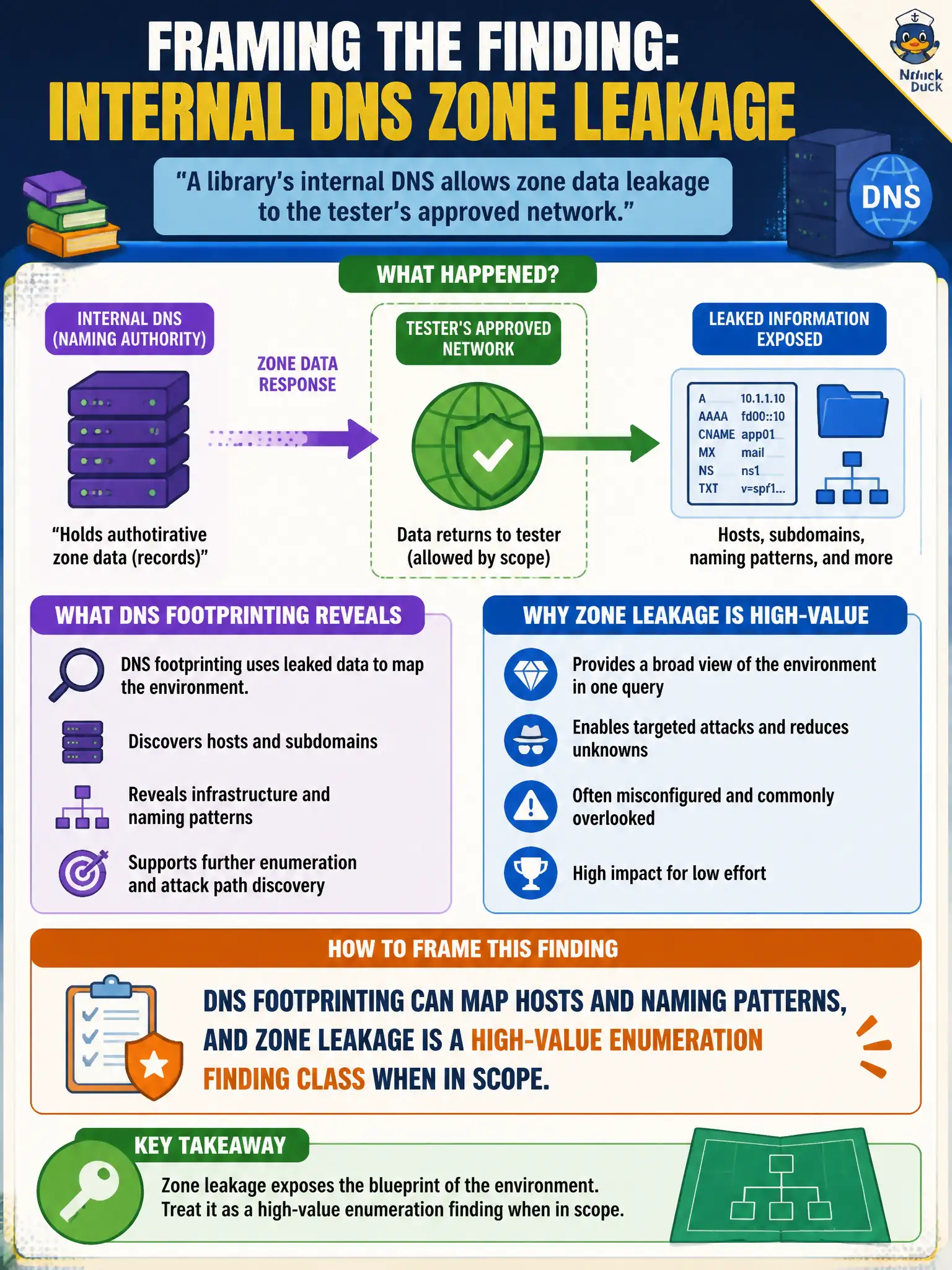
DNS zone leakage is like getting the building directory with room numbers included. Hostnames and patterns sketch the whole campus layout. That is gold for enumeration — write it down even if you never change a record.
Full Explanation
When a library's internal DNS allows zone data leakage to the tester's approved network, DNS footprinting can map hosts and naming patterns, and zone leakage is a high-value enumeration finding class when in scope. Internal DNS data is not nonsensitive; names often correlate to real systems and roles. Zone leakage should be reported even if the tester cannot modify production DNS records. DNS recon belongs in technical reports, not only phishing art discussions. Exam caveat: distinguish authorized zone transfer or enumeration results from speculative guessing, and avoid dumping unrelated out-of-scope zones. Operational check: document the leakage method, sample records that reveal attack surface, assess exposure of admin or staging names, and recommend tightening DNS ACLs for the library environment. Document the rationale in the municipal engagement notes so later civic responders know which boundary was honored and which failure modes the rejected options would create for public services. Document the rationale in the municipal engagement notes so later civic responders know which boundary was honored and which failure modes the rejected options would create for public services. Document the rationale in the municipal engagement notes so later civic responders know which boundary was honored and which failure modes the rejected options would create for public services.