
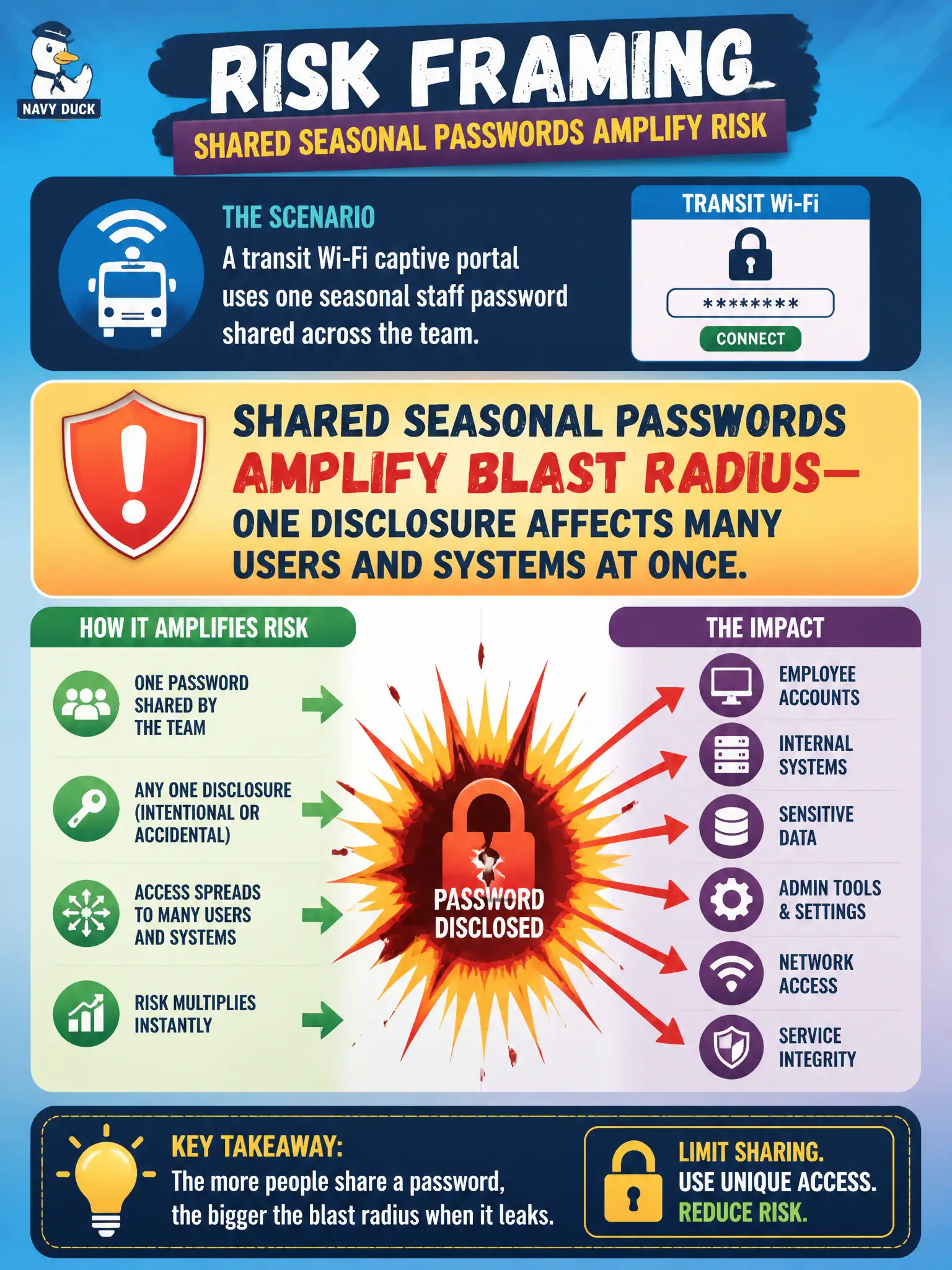
A transit Wi-Fi captive portal uses one seasonal staff password shared across the team. What risk framing is most accurate?
Select an answer to reveal the explanation.
Short Explanation
One shared password is like one master house key photocopied for the whole crew—lose one copy and every door is open. Seasonal slogans make guessing easier, not safer. Credential hygiene findings belong in the report when sharing is the design.
Full Explanation
A transit Wi-Fi captive portal that uses one seasonal staff password shared across the team is best framed as amplifying blast radius: one disclosure affects many users and systems at once. Seasonal slogans also make guessing and shoulder-surfing easier for anyone who knows the municipal calendar. Accepting shared passwords because the season string rotates quarterly still leaves a single shared secret during each window and does not create per-user accountability. Claiming password sharing only matters for domain admin accounts ignores staff portals that gate operational access and citizen-facing services. Asserting captive portals cannot create credential-hygiene findings because traffic is guest-facing confuses audience of the portal with the sensitivity of the shared staff secret. Exam caveat: shared-secret findings are about blast radius and accountability, not only about Active Directory group names. Operational check: verify whether the portal credential is reused elsewhere, recommend individual accounts or short-lived per-user secrets, and confirm rotation plus logging of admin actions on the transit Wi-Fi management path. In municipal operations, record the rationale in the engagement notes so future testers and city defenders understand which approach was chosen and which failure modes the rejected options would create for civic services.