
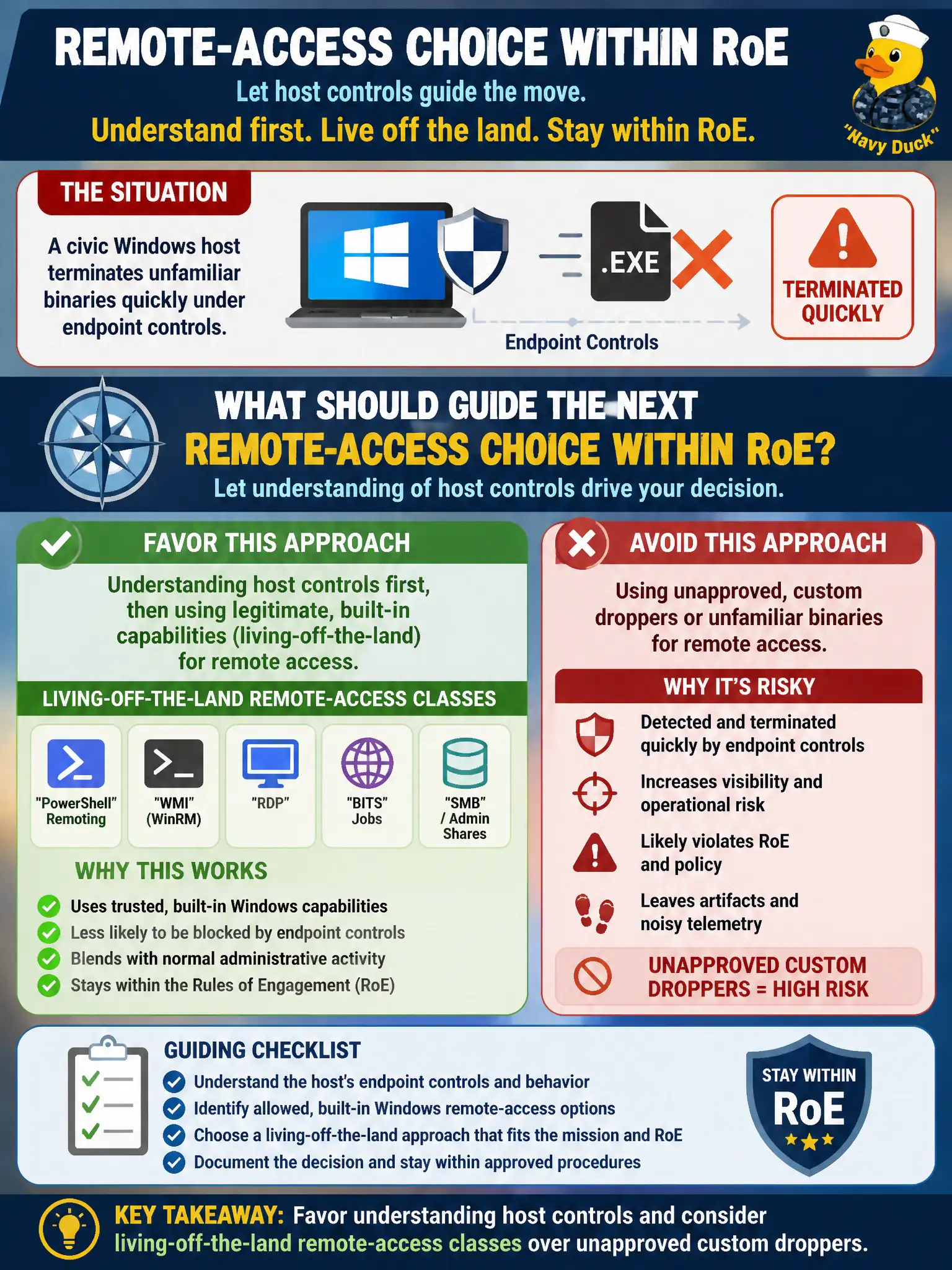
A civic Windows host terminates unfamiliar binaries quickly under endpoint controls. At a concept level, what should guide the next remote-access choice within RoE?
Select an answer to reveal the explanation.
Short Explanation
When the guard dogs bark at strange packages, stop tossing mystery boxes over the fence. Lean on allowed built-in channels and learn what the controls block—do not cook up stealth malware.
Full Explanation
When a civic Windows host terminates unfamiliar binaries quickly under endpoint controls, the next remote-access choice within RoE should favor understanding those host controls and considering living-off-the-land remote-access classes over unapproved custom droppers. Writing custom evasion malware and withholding the technique from the report is unethical and inappropriate for this practice bank. Disabling antivirus permanently across the domain without change control is unauthorized and harmful. Switching to destructive testing to 'punish' the controls violates professional conduct and likely RoE. Exam caveat: document detection efficacy as a finding—controls that stop unknown binaries may be working as intended. Operational check: identify which native remote-access methods remain allowed, test only approved approaches, report what the endpoint stack blocked, and coordinate any exceptions through municipal change control. Document the rationale in the municipal engagement notes so later civic responders know which boundary was honored and which failure modes the rejected options would create for public services. Document the rationale in the municipal engagement notes so later civic responders know which boundary was honored and which failure modes the rejected options would create for public services.