
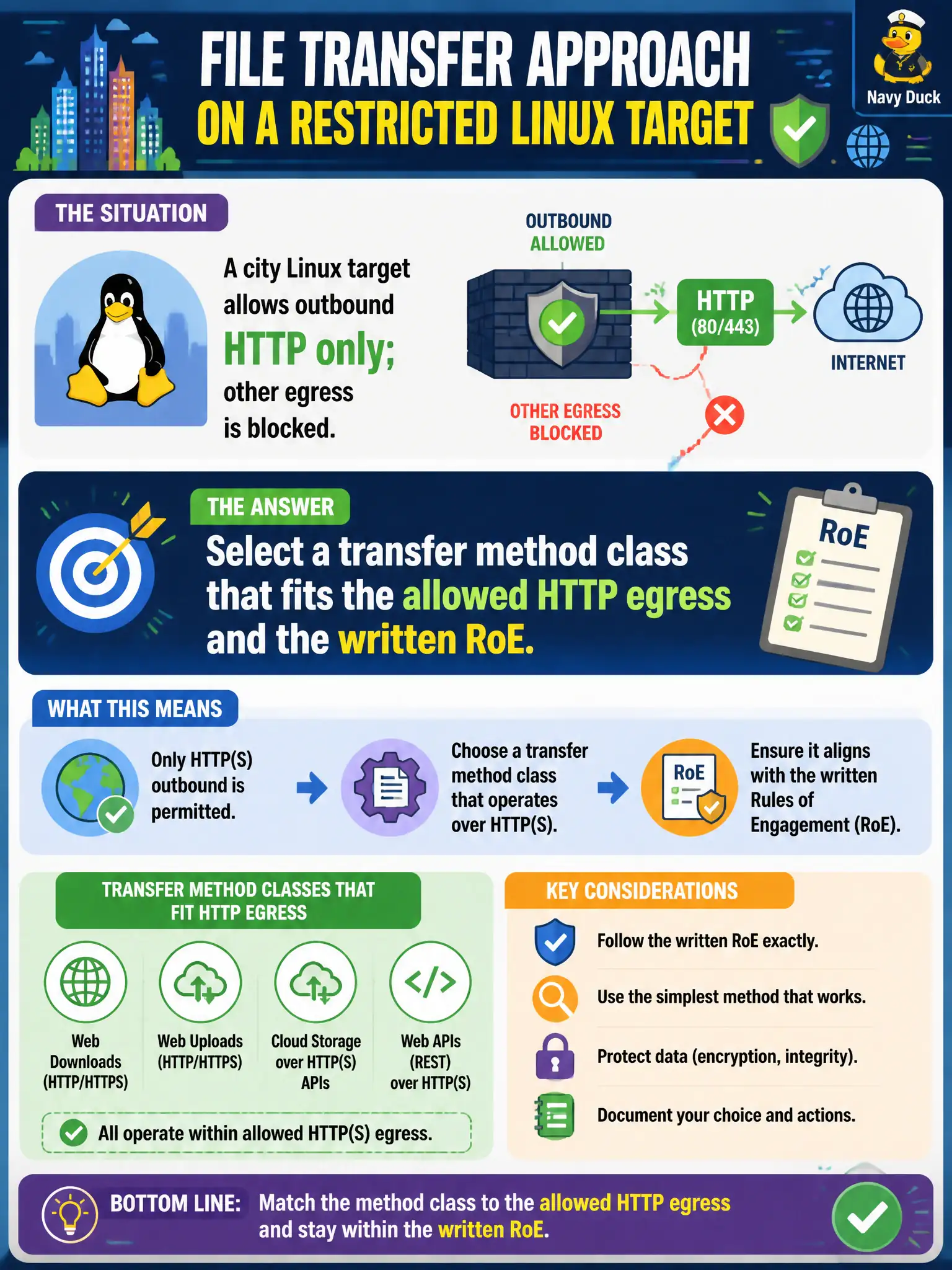
A city Linux target allows outbound HTTP only; other egress is blocked. How should the tester choose a file-transfer approach?
Select an answer to reveal the explanation.
Short Explanation
If the only open road out of town is the HTTP highway, do not plan a ferry. Match the transfer to the egress you actually have—and to the rules on paper.
Full Explanation
When a city Linux target allows outbound HTTP only and blocks other egress, choose a transfer method class that fits the allowed HTTP egress and the written RoE. Insisting on SMB because it is preferred in the lab ignores the target's constraints. Opening inbound RDP without RoE approval to stage files invents unauthorized access paths. Disabling the host firewall remotely to enable every protocol is an unsafe, usually unauthorized change. Exam caveat: match protocol choice to both technical filters and engagement rules, not tester habit. Operational check: confirm egress allowlists with the city, select an HTTP-compatible transfer approach approved by RoE, verify integrity of transferred files, and document the method used for reproducibility and cleanup. Document the rationale in the municipal engagement notes so later civic responders know which boundary was honored and which failure modes the rejected options would create for public services. Document the rationale in the municipal engagement notes so later civic responders know which boundary was honored and which failure modes the rejected options would create for public services. Document the rationale in the municipal engagement notes so later civic responders know which boundary was honored and which failure modes the rejected options would create for public services.