
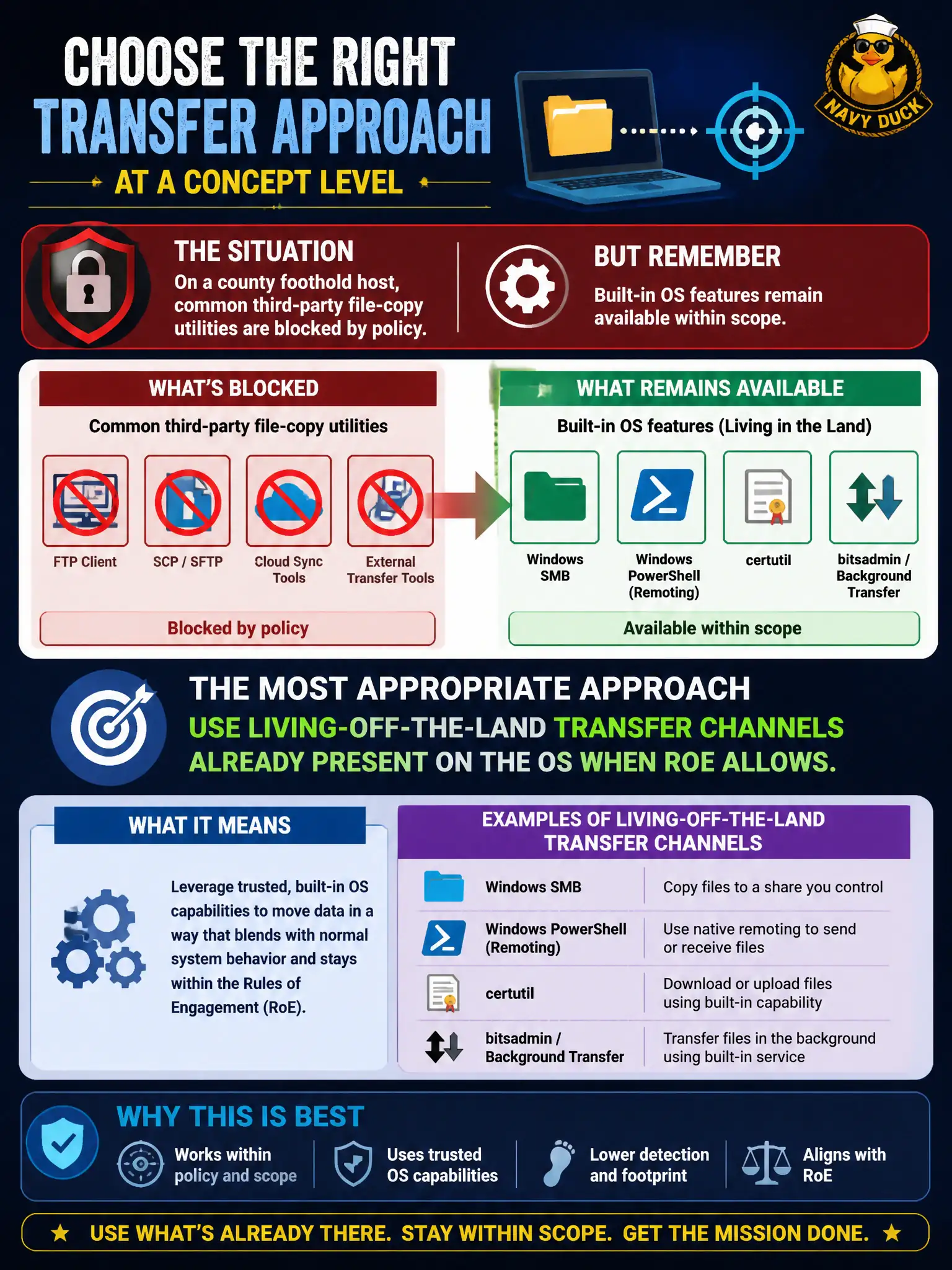
On a county foothold host, common third-party file-copy utilities are blocked by policy, but built-in OS features remain available within scope. Which transfer approach is most appropriate at a concept level?
Select an answer to reveal the explanation.
Short Explanation
When the fancy USB tools are locked in the drawer, use what the kitchen already has. Built-in OS channels—within the RoE—beat inventing shady droppers.
Full Explanation
On a county foothold where common third-party file-copy utilities are blocked but built-in OS features remain available within scope, the appropriate concept-level approach is to use living-off-the-land transfer channels already present on the OS when RoE allows. Installing a banned custom malware dropper to move binaries violates policy and often RoE. Abandoning all file movement and stopping the engagement is unnecessary if native channels work. Emailing files to a personal account outside agreed data-handling rules risks data leakage and authorization breaches. Exam caveat: this bank teaches concepts—not malware recipes—and cleanup tracking still applies to native-channel artifacts. Operational check: identify permitted native transfer methods, move only necessary tools, log what was introduced, and remove artifacts during cleanup for the county host. Document the rationale in the municipal engagement notes so later civic responders know which boundary was honored and which failure modes the rejected options would create for public services. Document the rationale in the municipal engagement notes so later civic responders know which boundary was honored and which failure modes the rejected options would create for public services.