
A county executive summary is being drafted. What content approach best fits a leadership audience?
Select an answer to reveal the explanation.
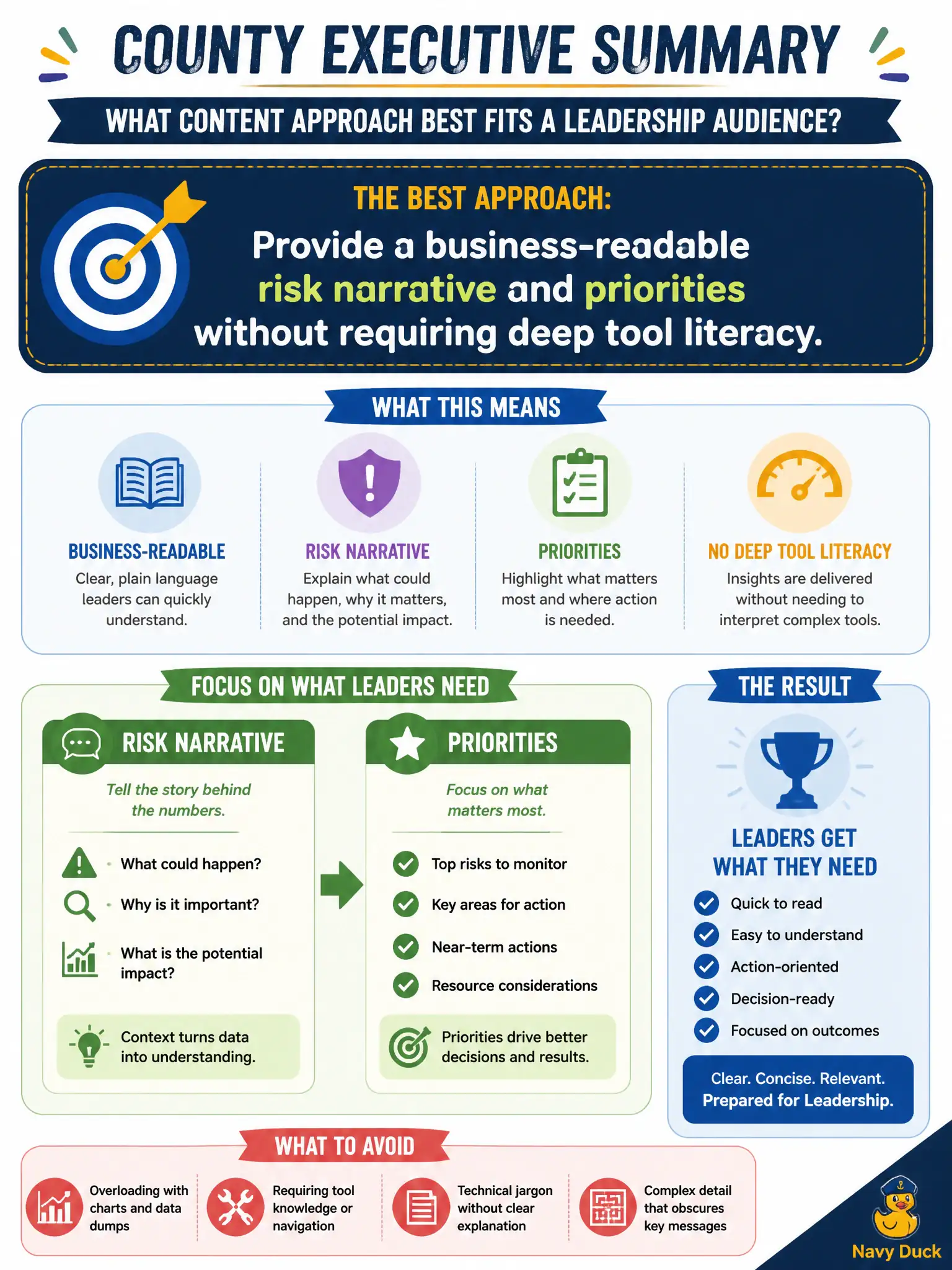
Short Explanation
Executives need the weather report, not the raw radar pixels. Tell them what is at stake, what matters first, and what to fund—leave the tool dumps for the technical appendix.
Full Explanation
A county executive summary for leadership should provide a business-readable risk narrative and priorities without requiring deep tool literacy: what matters to residents and operations, what to fix first, and what residual risk remains—in plain language.
Pasting raw Nessus and BloodHound dumps as the entire summary fails the audience. Leading with obscure assembler snippets from exploit attempts obscures decisions. Omitting risk language so leadership stays comfortable withholds necessary truth.
Exam caveat: technical appendices can hold detail; the summary translates impact for authorizing officials.
Operational check: draft the summary around top civic risks, owners, and timelines; peer-review for jargon; and keep tool output referenced, not dumped, for county executives. In municipal operations, record the rationale in the engagement notes so future assessors know which control was chosen and which failure modes the rejected options would create for city services. Re-validate after the next maintenance window that the same finding class still applies under the estate's current patch and configuration baseline. In municipal operations, record the rationale in the engagement notes so future assessors know which control was chosen and which failure modes the rejected options would create for city services.