
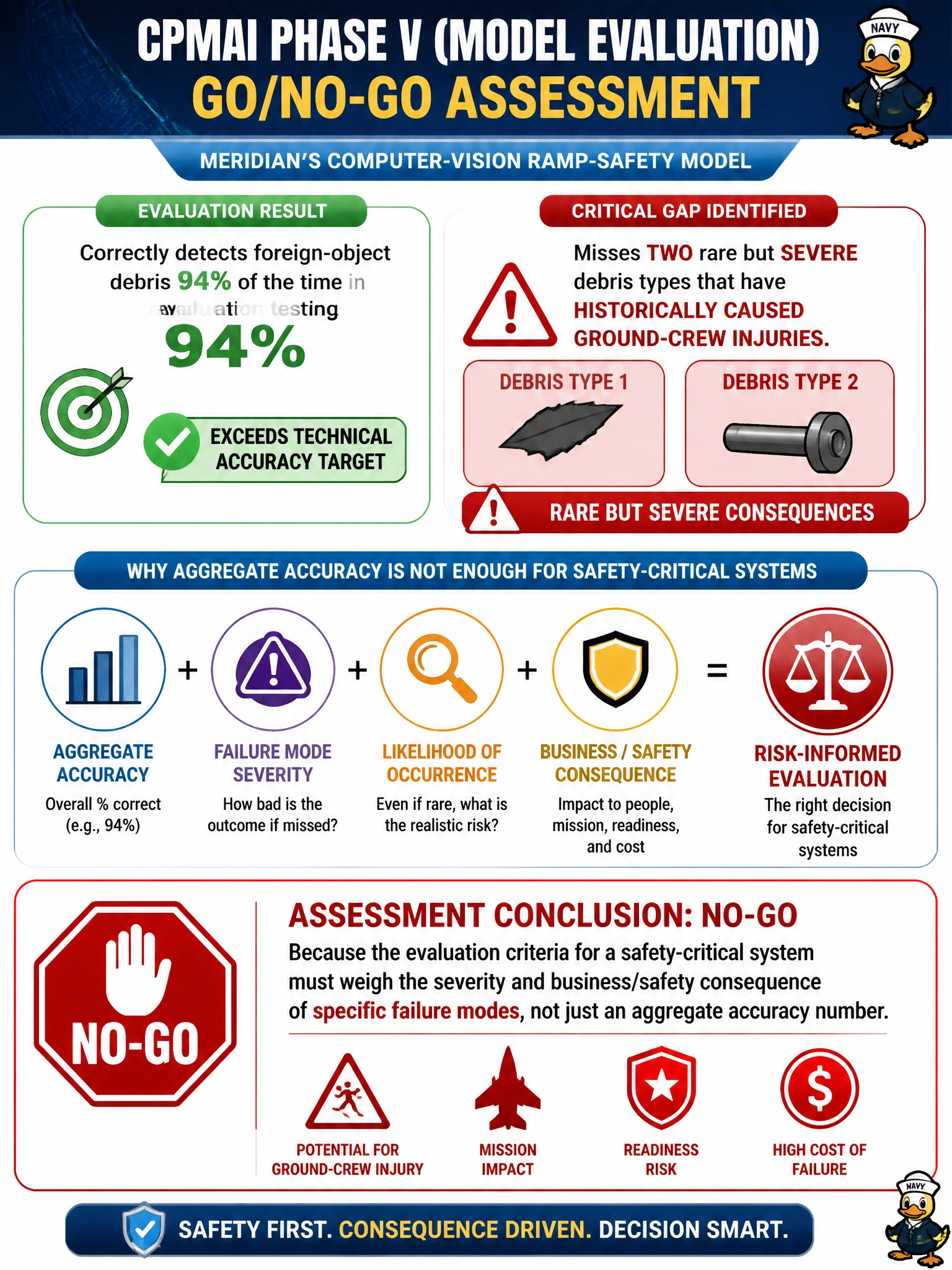
Meridian's computer-vision ramp-safety model correctly detects foreign-object debris 94% of the time in evaluation testing, exceeding the technical accuracy target, but it misses two rare but severe debris types that have historically caused ground-crew injuries. What should the CPMAI Phase V (Model Evaluation) Go/No-Go assessment conclude?
Select an answer to reveal the explanation.
Short Explanation
An aggregate accuracy score can hide the exact failures that matter most. On a ramp-safety system, missing the rare-but-severe debris types is a No-Go every time, no matter how good the headline number looks.
Full Explanation
A CPMAI Phase V Go/No-Go assessment isn't a single pass/fail threshold on one aggregate metric — it weighs whether evaluation results meet the criteria that matter for the specific business and safety context. For a ramp-safety computer-vision system, missing rare-but-severe foreign-object debris types that have historically caused injuries is a disqualifying failure regardless of a strong 94% overall score, because the cost of those specific misses is disproportionate to their frequency. The correct answer reflects that Go/No-Go criteria must be risk-weighted, not just aggregate-accuracy-weighted, especially in a safety-critical aviation context. Approving a 'Go' contingent only on finance sign-off ignores the safety gap entirely — budget approval is a different governance step and doesn't address the missed failure modes. Deferring the fix to 'routine maintenance after deployment' misunderstands what the Go/No-Go gate is for: it exists precisely to stop an unsafe model from reaching production, not to wave it through and patch it later while ground crew are exposed to the risk in the meantime. The exam point: Go/No-Go assessments must be criteria-driven and risk-aware, and a high average score does not override a known, severe, unaddressed failure mode.