
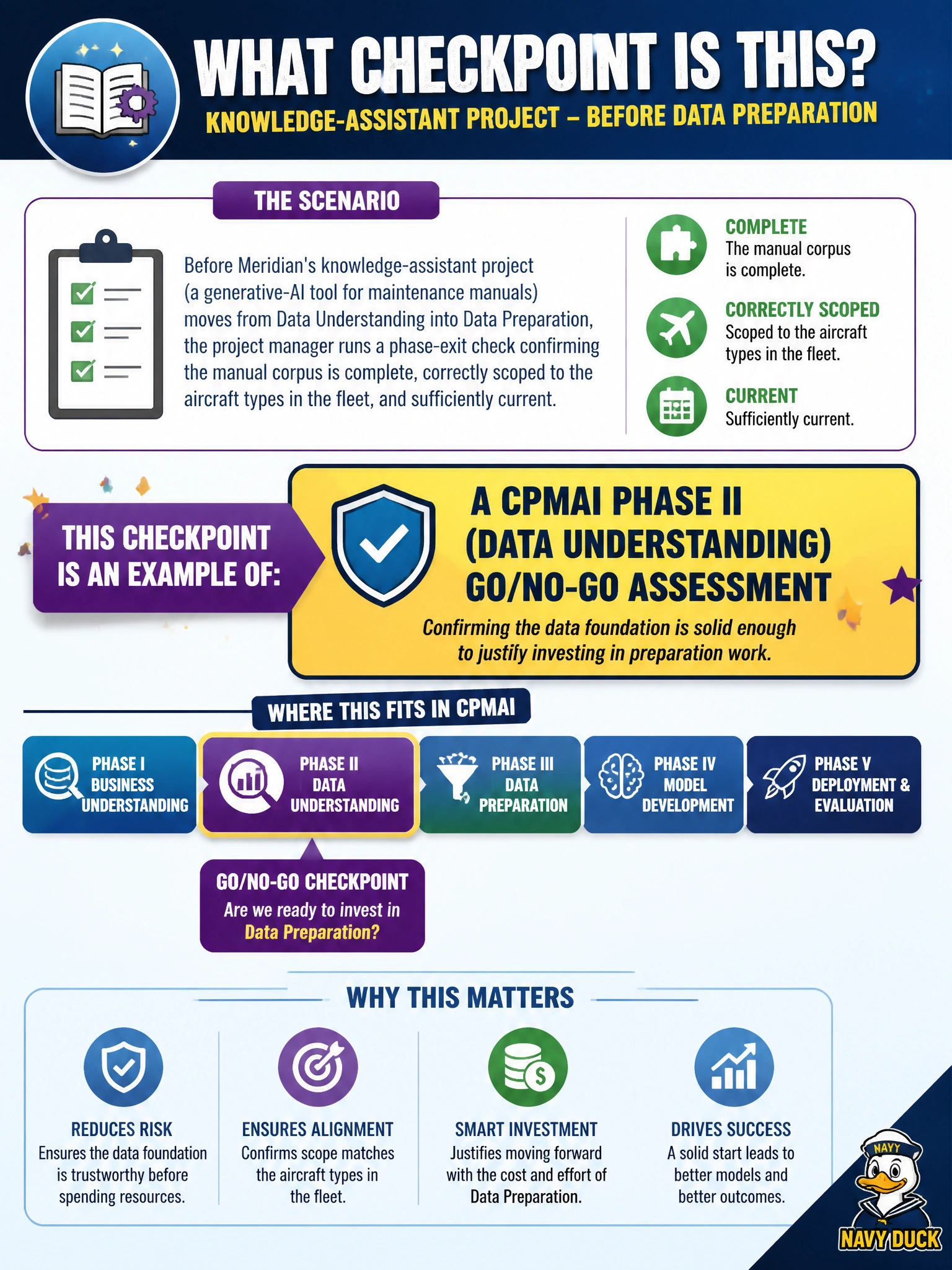
Before Meridian's knowledge-assistant project (a generative-AI tool for maintenance manuals) moves from Data Understanding into Data Preparation, the project manager runs a phase-exit check confirming the manual corpus is complete, correctly scoped to the aircraft types in the fleet, and sufficiently current. What is this checkpoint an example of?
Select an answer to reveal the explanation.
Short Explanation
Every CPMAI phase ends with a deliberate checkpoint before you spend money on the next one. Confirming the data foundation before committing to prep work is Data Understanding's Go/No-Go — not the production-readiness check that comes much later.
Full Explanation
CPMAI builds a Go/No-Go assessment into the end of each phase so the team makes a deliberate, evidence-based decision before investing further effort — and the scenario described (confirming corpus completeness, fleet-type coverage, and currency before committing to Data Preparation) is the Data Understanding phase's exit checkpoint. A Phase V Go/No-Go, by contrast, evaluates whether a trained and evaluated model is ready to move into Operationalization/production — that's several phases downstream of confirming the manual corpus is usable, and involves questions like performance against business KPIs, not raw data completeness. A user-acceptance test on tone and phrasing is a Model Evaluation or post-deployment activity focused on the finished assistant's behavior, not the input documents it will be built from. A finance-department budget audit is an organizational governance activity that could happen at any point in a company's project lifecycle, but it isn't a CPMAI phase-specific Go/No-Go — it doesn't evaluate data readiness at all. Recognizing which phase a described checkpoint belongs to, by what it actually checks rather than just seeing the words "Go/No-Go," is a recurring exam skill across CPMAI Methodology questions.