
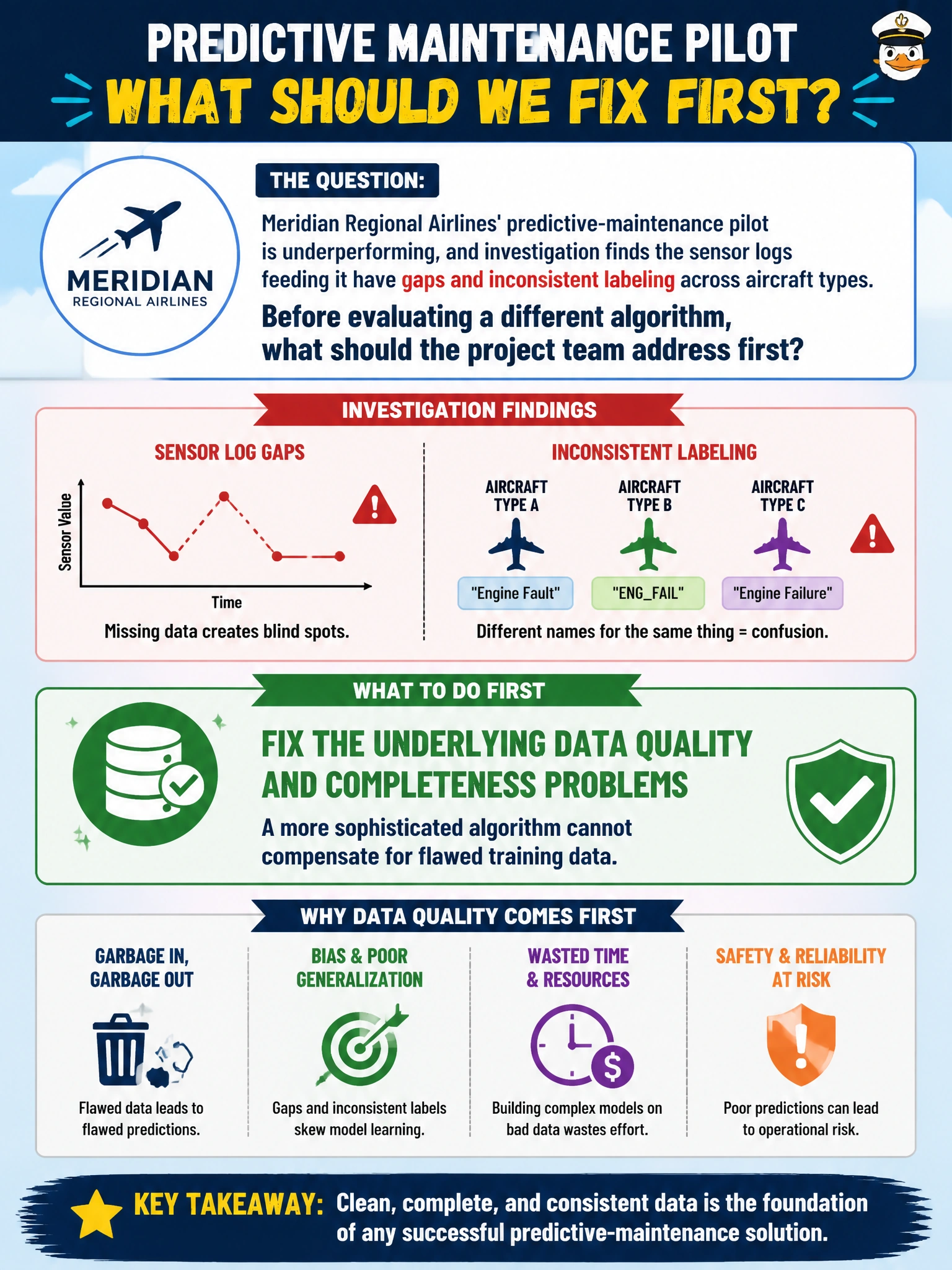
Meridian Regional Airlines' predictive-maintenance pilot is underperforming, and investigation finds the sensor logs feeding it have gaps and inconsistent labeling across aircraft types. Before evaluating a different algorithm, what should the project team address first?
Select an answer to reveal the explanation.
Short Explanation
This is the oldest trap in AI project management: throwing a bigger algorithm at a data problem. Garbage in, garbage out — no model architecture fixes bad input data. Fix the data first, then reassess.
Full Explanation
Data quality and completeness problems are consistently cited as the leading cause of AI project failure, and they must be diagnosed and addressed before any algorithm change is considered. Gaps and inconsistent labeling in sensor logs directly corrupt what the model learns; a more capable algorithm trained on the same flawed data will simply learn the flaws more precisely. Option B (swap in a more complex model) is the classic distractor: teams under schedule pressure often assume the fix is technical sophistication rather than data discipline, and this almost always wastes time while masking the real problem. Option C (more compute) addresses training speed, not training-data validity, and has no bearing on whether the labels or coverage are correct. Option D (blame the vendor and renegotiate) may eventually be warranted if the sensors themselves are faulty, but it skips the necessary internal step of first characterizing exactly what is wrong with the data the team already has — jumping to vendor escalation without that diagnosis is premature. CPMAI treats data quality assessment as foundational, carried from Business Understanding into Data Understanding, precisely because it dictates whether any subsequent modeling work can succeed.