
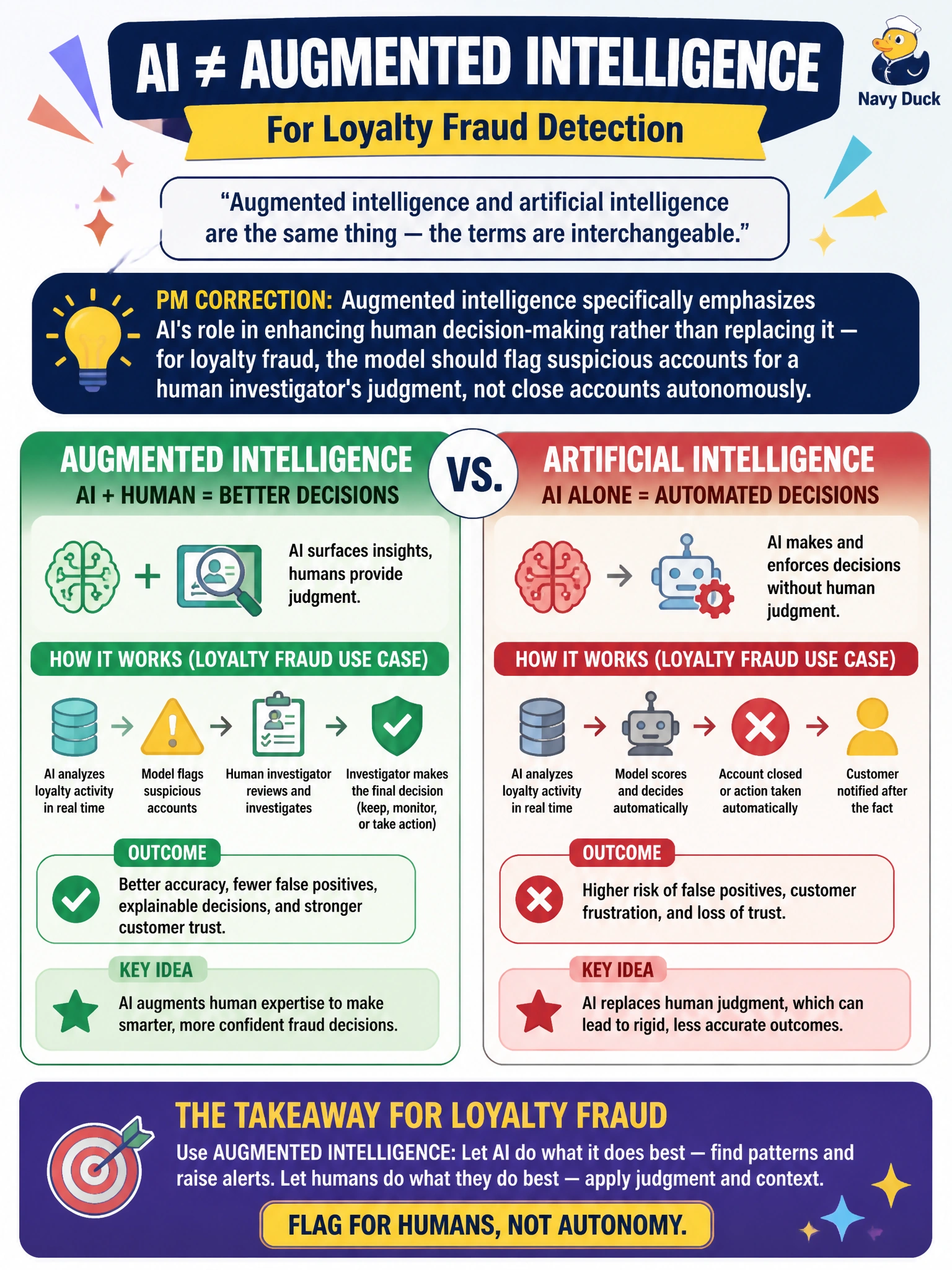
A junior analyst on the loyalty-fraud project says, 'Augmented intelligence and artificial intelligence are the same thing — the terms are interchangeable.' How should the PM correct this for the fraud-detection use case?
Select an answer to reveal the explanation.
Short Explanation
'Augmented' means the machine boosts a human's judgment, not replaces it — for fraud, that's a flagged account and a human investigator making the call, not the system silently freezing someone's miles. Same underlying tech, different intent and different design.
Full Explanation
CPMAI Task 1 requires applying augmented-intelligence principles to business problems, and the key distinction from generic 'AI' is one of intent and design: augmented intelligence deliberately frames the technology as enhancing human judgment and decision-making rather than replacing the human, which is exactly the right posture for loyalty-fraud detection — a model should surface suspicious mileage-redemption or account-takeover patterns for an investigator to review, not autonomously lock a customer's account. The 'fully interchangeable synonyms' distractor erases a meaningful emphasis that CPMAI wants project managers to apply when designing human-in-the-loop workflows, which matters a great deal for a program that can affect a paying customer's account access. The 'hardware accelerators' distractor confuses augmented intelligence (a design philosophy) with unrelated infrastructure terminology (GPUs accelerate training, but that is not what 'augmented' refers to here). The 'zero human involvement' distractor inverts the concept entirely — augmented intelligence is defined by keeping the human in the loop, not automating them out of it. Applying this correctly protects Meridian from wrongful account actions and strengthens the audit trail Trustworthy AI later requires.