
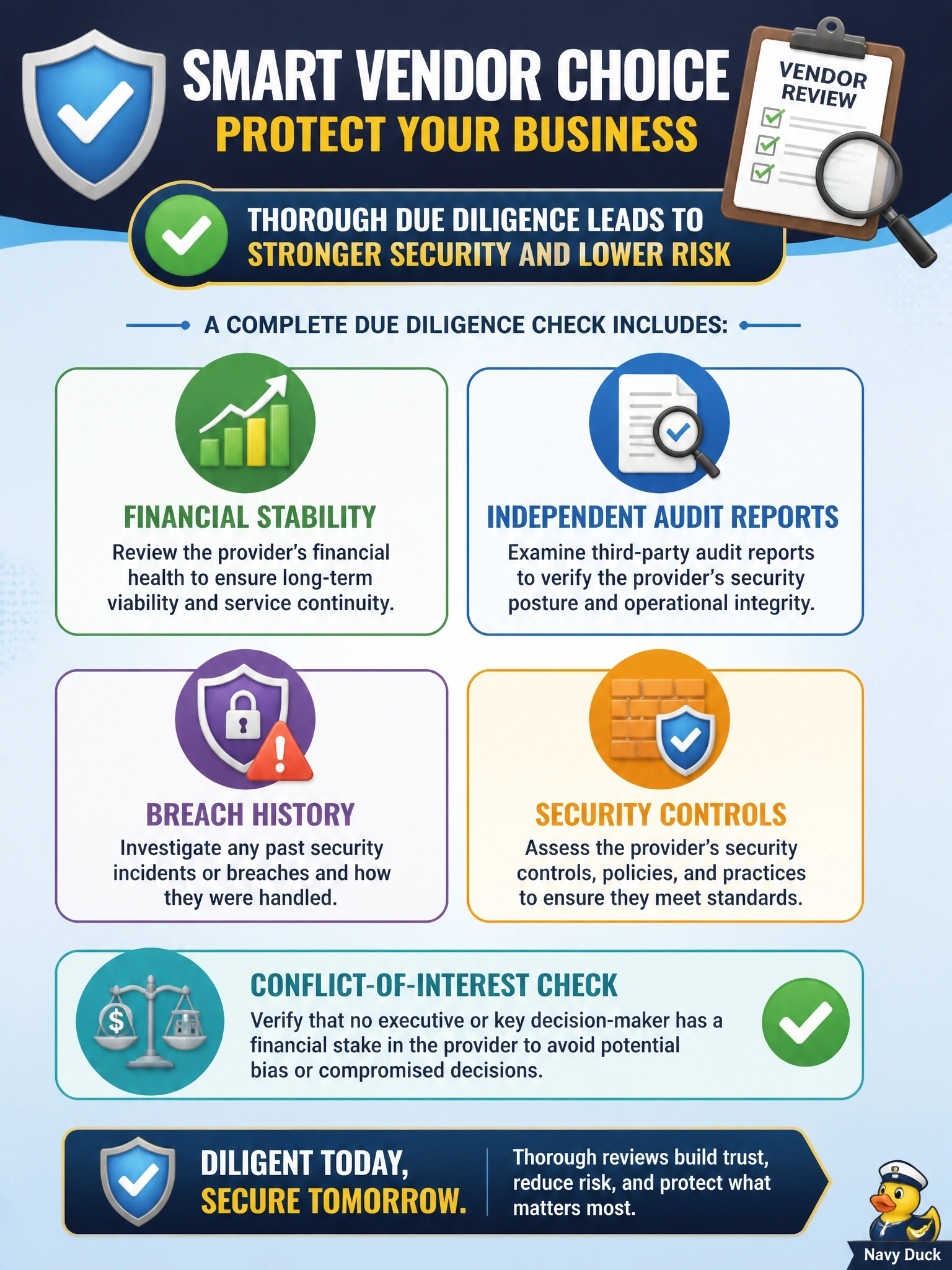
Before signing a contract with a new managed security provider, a company reviews the provider's financial stability, independent audit reports, breach history, and security controls, and checks whether any executive has a financial stake in the provider. Which vendor selection activity is this?
Select an answer to reveal the explanation.
Short Explanation
Due diligence is kicking the tires before you buy the car: you look at the books, the track record and the controls before you sign anything. Checking whether an executive has a stake in the vendor is the conflict-of-interest piece of that same homework. The trap is the right-to-audit answer, which only exists once there's a contract.
Full Explanation
Due diligence is the investigation an organization performs before entering a third-party relationship, to confirm the vendor can meet its obligations and will not introduce unacceptable risk. Typical elements include financial health, reputation and breach history, independent assessment or audit reports, security control questionnaires, insurance, and regulatory standing. Conflict-of-interest screening sits alongside it in the vendor selection objective: if a decision-maker benefits personally from choosing a vendor, the selection may not be objective, so such relationships are identified and disclosed before award. Service-level monitoring happens after a contract is in place and measures delivered performance against agreed targets; the scenario takes place before signing. Enforcing a right-to-audit clause also requires an existing contract that contains the clause, so it is a vendor monitoring activity, not a selection activity. A request for quote asks vendors to price a clearly defined product or service; it compares cost rather than examining financial stability, breach history, and controls. Exam caveat: due diligence is not a one-time event, and the same checks are usually repeated at renewal or after significant vendor changes. Operational check: confirm the vendor file contains the reviewed audit reports, completed security questionnaire, financial review, and signed conflict-of-interest declarations from everyone involved in the selection.