
After a flood destroys the primary data center, the IT team needs a document that tells them how to restore servers, networks, and data at the alternate site and in what priority order. Which plan should the team follow?
Select an answer to reveal the explanation.
Short Explanation
Here's the split you need to keep straight: continuity keeps the business limping along, disaster recovery gets the technology back. When the job is rebuilding servers and data at another site, that's DR. The trap is BCP, which sounds bigger and therefore 'more right', but it's about business processes, not restore steps.
Full Explanation
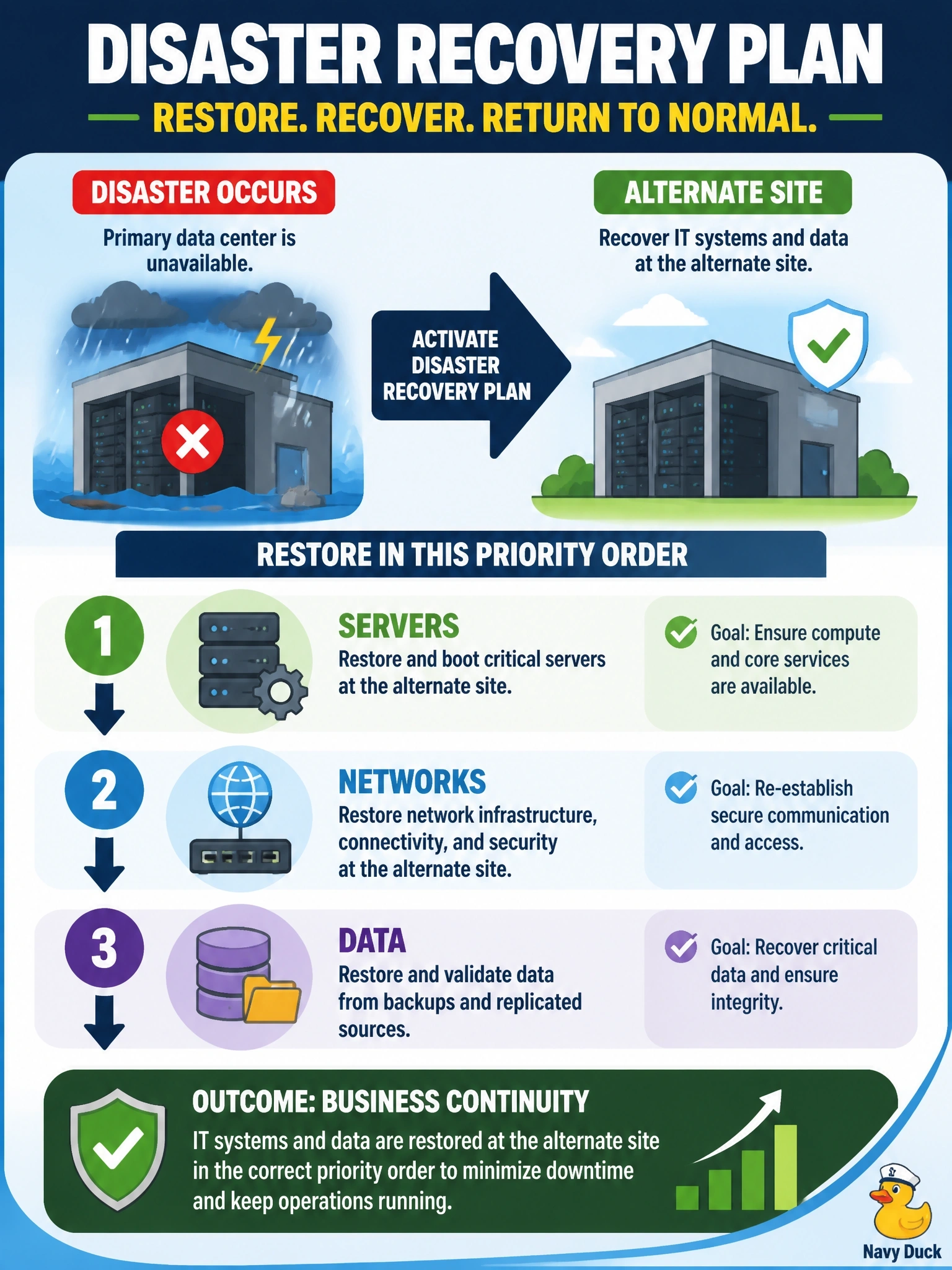
Disaster recovery planning focuses on restoring information technology after a disruptive event. A disaster recovery plan identifies the alternate site, recovery priorities derived from the business impact analysis, recovery time and recovery point objectives, the order in which infrastructure, applications, and data are rebuilt, and the people responsible. Losing a data center to flooding and needing to restore servers, networks, and data elsewhere is precisely its scope. The business continuity plan is broader and business-centered: it keeps essential functions running during the disruption, for example with manual processes, alternate work locations, or communication plans. The DR plan supports it, but the BCP is not the document that sequences server and data restoration. The incident response plan addresses security incidents such as malware or intrusion through identification, containment, eradication, and recovery; a flood is an environmental disaster rather than a security incident. A data retention policy defines how long records and backups are kept and when they are destroyed; it matters for whether backups exist, but it gives no restoration steps. Exam caveat: many organizations nest DR inside a broader continuity program, yet exam questions about restoring IT systems point to DR. Operational check: confirm the DR plan's priority list matches current RTOs and test a full restore at the alternate site.