
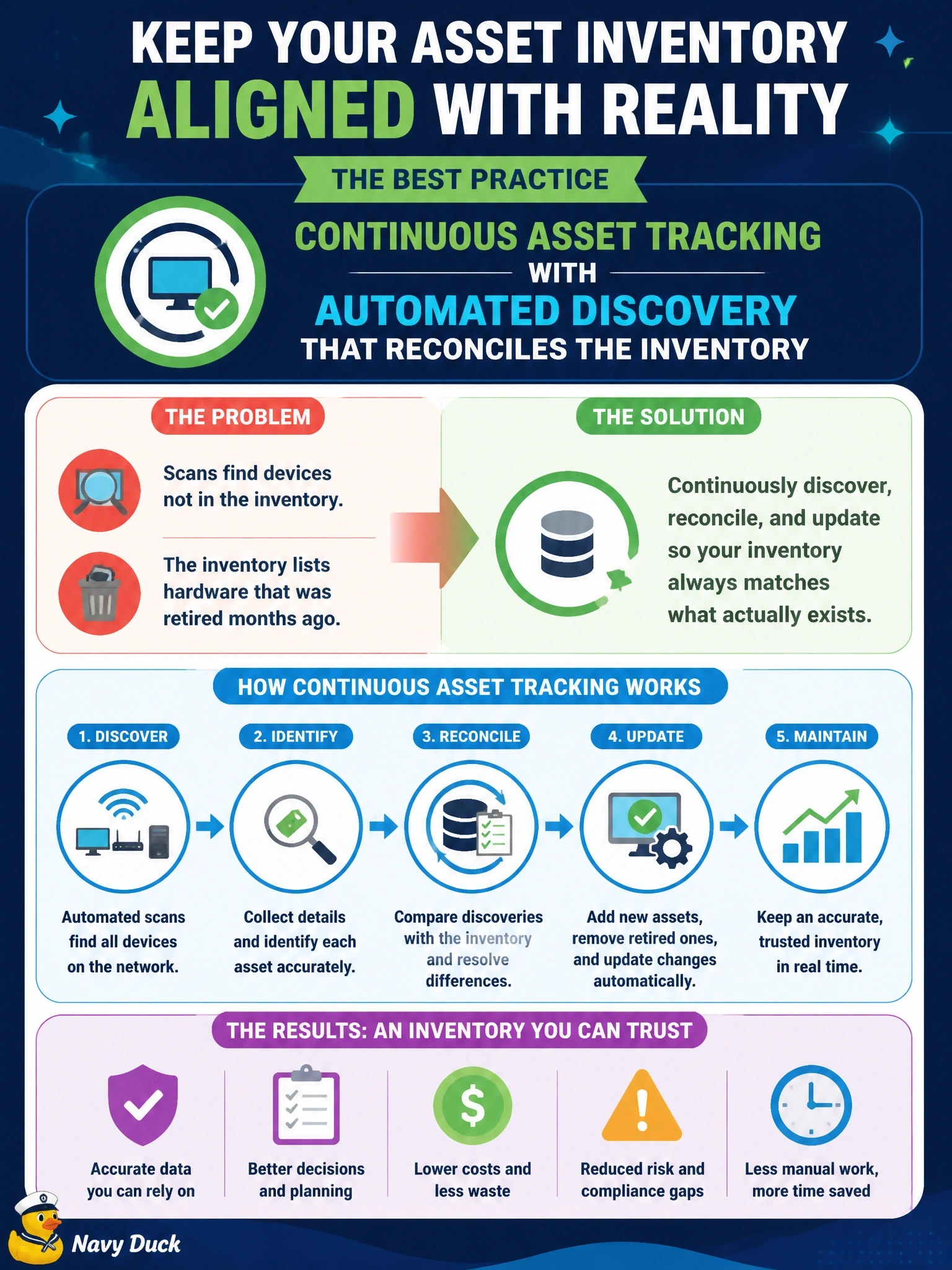
Network scans keep discovering devices that are not in the asset inventory, while the inventory still lists hardware that was retired months ago. Which practice best keeps the inventory aligned with what actually exists?
Select an answer to reveal the explanation.
Short Explanation
An inventory updated once a year is a photo of a moving crowd: it's wrong the moment you take it. Automated discovery keeps checking what's really out there and reconciles it with the list. Stricter purchasing helps going forward, but it won't find the devices that are already hiding on your network.
Full Explanation
Monitoring and asset tracking keep the inventory accurate throughout the life cycle. Automated discovery tools, such as network scanning, endpoint agents, directory and cloud API queries, continuously enumerate what is connected and compare the results with the inventory, flagging unknown devices for investigation and identifying listed items that no longer appear so they can be confirmed as retired. That closes both gaps described in the scenario. An annual manual spreadsheet audit captures a single point in time and depends on people remembering devices; drift reappears within weeks, and shadow devices are easily missed. A stricter procurement approval workflow helps prevent new unapproved purchases, but it does not discover devices that are already present, including personal or rogue devices that never went through purchasing, and it does not remove retired items. A data classification policy for file shares labels information by sensitivity, which is a data protection measure unrelated to whether the hardware inventory matches reality. Exam caveat: unknown devices are often unpatched and unmonitored, so discovery gaps translate directly into vulnerability management gaps. Operational check: run discovery across all network segments and cloud accounts, reconcile results against the inventory, and track the counts of unknown and stale entries until they trend toward zero.