
Several laptops have gone missing, and investigators cannot determine who last had them, because devices are handed out from a shared pool without any record of who receives them. Which asset management practice most directly fixes this accountability gap?
Select an answer to reveal the explanation.
Short Explanation
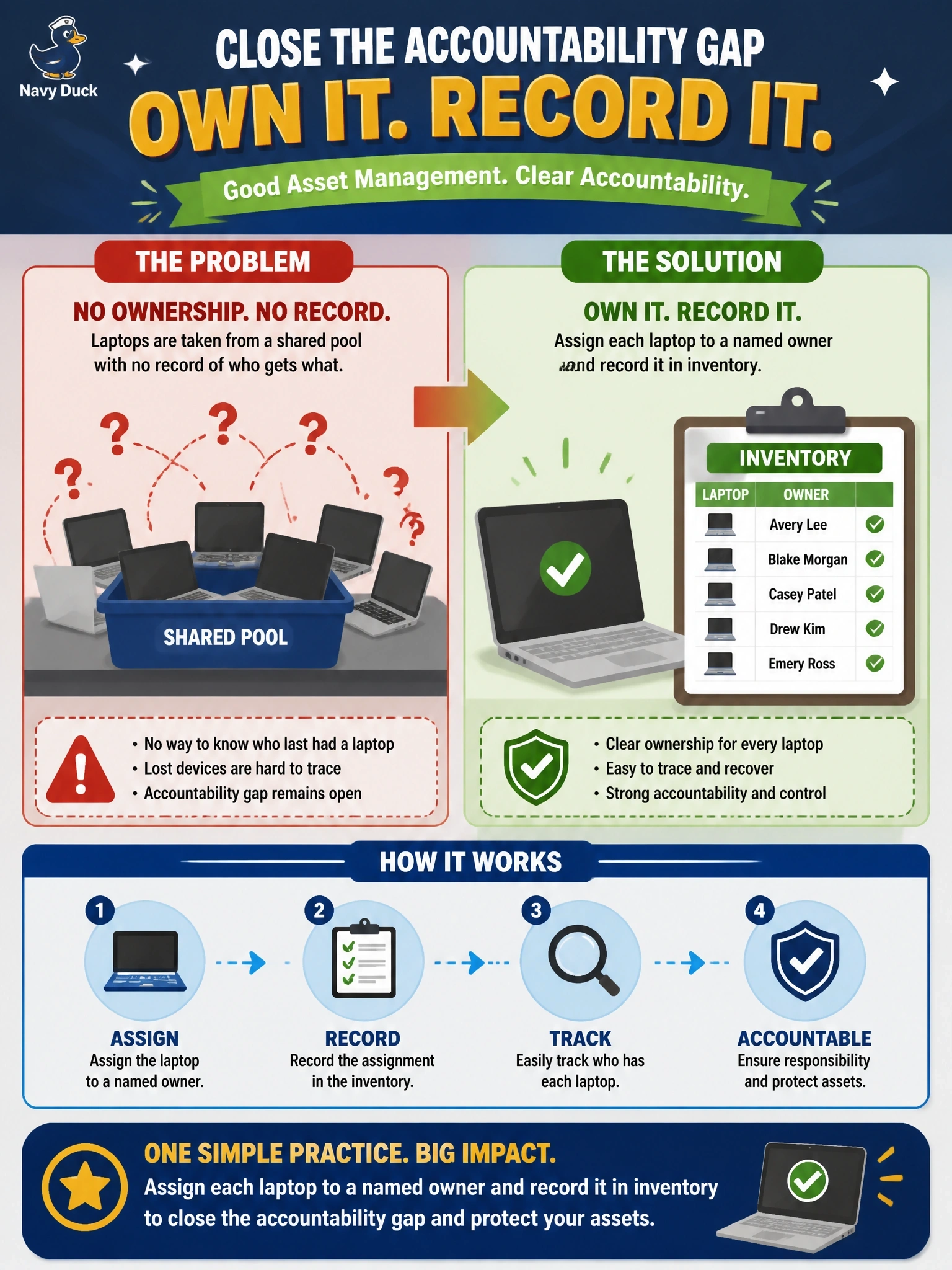
If nobody signs the library card, nobody knows who has the book. Assignment ties every laptop to a real person, so when one goes missing you know exactly whose desk to visit. The other options are good habits, but none of them tells you who had the device.
Full Explanation
Assignment and accounting link each asset to a responsible person or department and record that link in the asset inventory, often with check-out and check-in records for pooled devices. That establishes accountability: when a laptop is lost, the organization knows who last held it, can follow up, can trigger remote wipe or credential resets for that person's accounts and can report the loss accurately. Buying laptops only from authorized resellers protects against counterfeit or tampered hardware, which is an acquisition control, but it does nothing to record who has each device after it is issued. Wiping and reimaging laptops before they return to the pool protects the next user and limits data exposure, yet it is a data sanitization step, not a custody record. Enrolling laptops in a standard configuration baseline ensures they are hardened consistently, which reduces risk if one is lost, but a baseline does not identify the holder. Exam caveat: accounting also supports software license compliance and helps scope the impact of a lost device, because the owner's role indicates what data it likely held. Operational check: confirm every laptop in the inventory has a current assigned owner, sample several devices to verify the recorded holder matches reality, and confirm the pool process requires a check-out record before a device leaves.