
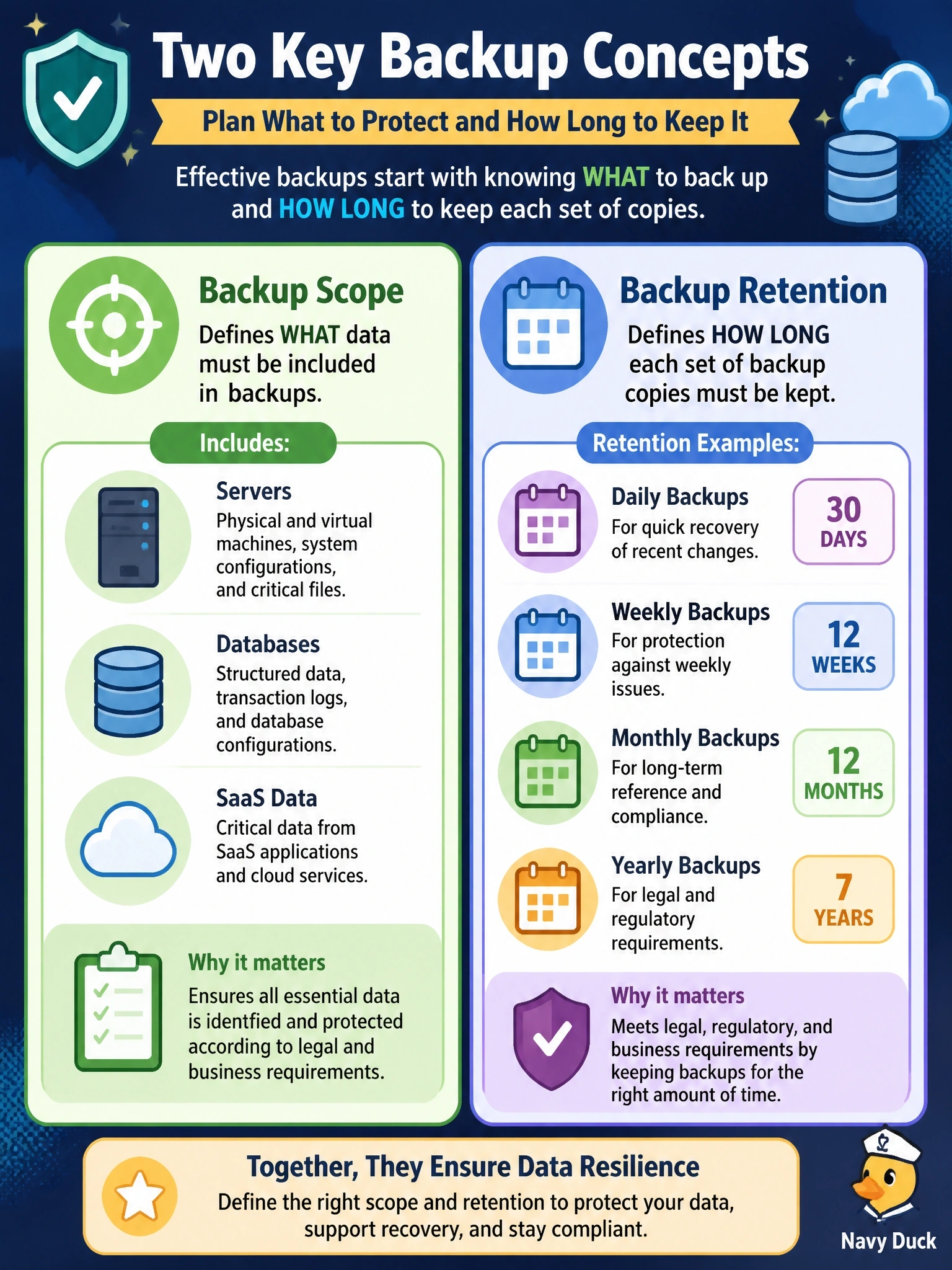
A backup team is asked to define which servers, databases and SaaS data must be included in backups, and how long each set of copies must be kept to satisfy legal and business requirements. Which two backup concepts is the team defining?
Select an answer to reveal the explanation.
Short Explanation
You're answering two questions: 'what do we back up?' is scope, and 'how long do we keep it?' is retention. The other choices are real backup features, but they answer different questions, like 'can it be changed?' or 'does it work?'
Full Explanation
Backup scope defines what is protected: which systems, databases, file shares and cloud or SaaS data sources are included, and at what granularity. Backup retention defines how long each set of copies must be kept, driven by legal, regulatory and business requirements, and how many versions must be available. The team's two questions map directly onto these two concepts. Immutability is about whether existing copies can be altered or deleted during their lock period, and restoration testing is about proving backups can be recovered; neither decides which data is included or how long it is held, although a retention period often sets the immutability window. Replication copies data to another location and snapshot frequency sets how often point-in-time copies are taken, which relate to recovery point objectives rather than to the inclusion list or the legal keeping period. Encryption protects the confidentiality of backup data, and platform diversity reduces common-mode failure by spreading systems across vendors; both are worthwhile, but neither answers what to back up or for how long. Exam caveat: data that is out of scope is not recoverable no matter how good the other controls are, so scope reviews must track new systems. Operational check: compare the backup scope list against the current asset inventory for gaps, and confirm each policy's retention setting matches the documented legal requirement.