
A healthcare firm wants its patient records app on corporate tablets to refuse to open any record whenever the device's reported location is outside the country, regardless of which network the tablet is using. Which data handling control meets this requirement?
Select an answer to reveal the explanation.
Short Explanation
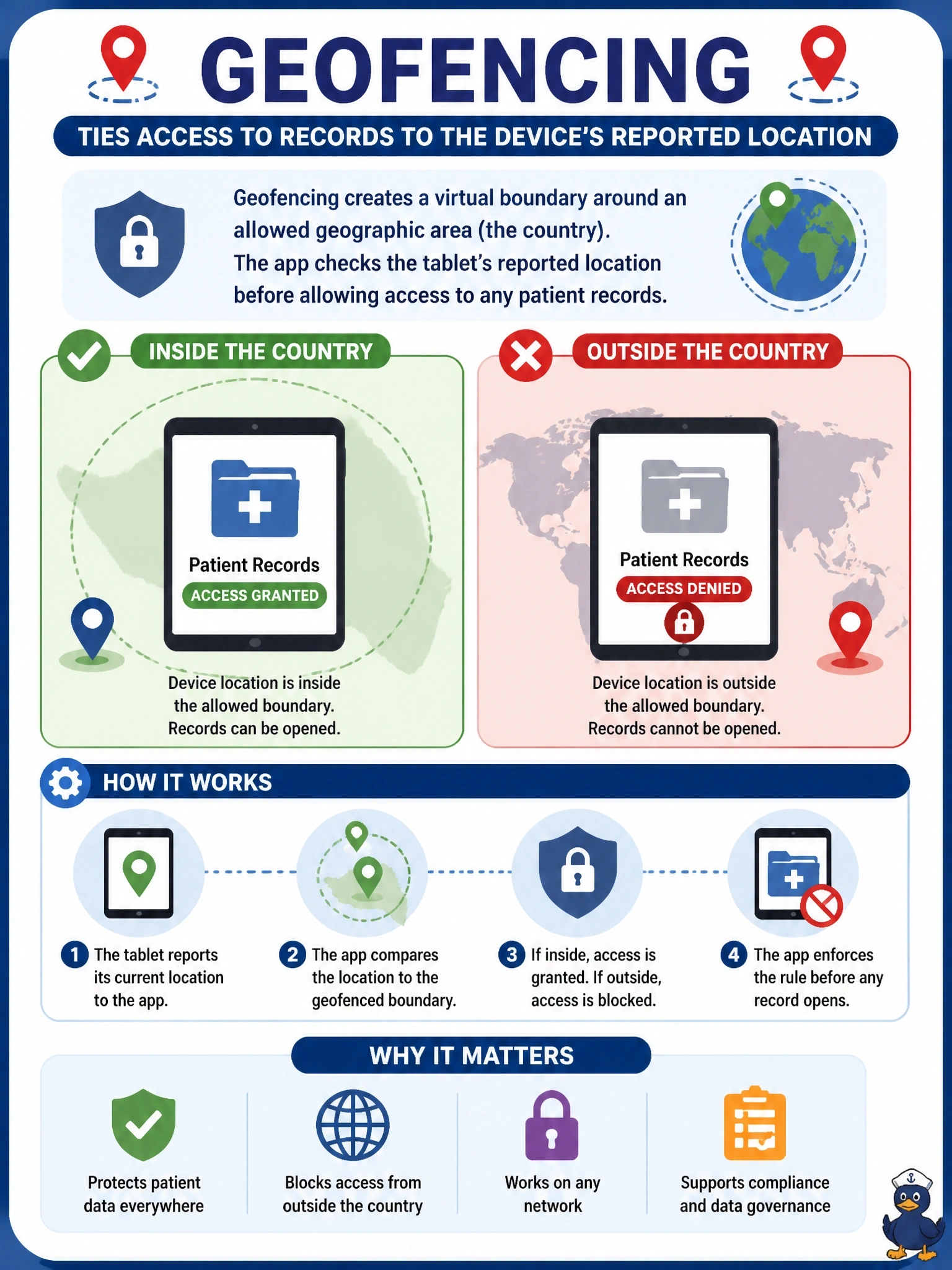
Imagine you draw an invisible fence on a map: step outside it and the app locks up. That's geofencing, and it works off where the device is, not which network it's on. A contract clause or a label can't stop a tablet in an airport overseas from opening a chart.
Full Explanation
Geofencing defines a geographic boundary and enforces policy based on whether a device's reported location falls inside it, using signals such as GPS, cellular and Wi-Fi positioning. Applied through the app or a mobile management platform, it can block access to patient records whenever a tablet leaves the permitted country, independent of which network the device connects through. A data sovereignty clause governs where the provider stores and processes data and which jurisdiction's law applies; it says nothing about where an end user's device may open records, so a traveling clinician would still have access. Network segmentation controls traffic between internal zones, but it cannot follow a tablet onto a hotel or cellular network abroad, and the requirement is explicitly network-independent. Marking and labeling records with a regional tag tells people and tools how the data should be handled, yet a label alone does not evaluate device location or block the app. Exam caveat: data location and data placement concern where data is stored, while geofencing concerns where it may be accessed from, and the two are often combined. Operational check: test the app on an enrolled tablet with a simulated out-of-country location, confirm records refuse to open and the event is logged, then confirm normal access resumes inside the boundary.